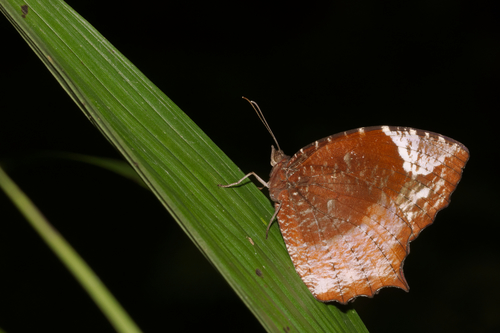
Chestnut Bob

Chestnut Bob

Iambrix salsala

Daily sighting probability ~30% · Possible
at Thiruvananthapuram

In 3 days ~60% in a week ~90%

15 Verified sightings at Thiruvananthapuram
47 In all 5 parks From 2019 to 2026
February Best month
☀️ Diurnal When it's spotted

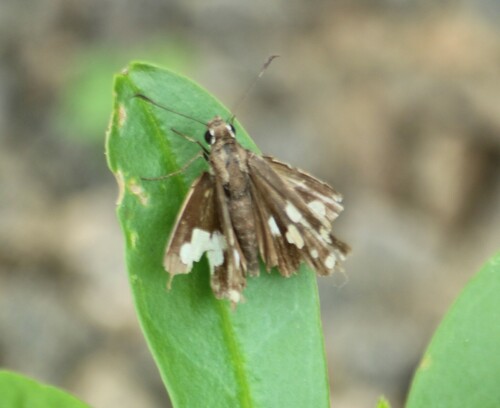
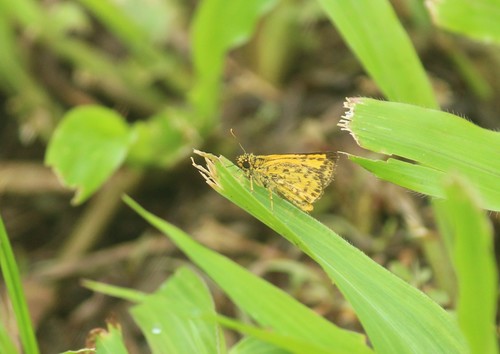
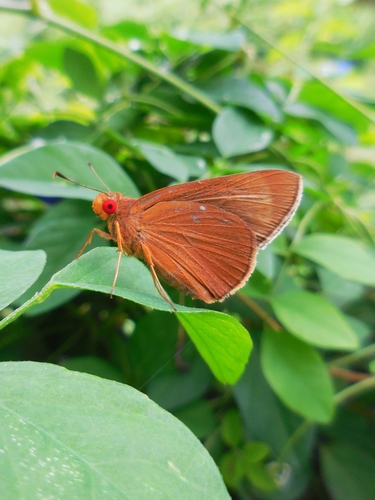
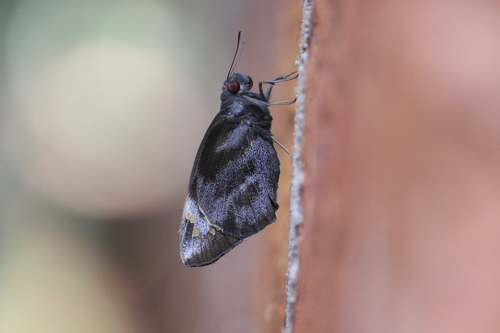
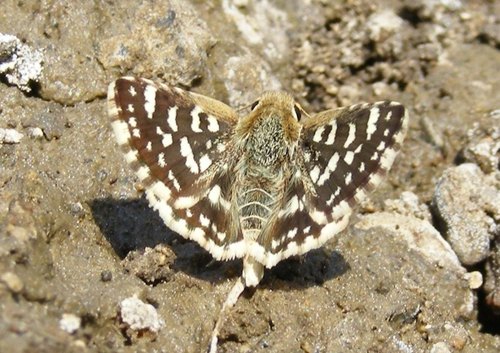
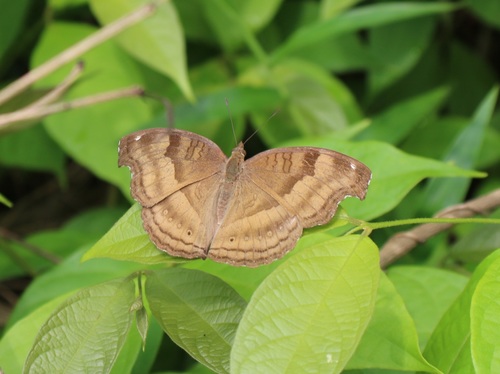
About the Chestnut Bob

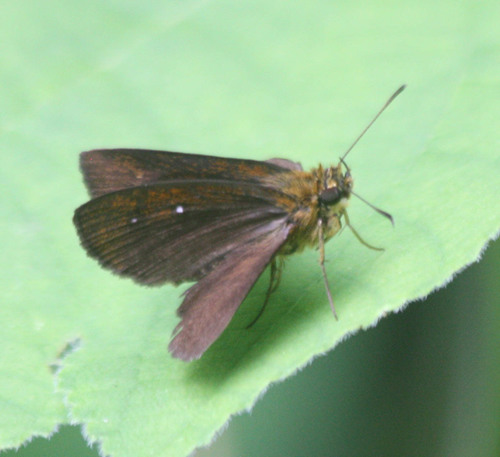
Iambrix salsala, the chestnut bob, is a butterfly belonging to the family Hesperiidae, that is found in parts of South Asia and Southeast Asia. The subspecies of Iambrix salsala found in India are- Iambrix salsala salsala Moore, 1865

Iambrix salsala luteipalpis Plötz, 1886 The butterfly occurs in Sri Lanka, India, Nepal, Myanmar, Thailand, Cambodia, Laos, north Vietnam, Hainan, Hong Kong, south Yunnan, Langkawi, Malaysia, Singapore, Tioman, Sumatra and Java.

In India, the butterfly flies in South India, Calcutta, along the Himalayas from Kumaon to Sikkim, Assam and eastwards to Myanmar. Edward Yerbury Watson (1891) states the butterfly's range as follows: Has been recorded from Bengal (Moore), Cachar (Wood-Mason and de Niceville); Tavoy (Elwes and de Niceville); Calcutta (de Niceville); Orissa (Taylor); Sikkim (de Niceville; Elwes).

Recorded as A. stellifer from Ceylon (Hutchison, Wade, Mackwood); Poona, Bombay (Swinhoe); and the Nilgiris (Hampson). Watson (1891) gives a detailed description, shown below: Male and female dark brown with olive-brown gloss. Male; upperside, forewing with two or three ill-defined yellowish spots ascending... Wikipedia →
Global Distribution

Parks Where Found

# Park Country Daily sighting probability
1 Namdapha National Park 🇮🇳 India
~40%
2 Periyar National Park 🇮🇳 India
~20%
3 Nagarhole National Park 🇮🇳 India
~20%
4 Sinharaja Forest Reserve 🇱🇰 Sri Lanka
~10%
5 Kaeng Krachan National Park 🇹🇭 Thailand
~10%

Cities Where Found

# City Country Daily sighting probability
1 Thiruvananthapuram 🇮🇳 India
~30%
2 Kozhikode 🇮🇳 India
~20%
3 Chattogram 🇧🇩 Bangladesh
~20%
4 Kochi 🇮🇳 India
~20%
5 Ponnani 🇮🇳 India
~20%
6 Singapore 🇸🇬 Singapore
~20%
7 Thrissur 🇮🇳 India
~20%
8 Kollam 🇮🇳 India
~10%
9 Kuala Lumpur 🇲🇾 Malaysia
~10%
10 Colombo [Sri Jayawardenepura Kotte] 🇱🇰 Sri Lanka
~10%

Before you go

What are the chances of seeing a Chestnut Bob in Thiruvananthapuram?

Possible

About 30% of wildlife watchers report a Chestnut Bob sighting in Thiruvananthapuram on a given day, based on 15 verified sightings from GBIF citizen-science data. It is the 21st most-seen of the 112 insects we can rate there. Over three days the chance rises to about 60%, and over a week to about 90%, if each day is a fresh chance.

When is the best time to see a Chestnut Bob in Thiruvananthapuram?

February

In that month about 60% of wildlife watchers report a Chestnut Bob in Thiruvananthapuram on a given day, against under 5% in March, July–August and November–January, the lowest months. That is one of Thiruvananthapuram's driest months, with about 20 mm of rain against 290 mm in October.

What time of day is best to see a Chestnut Bob?

Between 10 am and 1 pm

Across all the parks we cover, that three-hour window holds the most Chestnut Bob sightings with a recorded time, and about 9 in 10 of them come between 6 am and 6 pm: it is a daytime animal.

Is Thiruvananthapuram the best place to see a Chestnut Bob?

Yes

Of the 18 cities where we can rate Chestnut Bob sightings, Thiruvananthapuram has the highest daily chance: about 30%. Next come Kozhikode (India, about 20%) and Chattogram (Bangladesh, about 20%).

Which relatives of the Chestnut Bob live in Thiruvananthapuram?

Same family: Hesperiidae

The closest relatives of the Chestnut Bob that you can see in Thiruvananthapuram (family Hesperiidae, Skippers) are Grass Demon (about 20%), Common Bush Hopper (about 10%) and Common Redeye (about 10%), with each one's daily chance of a sighting.

Where does the Chestnut Bob sighting chance come from?

GBIF citizen-science records

It is estimated from how often the Chestnut Bob is recorded against all the insects logged in Thiruvananthapuram (15 verified sightings), calibrated against known sighting rates. Figures are rounded to the nearest 10% because citizen-science data supports honest approximations, not decimals, and months with records from fewer than five people show "—". How it works.

← Back to Thiruvananthapuram