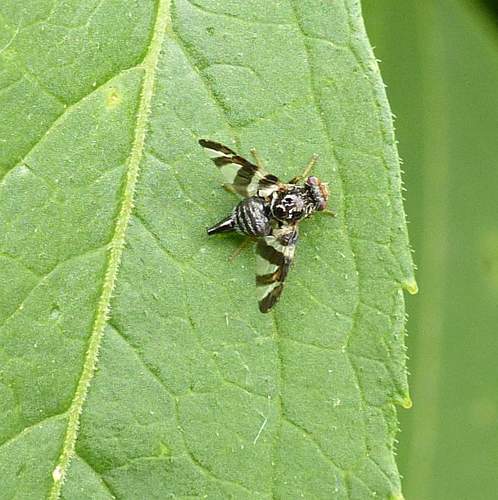
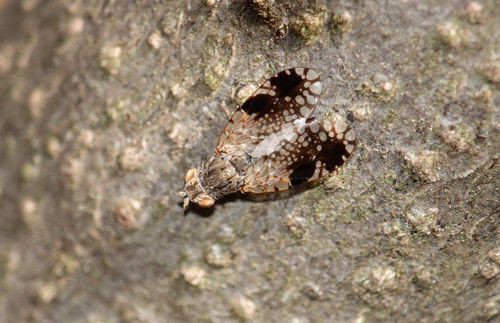
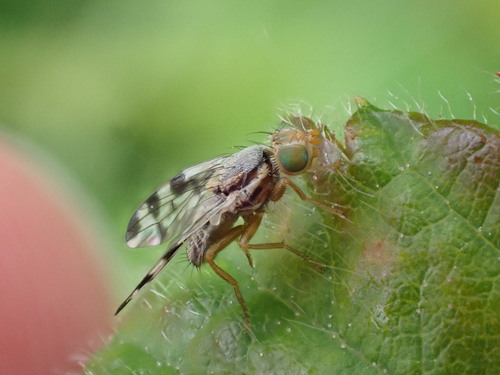
Sunflower Maggot Fly

Sunflower Maggot Fly

Strauzia longipennis

Daily sighting probability <5% · Rare
at Toronto

In 3 days ~10% in a week ~20%

14 Verified sightings at Toronto
June Best month

About the Sunflower Maggot Fly

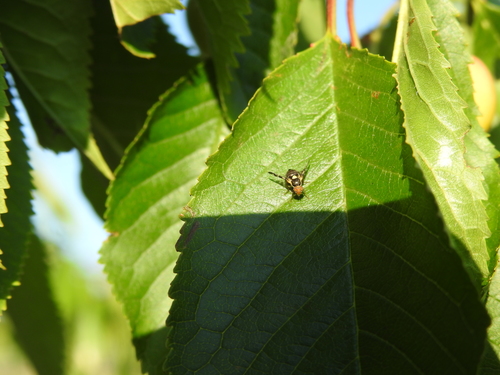
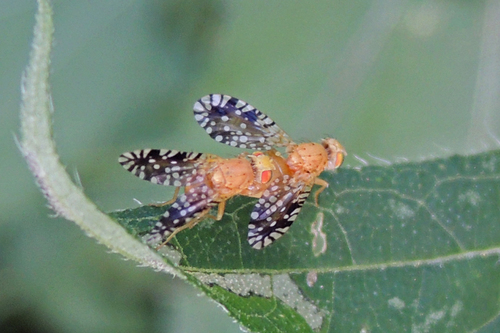
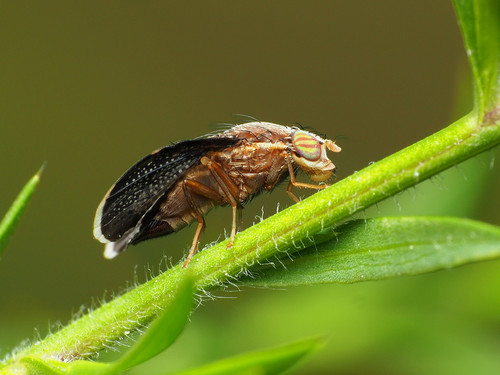
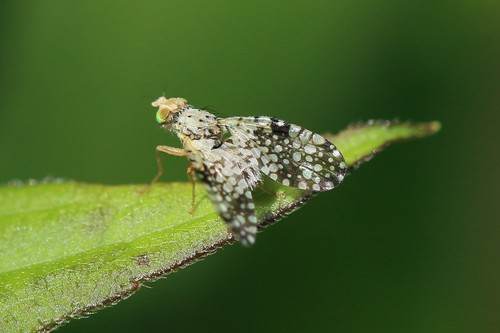
Strauzia longipennis is a large species of tephritid fruit fly known by the common name sunflower maggot. It is a minor pest whose larvae mine stems of sunflowers (Helianthus spp.). Damage from larval feeding on spongy tissue is usually light. The larvae do not damage the flower head or seeds, although those of other fruit fly species do so.

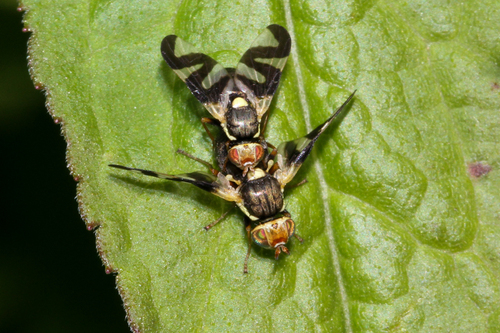
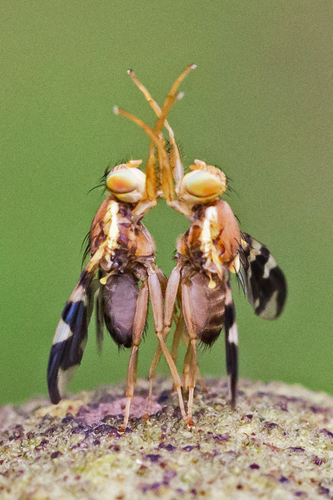
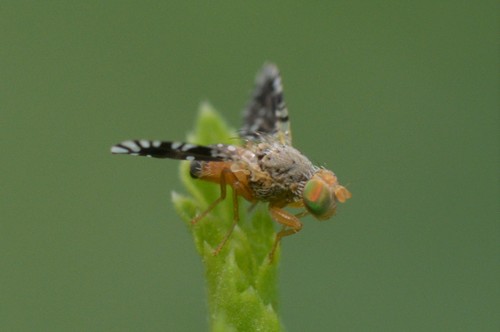
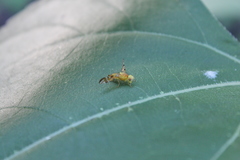
Adults are about 6 mm long and a wing length of approximately 7 mm. (reasonably large for a Tephritid) The body is yellow to orange and the wing has orange to brown bands, usually forming a distinct F-shaped marking near the wing tip. The larvae are yellowish-white in color reaching a length of about 5 mm and spend around 30 days feeding within the host plant before overwintering in the base of the plant or soil as pupae. Adults are found from May to August depending on location.

There are two other species of Tephritid fly species known as Sunflower Maggot, these are Gymnocarena diffusa which feeds in the flower head and Neotephritis finalis, the sunflower seed maggot, which feeds on the developing sunflower seeds. Wikipedia →
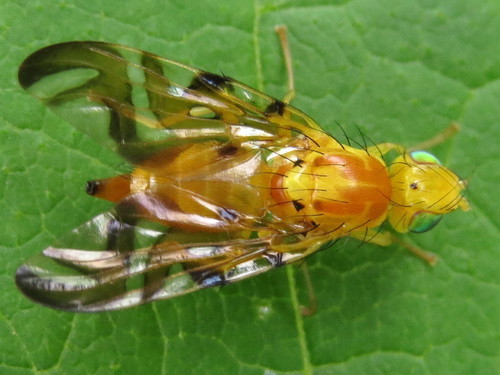
Global Distribution

Parks Where Found

# Park Country Daily sighting probability

More parks will be added in future updates.

Cities Where Found

# City Country Daily sighting probability
1 Berlin 🇩🇪 Germany
<5%
2 Montreal 🇨🇦 Canada
<5%
3 Toronto 🇨🇦 Canada
<5%
4 Washington 🇺🇸 United States
<5%
5 New York City 🇺🇸 United States
<5%

Before you go

What are the chances of seeing a Sunflower Maggot Fly in Toronto?

Rare

Under 5% of wildlife watchers report a Sunflower Maggot Fly sighting in Toronto on a given day, based on 14 verified sightings from GBIF citizen-science data. It is the 867th most-seen of the 1689 insects we can rate there. Over three days the chance rises to about 10%, and over a week to about 20%, if each day is a fresh chance.

When is the best time to see a Sunflower Maggot Fly in Toronto?

Any time of year

In every month with enough records, under 5% of wildlife watchers report a Sunflower Maggot Fly in Toronto on a given day, so our monthly data shows no clear season.

Is Toronto the best place to see a Sunflower Maggot Fly?

Among the best

Of the 5 cities where we can rate Sunflower Maggot Fly sightings, Toronto ranks 3rd at under 5%, level with the leaders once rounded. The best odds are in Berlin (Germany, under 5%) and Montreal (Canada, under 5%).

Which relatives of the Sunflower Maggot Fly live in Toronto?

Same family: Tephritidae

The closest relatives of the Sunflower Maggot Fly that you can see in Toronto (family Tephritidae, Fruit Flies) are Goldenrod Gall Fly (about 10%) and Thistle Stem Gall Fly (about 10%), with each one's daily chance of a sighting.

Where does the Sunflower Maggot Fly sighting chance come from?

GBIF citizen-science records

It is estimated from how often the Sunflower Maggot Fly is recorded against all the insects logged in Toronto (14 verified sightings), calibrated against known sighting rates. Figures are rounded to the nearest 10% because citizen-science data supports honest approximations, not decimals, and months with records from fewer than five people show "—". How it works.

← Back to Toronto