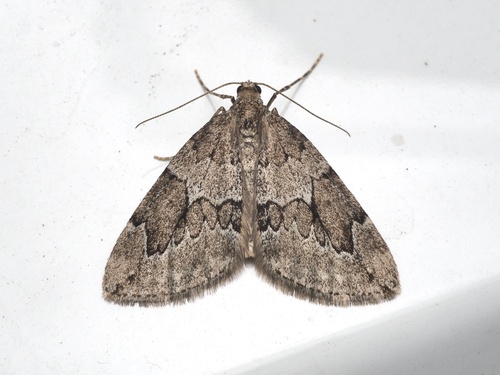
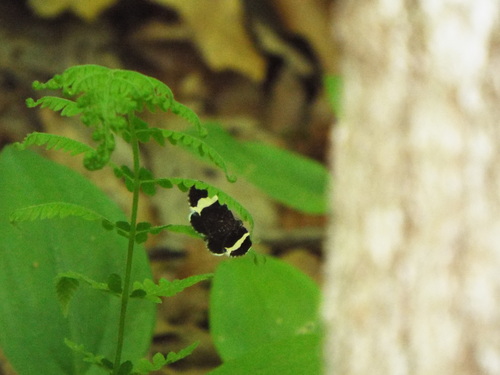
Canary-Shouldered Thorn

Canary-Shouldered Thorn

Ennomos alniaria

Daily sighting probability <5% · Rare
at Vancouver

In 3 days ~10% in a week ~20%

15 Verified sightings at Vancouver
41 In all 2 parks From 2019 to 2026
August Best month
☀️ Diurnal When it's spotted

About the Canary-Shouldered Thorn

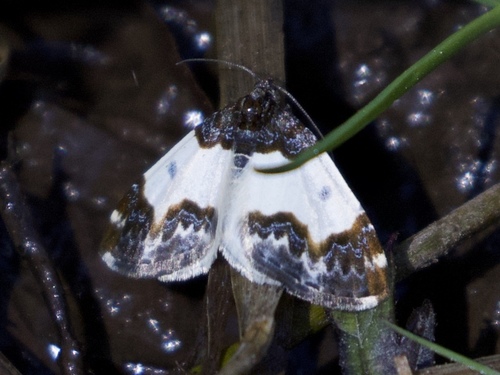
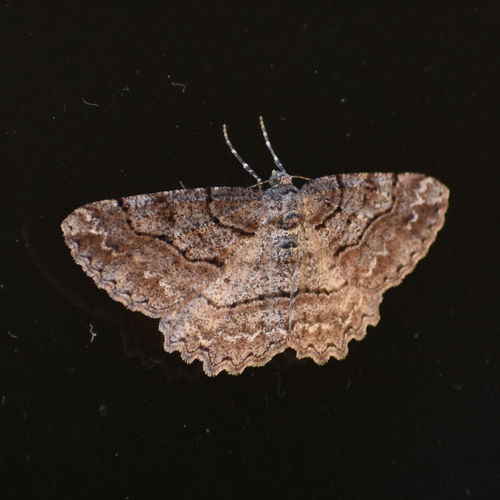
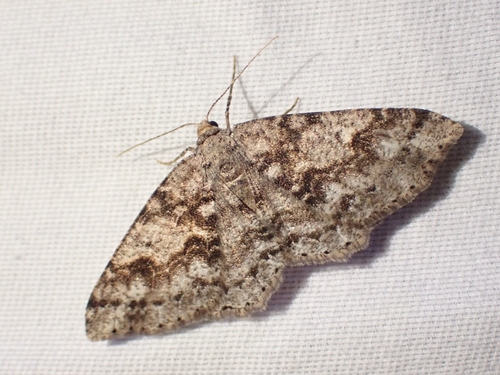
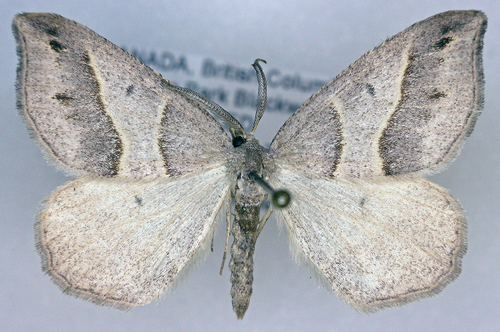
Ennomos alniaria, the canary-shouldered thorn, is a moth of the family Geometridae. The species was first described by Carl Linnaeus in his 1758 10th edition of Systema Naturae. It can be found in Europe in a wide variety of biotopes where there are deciduous trees, perhaps mostly in deciduous forests and gardens.

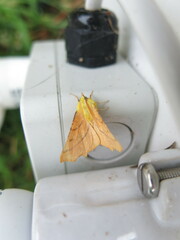
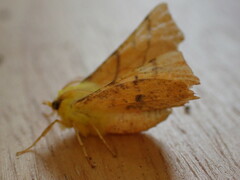
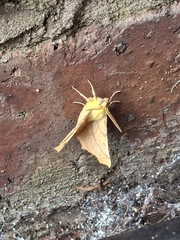
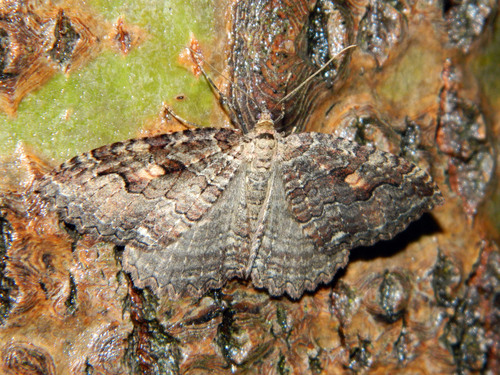
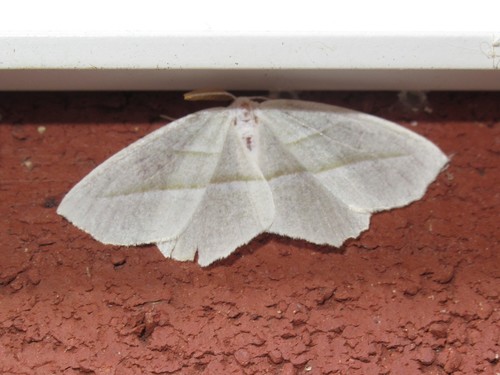
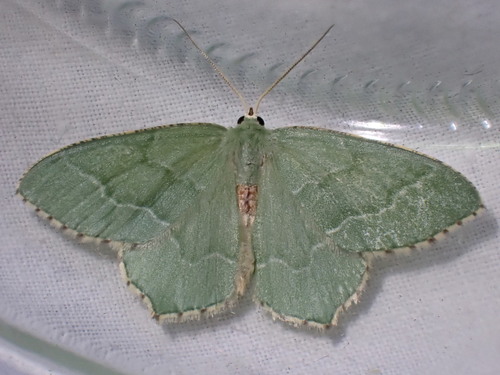
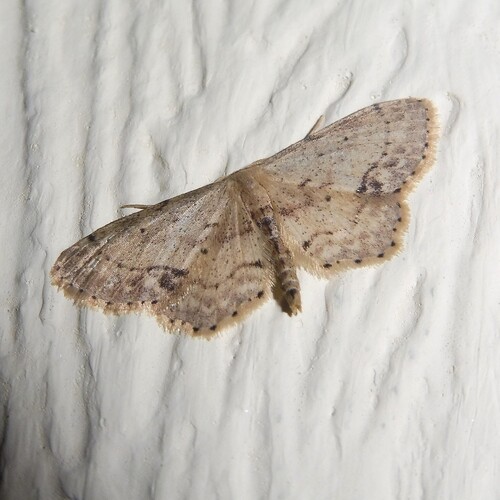
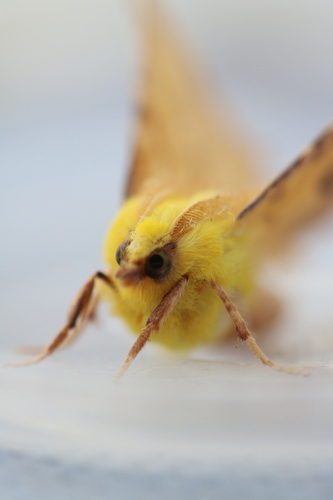
The wingspan is 34–42 mm. The length of the forewings is 16–20 mm. Resembles Ennomos quercinaria, but has a canary-yellow thorax. The forewings are scalloped and there are also two cross lines. The wings are ochre yellow with greyish flecks. The bands, a small discal spot on the forewing and a larger discal spot on the hindwing are grey. The larva is brownish-grey, long and thin, with four raised cross-bands on the dorsal side. It closely resembles a dead twig.

Other Ennomos species are similar. Caucasus and Russia to western Europe. The northern limit is Fennoscandia and the southern limit is the northern Mediterranean. It has also been introduced into British Columbia. The moths fly in one generation from July to October.[1] They are attracted to light.

The larvae feed on a number of deciduous trees including downy birch... Wikipedia →
Global Distribution

Parks Where Found

# Park Country Daily sighting probability
1 Snowdonia National Park 🇬🇧 United Kingdom
~20%
2 Wadden Sea National Park 🇩🇪 Germany
<5%

Cities Where Found

# City Country Daily sighting probability
1 Liverpool 🇬🇧 United Kingdom
~10%
2 Porto 🇵🇹 Portugal
~10%
3 Manchester 🇬🇧 United Kingdom
~10%
4 London 🇬🇧 United Kingdom
~10%
5 Rotterdam [The Hague] 🇳🇱 Netherlands
<5%
6 Birmingham 🇬🇧 United Kingdom
<5%
7 Leeds 🇬🇧 United Kingdom
<5%
8 Helsinki 🇫🇮 Finland
<5%
9 Vancouver 🇨🇦 Canada
<5%
10 Berlin 🇩🇪 Germany
<5%

Before you go

What are the chances of seeing a Canary-Shouldered Thorn in Vancouver?

Rare

Under 5% of wildlife watchers report a Canary-Shouldered Thorn sighting in Vancouver on a given day, based on 15 verified sightings from GBIF citizen-science data. It is the 244th most-seen of the 482 insects we can rate there. Over three days the chance rises to about 10%, and over a week to about 20%, if each day is a fresh chance.

When is the best time to see a Canary-Shouldered Thorn in Vancouver?

August

In that month about 10% of wildlife watchers report a Canary-Shouldered Thorn in Vancouver on a given day, against under 5% in September to July, the lowest months. That is one of Vancouver's driest months, with about 35 mm of rain against 210 mm in November.

What time of day is best to see a Canary-Shouldered Thorn?

Between 9 am and noon

Across all the parks we cover, that three-hour window holds the most Canary-Shouldered Thorn sightings with a recorded time, and about 8 in 10 of them come between 6 am and 6 pm: it is a daytime animal.

Is Vancouver the best place to see a Canary-Shouldered Thorn?

9th of 10

Of the 10 cities where we can rate Canary-Shouldered Thorn sightings, Vancouver ranks 9th at under 5%. The best odds are in Liverpool (United Kingdom, about 10%), Porto (Portugal, about 10%) and Manchester (United Kingdom, about 10%).

Which relatives of the Canary-Shouldered Thorn live in Vancouver?

Same family: Geometridae

The closest relatives of the Canary-Shouldered Thorn that you can see in Vancouver (family Geometridae, Geometer Moths) are Hemlock Looper Moth (about 10%) and Phantom Hemlock Looper (about 10%), with each one's daily chance of a sighting.

Where does the Canary-Shouldered Thorn sighting chance come from?

GBIF citizen-science records

It is estimated from how often the Canary-Shouldered Thorn is recorded against all the insects logged in Vancouver (15 verified sightings), calibrated against known sighting rates. Figures are rounded to the nearest 10% because citizen-science data supports honest approximations, not decimals, and months with records from fewer than five people show "—". How it works.

← Back to Vancouver