
Rufous-tailed Lark

Rufous-tailed Lark

Ammomanes phoenicura

Silhouette: Gossipguy and T. Michael Keesey · PhyloPic

LCNTNear ThreatenedVUENCR
Daily sighting probability ~10% · With luck
at Vasai-Virar

In 3 days ~30% in a week ~60%

141 Verified sightings at Vasai-Virar
261 In all 5 parks From 2019 to 2026
January Best month
☀️ Diurnal When it's spotted

About the Rufous-tailed Lark

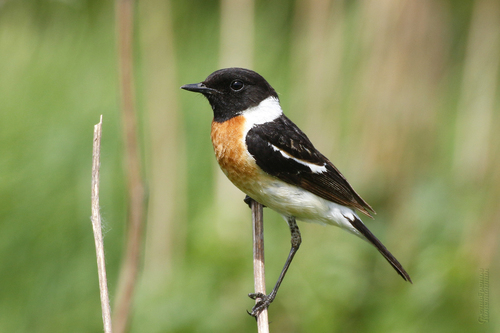
The rufous-tailed lark (Ammomanes phoenicura), also sometimes called the rufous-tailed finch-lark, is a ground bird found in the drier open stony habitats of India and parts of Pakistan. Like other species in the genus it has a large finch-like bill with a slightly curved edge to the upper mandible. The dull brown colour matches the soil as it forages for grass seeds, grain and insects. Males and females are indistinguishable in the field but during the breeding season, the male has a courtship display that involves flying up steeply and then nose-diving and pulling up in a series of stepped wavy dips accompanied by calling. They forage on the ground in pairs or small groups.

The rufous-tailed lark was originally placed in the genus Mirafra. Alternate names for the rufous-tailed lark include bar-tailed lark, rufous-tailed desert lark, and rufous-tailed finch-lark. Some taxonomists in the past included the bar-tailed lark as a subspecies of the rufous-tailed lark but the two are now generally considered to be separate species. Walter Koelz designated the peninsular Indian population south of a line across India from Hubli to Bellary and... Wikipedia →

Sounds

Call0:31

India · 2025

© Peter Boesman · XC1030466 · CC BY-NC-ND 4.0

Song0:16

India · 2019

© Ross Gallardy · XC454344 · CC BY-NC-SA 4.0

Call0:31

India · 2012

© Sreekumar Chirukandoth · XC632678 · CC BY-NC-SA 4.0

Global Distribution

Parks Where Found

# Park Country Daily sighting probability
1 Satpura National Park 🇮🇳 India
~10%
2 Kanha National Park 🇮🇳 India
<5%
3 Ranthambore National Park 🇮🇳 India
<5%
4 Bandhavgarh National Park 🇮🇳 India
<5%
5 Keoladeo National Park 🇮🇳 India
<5%

Cities Where Found

# City Country Daily sighting probability
1 Durg 🇮🇳 India
~10%
2 Indore 🇮🇳 India
~10%
3 Vasai-Virar 🇮🇳 India
~10%
4 Nashik 🇮🇳 India
~10%
5 Kalyan-Dombivli 🇮🇳 India
~10%
6 Chhatrapati Sambhajinagar 🇮🇳 India
~10%
7 Bhopal 🇮🇳 India
~10%
8 Jodhpur 🇮🇳 India
<5%
9 Pune 🇮🇳 India
<5%
10 Nagpur 🇮🇳 India
<5%

Before you go

What are the chances of seeing a Rufous-tailed Lark in Vasai-Virar?

With luck

About 10% of wildlife watchers report a Rufous-tailed Lark sighting in Vasai-Virar on a given day, based on 141 verified sightings from GBIF citizen-science data. It is the 75th most-seen of the 217 birds we can rate there. Over three days the chance rises to about 30%, and over a week to about 60%, if each day is a fresh chance.

When is the best time to see a Rufous-tailed Lark in Vasai-Virar?

January

In that month about 30% of wildlife watchers report a Rufous-tailed Lark in Vasai-Virar on a given day, against under 5% in April to September, the lowest months. That is one of Vasai-Virar's driest months, with almost no rain against 840 mm in July.

What time of day is best to see a Rufous-tailed Lark?

Between 7 and 10 am

Across all the parks we cover, that three-hour window holds the most Rufous-tailed Lark sightings with a recorded time, and about 9 in 10 of them come between 6 am and 6 pm: it is a daytime animal.

Is Vasai-Virar the best place to see a Rufous-tailed Lark?

Among the best

Of the 16 cities where we can rate Rufous-tailed Lark sightings, Vasai-Virar ranks 3rd at about 10%, level with the leaders once rounded. The best odds are in Durg (India, about 10%) and Indore (India, about 10%).

Which relatives of the Rufous-tailed Lark live in Vasai-Virar?

Same family: Alaudidae

The closest relatives of the Rufous-tailed Lark that you can see in Vasai-Virar (family Alaudidae, Larks) are Oriental Skylark (about 20%) and Ashy-crowned Sparrow-Lark (about 20%), with each one's daily chance of a sighting.

Where does the Rufous-tailed Lark sighting chance come from?

GBIF citizen-science records

It is estimated from how often the Rufous-tailed Lark is recorded against all the birds logged in Vasai-Virar (141 verified sightings), calibrated against known sighting rates. Figures are rounded to the nearest 10% because citizen-science data supports honest approximations, not decimals, and months with records from fewer than five people show "—". How it works.

← Back to Vasai-Virar