About the Japanese Maple Leafhopper
Japananus hyalinus, the Japanese maple leafhopper, is a species of leafhopper of the subfamily Deltocephalinae and tribe Opsiini (formerly placed in tribe Scaphytopiini). Believed to be native to eastern Asia, it has been carried with the trade in cultivated maples and is now widely found in Europe, North America and Australia.
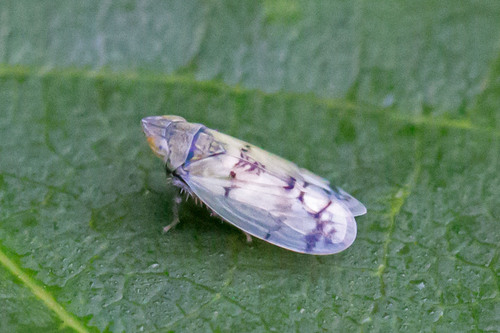
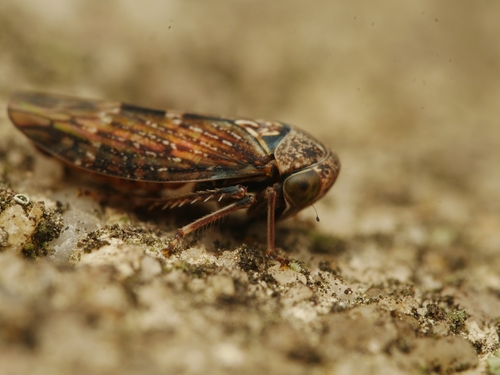
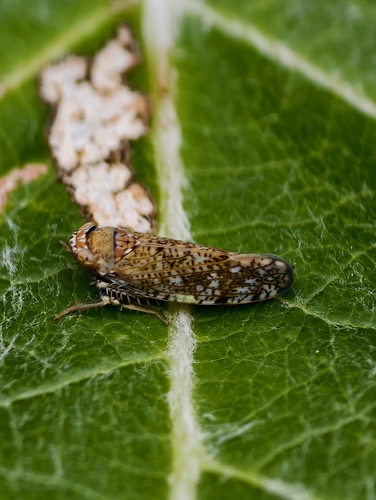
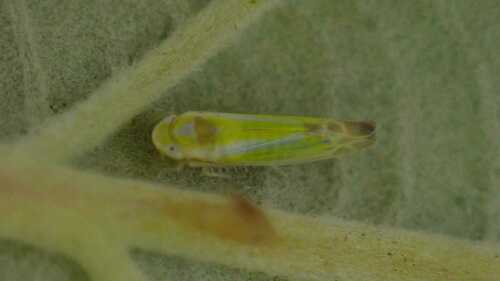
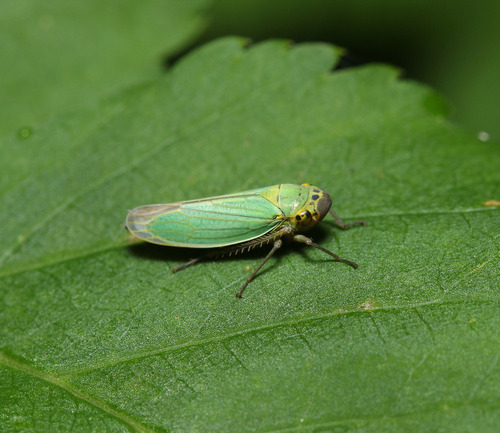
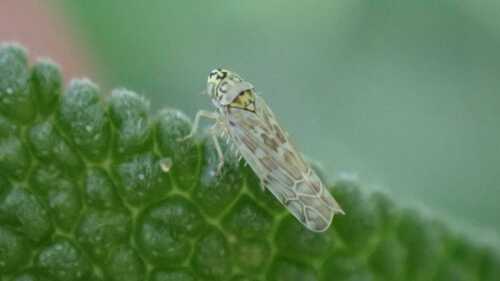
Female 5.5 mm long (even 6.5 mm), male 4.25 mm. Head comes to an acute point, head and prothorax greenish yellow. Forewings translucent with reddish veins (paler in male). In the resting position three narrow beaded bands of purplish brown run more or less straight across the wings, incorporating some portions of the veins.
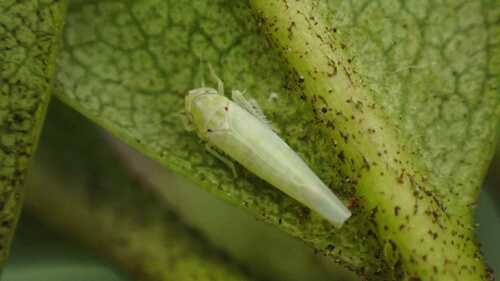
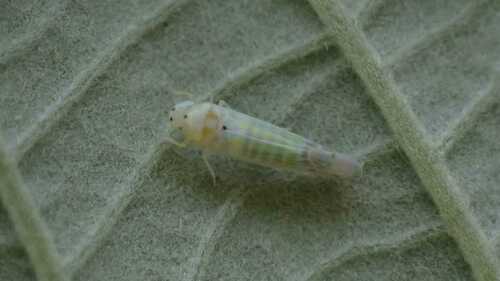
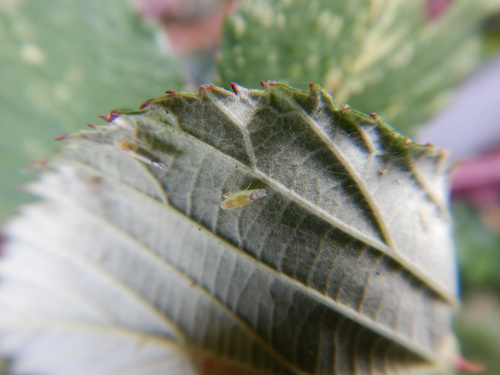
The eggs are inserted into the nodes of young branches, making them very difficult to detect in dormant planting stock. There is normally one generation per year (two in Italy), with the eggs over wintering. The nymphs are sharply pointed at both head and tail and are frequently yellowish.
The species was first described (as Platymetopius hyalinus) by Herbert Osborn in 1900, from specimens taken in Washington, D.C. Since it was unlikely that a native species would have remained undetected so long... Wikipedia →