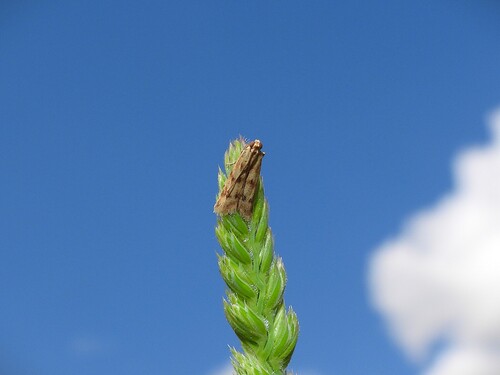
Theresian Moth

Theresian Moth

Lamoria anella

Daily sighting probability <5% · Rare
at Vienna

In 3 days ~10% in a week ~20%

22 Verified sightings at Vienna
6 In 1 park From 2019 to 2026
June Best month
☀️🌙 Day & Night When it's spotted

About the Theresian Moth

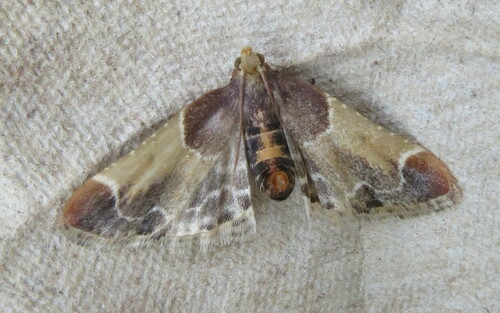
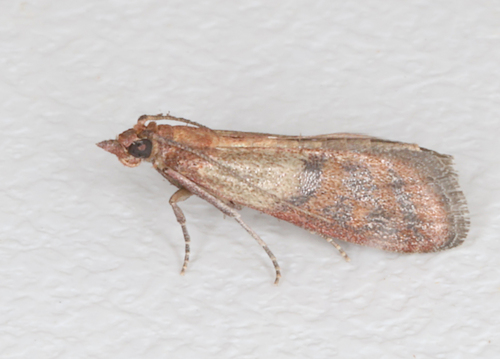
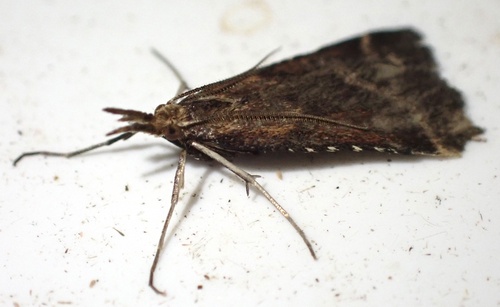
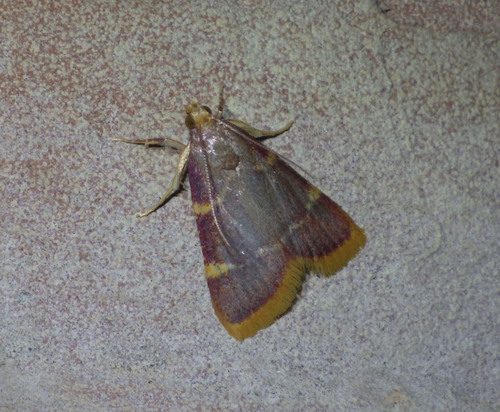
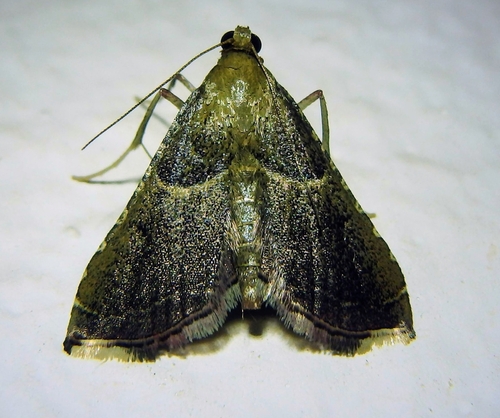
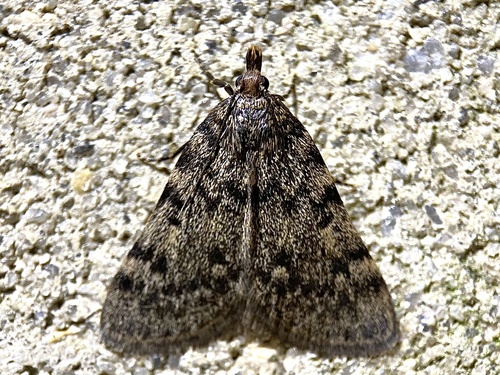
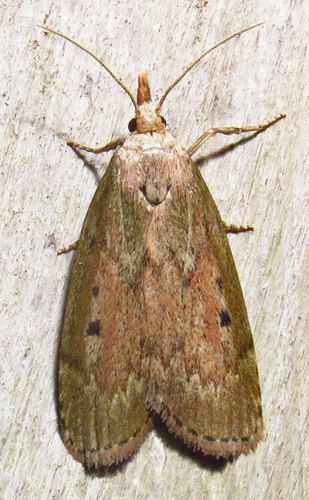
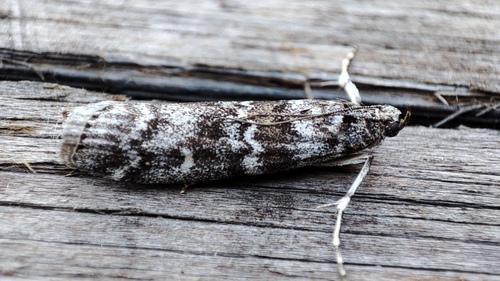
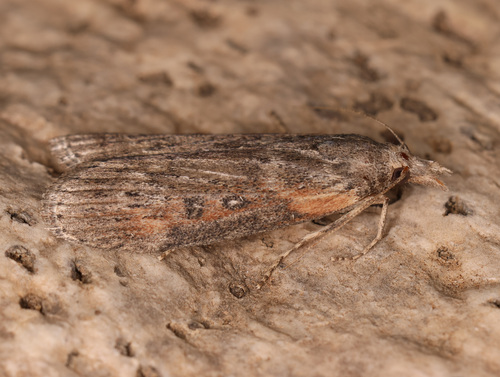
Lamoria anella is a species of snout moth described by Michael Denis and Ignaz Schiffermüller in 1775 found in Africa, Asia and Europe. The wingspan measures 18–28 mm for males and 30–40 mm for females. The head, thorax, and abdomen are greyish brown. The forewings are grey-brown, often entirely suffused with red or fuscous. There is an indistinct, highly dentate antemedial line. A more or less developed speck is present in the cell and the discocellular spot. A highly dentate postmedial line is sharply angled on vein 4 and often reduced to streaks on the veins. A marginal specks series is present. The hindwings are pale semi-hyaline, suffused with fuscous towards the margin.

It is found in most of Europe (except Ireland, Great Britain, Fennoscandia, Denmark, the Baltic region and Slovenia), the Canary Islands, as well as North Africa (including Tunisia, Morocco and Egypt), South Africa, India, Afghanistan, Sri Lanka and the United Arab Emirates.

The first confirmed British record was recorded in a garden at Hartford, Huntingdonshire on 5 October 2018, possibly as a migrant. Wikipedia →
Global Distribution

Parks Where Found

# Park Country Daily sighting probability
1 Sierra Nevada National Park 🇪🇸 Spain
~10%

More parks will be added in future updates.

Cities Where Found

# City Country Daily sighting probability
1 Jerusalem 🇮🇱 Israel
~10%
2 Rome 🇮🇹 Italy
~10%
3 Tel Aviv 🇮🇱 Israel
~10%
4 Istanbul 🇹🇷 Turkey
~10%
5 Paris 🇫🇷 France
<5%
6 Vienna 🇦🇹 Austria
<5%
7 Milan 🇮🇹 Italy
<5%
8 Madrid 🇪🇸 Spain
<5%
9 Lisbon 🇵🇹 Portugal
<5%

Before you go

What are the chances of seeing a Theresian Moth in Vienna?

Rare

Under 5% of wildlife watchers report a Theresian Moth sighting in Vienna on a given day, based on 22 verified sightings from GBIF citizen-science data. It is the 559th most-seen of the 1406 insects we can rate there. Over three days the chance rises to about 10%, and over a week to about 20%, if each day is a fresh chance.

When is the best time to see a Theresian Moth in Vienna?

June

In that month about 10% of wildlife watchers report a Theresian Moth in Vienna on a given day, against under 5% in July to May, the lowest months. That is one of Vienna's wettest months, with about 90 mm of rain against 40 mm in February.

What time of day is best to see a Theresian Moth?

Between midnight and 3 am

Across all the parks we cover, that three-hour window holds the most Theresian Moth sightings with a recorded time, and about 7 in 10 of them come between 6 pm and 6 am: it is seen both by day and at night.

Is Vienna the best place to see a Theresian Moth?

6th of 9

Of the 9 cities where we can rate Theresian Moth sightings, Vienna ranks 6th at under 5%. The best odds are in Jerusalem (Israel, about 10%), Rome (Italy, about 10%) and Tel Aviv (Israel, about 10%).

Which relatives of the Theresian Moth live in Vienna?

Same family: Pyralidae

The closest relatives of the Theresian Moth that you can see in Vienna (family Pyralidae, Pyralid Snout Moths) are Meal Moth (about 10%), Indian-Meal Moth (about 10%) and Rosy-Striped Knot-Horn (about 10%), with each one's daily chance of a sighting.

Where does the Theresian Moth sighting chance come from?

GBIF citizen-science records

It is estimated from how often the Theresian Moth is recorded against all the insects logged in Vienna (22 verified sightings), calibrated against known sighting rates. Figures are rounded to the nearest 10% because citizen-science data supports honest approximations, not decimals, and months with records from fewer than five people show "—". How it works.

← Back to Vienna