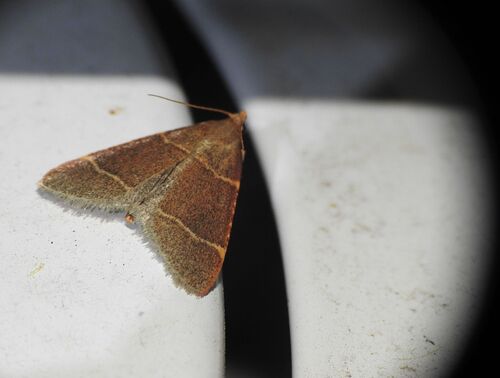
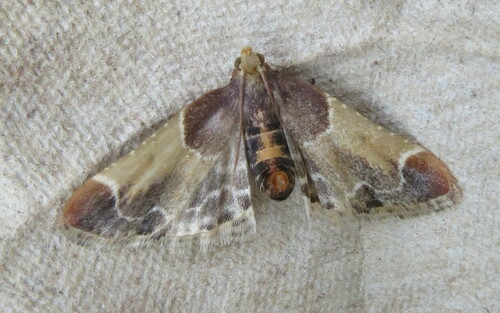
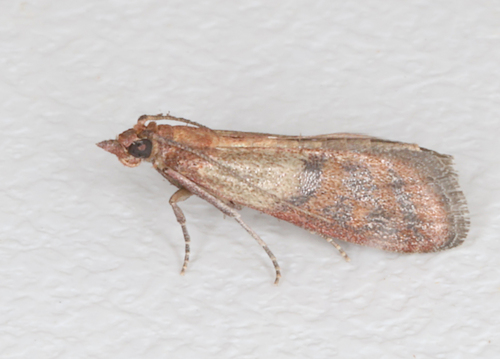
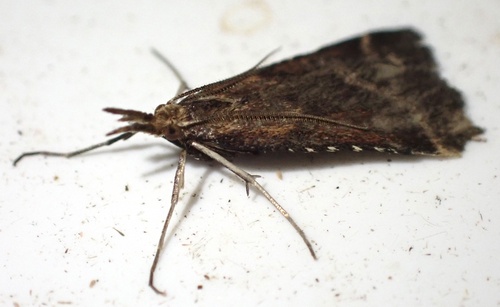
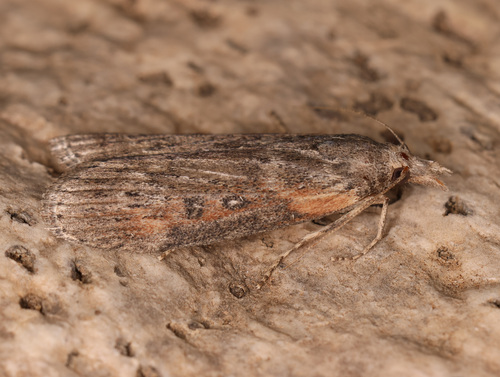
Clover Hayworm Moth

Clover Hayworm Moth

Hypsopygia costalis

Daily sighting probability ~10% · With luck
at Vienna

In 3 days ~20% in a week ~40%

73 Verified sightings at Vienna
21 In all 3 parks From 2019 to 2026
August Best month
🌙 Nocturnal When it's spotted

About the Clover Hayworm Moth

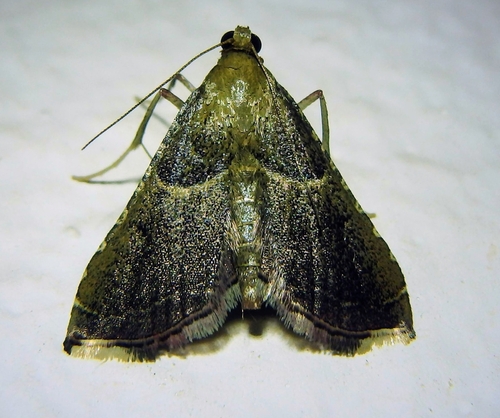
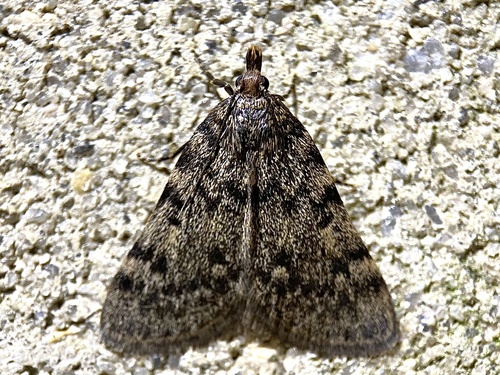
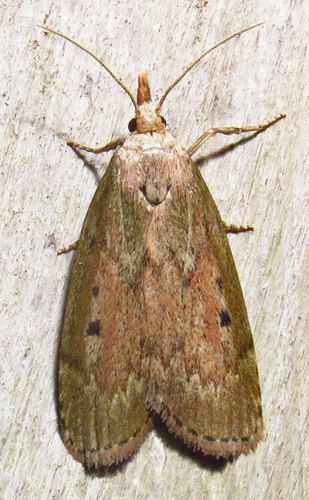
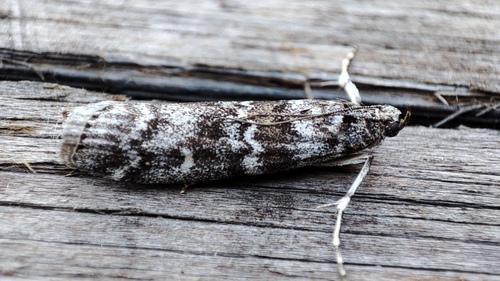
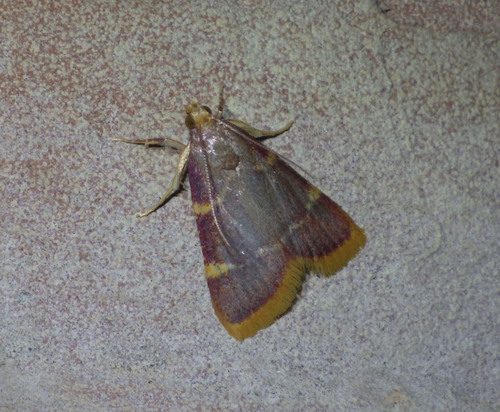
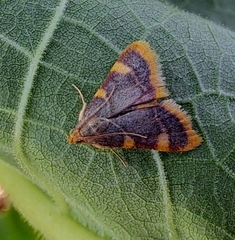
Hypsopygia costalis, the gold triangle or clover hay moth, is a species of moth of the family Pyralidae. It was described by Johan Christian Fabricius in 1775 and is found in Europe. The wingspan is 16–23 mm.The forewings are purple, sometimes blackish-sprinkled; median part of costa dotted with yellow; lines yellow, nearly straight, forming large spots on costa; a terminal line and cilia yellow. Hindwings as forewings, but lines much

nearer together, irregularly curved, not forming costal spots. The adult moths fly from May to July, depending on the location. The supposed species H. aurotaenialis is included here pending further study. The caterpillars feed on dry vegetable matter. They have been found in haystacks or thatching, as well as in chicken (Gallus) and magpie (Pica) nests. The caterpillar is injurious to clover hay, and to other hay when mixed with clover. Its depredations can be prevented by keeping the hay dry and well ventilated, as the insect preferably breeds in moist or matted material such as is to be found in the lower parts of haystacks, where affected hay becomes filled with webbings of the caterpillars and their excrement, rendering it unfit for feeding. A treatment is to burn the webbed material and to thoroughly clean the affected location. Wikipedia →
Global Distribution

Parks Where Found

# Park Country Daily sighting probability
1 Bavarian Forest National Park 🇩🇪 Germany
<5%
2 Pyrénées National Park 🇫🇷 France
<5%
3 Sierra de Guadarrama National Park 🇪🇸 Spain
<5%

Cities Where Found

# City Country Daily sighting probability
1 Budapest 🇭🇺 Hungary
~10%
2 Kyiv 🇺🇦 Ukraine
~10%
3 Essen 🇩🇪 Germany
~10%
4 Kharkiv 🇺🇦 Ukraine
~10%
5 Valencia 🇪🇸 Spain
~10%
6 London 🇬🇧 United Kingdom
~10%
7 Helsinki 🇫🇮 Finland
~10%
8 Vienna 🇦🇹 Austria
~10%
9 Prague 🇨🇿 Czechia
~10%
10 Berlin 🇩🇪 Germany
~10%

Before you go

What are the chances of seeing a Clover Hayworm Moth in Vienna?

With luck

About 10% of wildlife watchers report a Clover Hayworm Moth sighting in Vienna on a given day, based on 73 verified sightings from GBIF citizen-science data. It is the 219th most-seen of the 1406 insects we can rate there. Over three days the chance rises to about 20%, and over a week to about 40%, if each day is a fresh chance.

When is the best time to see a Clover Hayworm Moth in Vienna?

June to September

In those months about 10% of wildlife watchers report a Clover Hayworm Moth in Vienna on a given day, against under 5% in October to May, the lowest months. Those are among Vienna's wettest months, with about 85 mm of rain a month against 40 mm in February.

What time of day is best to see a Clover Hayworm Moth?

Between 9 pm and midnight

Across all the parks we cover, that three-hour window holds the most Clover Hayworm Moth sightings with a recorded time, and about 8 in 10 of them come between 6 pm and 6 am: it is mostly seen at night.

Is Vienna the best place to see a Clover Hayworm Moth?

Among the best

Of the 15 cities where we can rate Clover Hayworm Moth sightings, Vienna ranks 8th at about 10%, level with the leaders once rounded. The best odds are in Budapest (Hungary, about 10%), Kyiv (Ukraine, about 10%) and Essen (Germany, about 10%).

Where does the Clover Hayworm Moth sighting chance come from?

GBIF citizen-science records

It is estimated from how often the Clover Hayworm Moth is recorded against all the insects logged in Vienna (73 verified sightings), calibrated against known sighting rates. Figures are rounded to the nearest 10% because citizen-science data supports honest approximations, not decimals, and months with records from fewer than five people show "—". How it works.

← Back to Vienna