About the Webbing Clothes Moth
Tineola bisselliella, known as the common clothes moth, webbing clothes moth, or simply clothing moth, is a species of fungus moth (family Tineidae, subfamily Tineinae). It is the type species of its genus Tineola and was first described by the Swedish entomologist Arvid David Hummel in 1823. It and several closely related species are together known as the clothes moths due to their role as pests in human households. The specific name is commonly misspelled biselliella – for example, by G. A. W. Herrich-Schäffer, when he established Tineola in 1853.
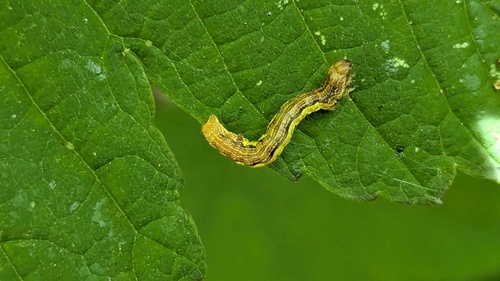
The larvae (caterpillars) of this moth are considered a serious pest, as they can derive nourishment from clothing – in particular wool, but many other natural fibres – and also, like most related species, from stored foods, such as grains.
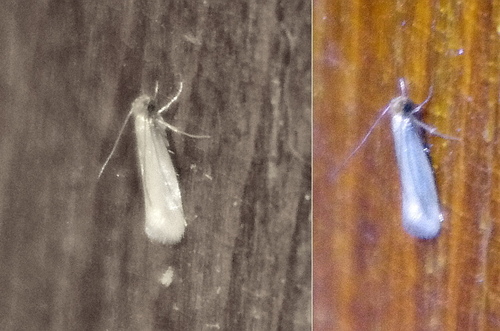
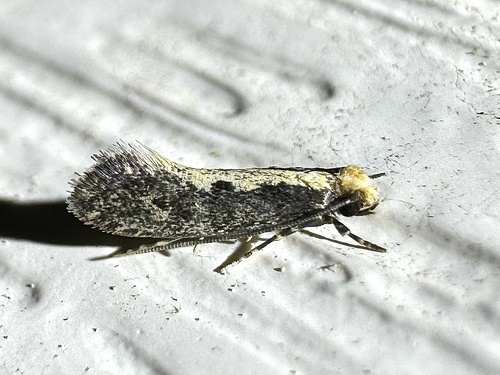
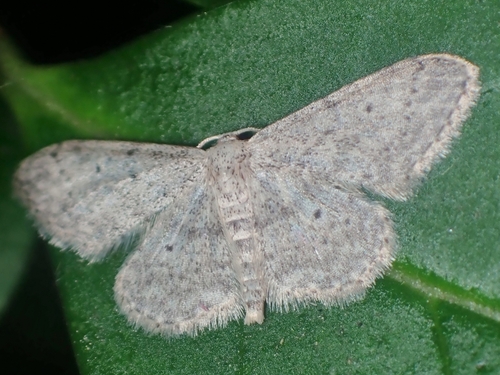
Tineola bisselliella is a small moth of 6–7 mm (0.24–0.28 in) body length and 9–16 mm (0.35–0.63 in) wingspan (most commonly 12–14 mm or 0.47–0.55 in). The head is light ferruginous ochreous, sometimes brownish-tinged.The antennae are thread-like and about four-fifths the length of the forewings. Forewings pale yellowish-ochreous; base of costa fuscous. Hindwings ochreous grey-whitish... Wikipedia →