Sun Fly

Sun Fly

Helophilus pendulus

Daily sighting probability ~10% · With luck
at Warsaw

In 3 days ~30% in a week ~60%

67 Verified sightings at Warsaw
160 In all 5 parks From 2019 to 2026
June Best month
☀️ Diurnal When it's spotted

About the Sun Fly

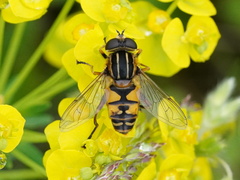
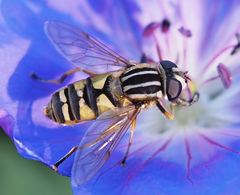
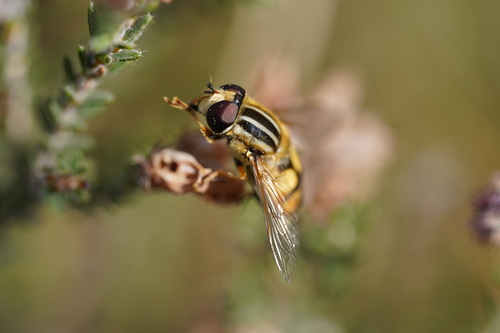
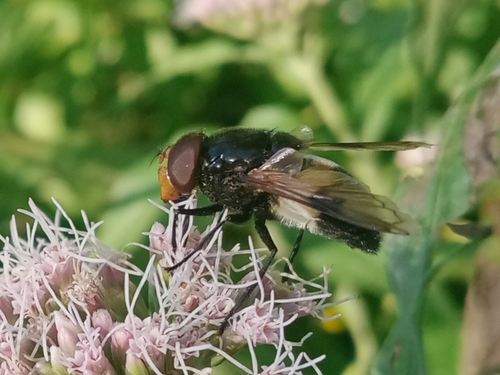
Helophilus pendulus is a European hoverfly. Its scientific name means "Dangling marsh-lover" (from Greek helo-, "marsh", -phil, "love", Latin pend-, "hang"). It is a very common species in Britain, where it is the commonest Helophilus species. It is found throughout Europe from the Mediterranean to Scandinavia, westward to the Faroe Islands and Iceland, and through eastward through Russia from the Kola Peninsula south to Crimea and across Siberia to the Pacific Ocean.

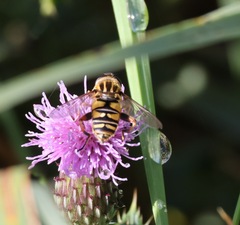
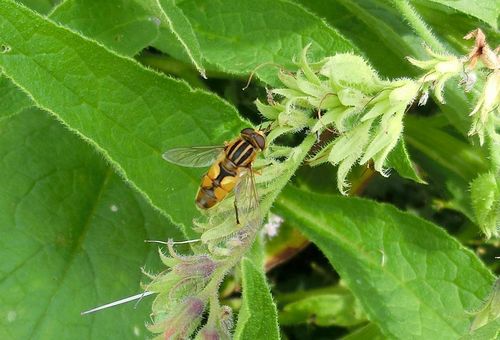
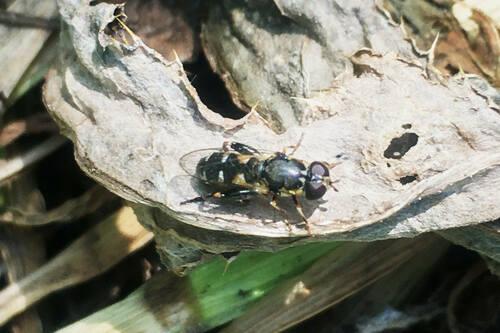
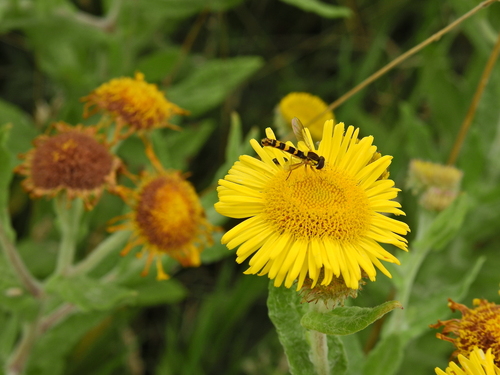
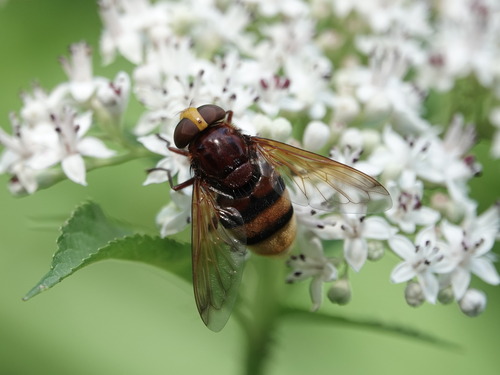
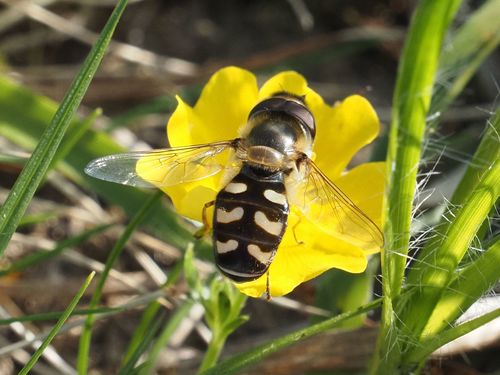
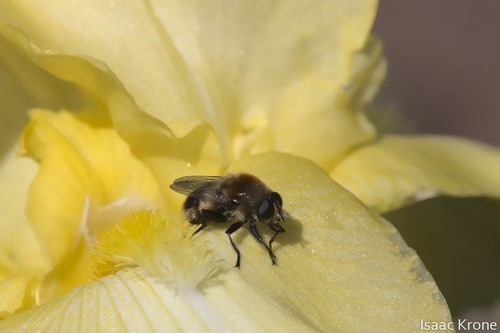
It also has the common name sun fly, although this is probably based on a mis-reading of helo- as helio-. Like other members of the genus Helophilus it has black and yellow longitudinal stripes on the upper surface of its thorax. The abdomen is patterned with yellow, black and grey, and for this reason it is sometimes called the footballer. It has a black central face-stripe. It has a wing-length of 8.5–11.25 mm (0.33–0.44 in).

The tergites two and three are yellow patterned with black. The black pattern consists of a band across the apex of the tergite (on its discal part only, not extending to the sides), and stripe down the centre of the tergite, and a black band across the full width... Wikipedia →

Global Distribution

Parks Where Found

# Park Country Daily sighting probability
1 Wadden Sea National Park 🇩🇪 Germany
~10%
2 Snowdonia National Park 🇬🇧 United Kingdom
~10%
3 Cairngorms National Park 🇬🇧 United Kingdom
~10%
4 Bavarian Forest National Park 🇩🇪 Germany
~10%
5 Cévennes National Park 🇫🇷 France
<5%

Cities Where Found

# City Country Daily sighting probability
1 Birmingham 🇬🇧 United Kingdom
~30%
2 Liverpool 🇬🇧 United Kingdom
~30%
3 Manchester 🇬🇧 United Kingdom
~20%
4 London 🇬🇧 United Kingdom
~20%
5 Helsinki 🇫🇮 Finland
~20%
6 Amsterdam 🇳🇱 Netherlands
~20%
7 Copenhagen 🇩🇰 Denmark
~20%
8 Leeds 🇬🇧 United Kingdom
~20%
9 Hamburg 🇩🇪 Germany
~10%
10 Warsaw 🇵🇱 Poland
~10%

Before you go

What are the chances of seeing a Sun Fly in Warsaw?

With luck

About 10% of wildlife watchers report a Sun Fly sighting in Warsaw on a given day, based on 67 verified sightings from GBIF citizen-science data. It is the 67th most-seen of the 580 insects we can rate there. Over three days the chance rises to about 30%, and over a week to about 60%, if each day is a fresh chance.

When is the best time to see a Sun Fly in Warsaw?

May–June and September

In those months about 20% of wildlife watchers report a Sun Fly in Warsaw on a given day, against under 5% in November to April, the lowest months.

What time of day is best to see a Sun Fly?

Between 11 am and 2 pm

Across all the parks we cover, that three-hour window holds the most Sun Fly sightings with a recorded time, and about 9 in 10 of them come between 6 am and 6 pm: it is a daytime animal.

Is Warsaw the best place to see a Sun Fly?

10th of 30

Of the 30 cities where we can rate Sun Fly sightings, Warsaw ranks 10th at about 10%. The best odds are in Birmingham (United Kingdom, about 30%), Liverpool (United Kingdom, about 30%) and Manchester (United Kingdom, about 20%).

Which relatives of the Sun Fly live in Warsaw?

Same genus: Helophilus

The closest relatives of the Sun Fly that you can see in Warsaw (genus Helophilus, Marsh Flies) are Trivittate Marsh Fly (about 10%) and Woolly-Tailed Marsh Fly (about 10%), with each one's daily chance of a sighting.

Where does the Sun Fly sighting chance come from?

GBIF citizen-science records

It is estimated from how often the Sun Fly is recorded against all the insects logged in Warsaw (67 verified sightings), calibrated against known sighting rates. Figures are rounded to the nearest 10% because citizen-science data supports honest approximations, not decimals, and months with records from fewer than five people show "—". How it works.

← Back to Warsaw