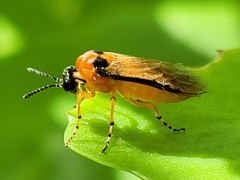
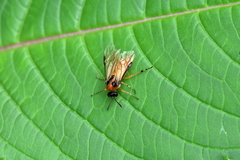
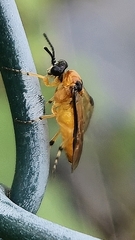
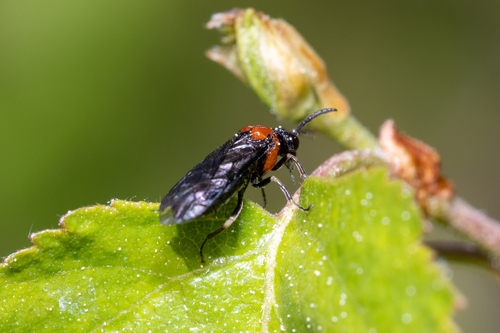
Turnip Sawfly
Daily sighting probability ~10% · With luck
at Warsaw

In 3 days ~20% in a week ~40%

22 Verified sightings at Warsaw
61 In all 2 parks From 2019 to 2026
September Best month
☀️ Diurnal When it's spotted

About the Turnip Sawfly

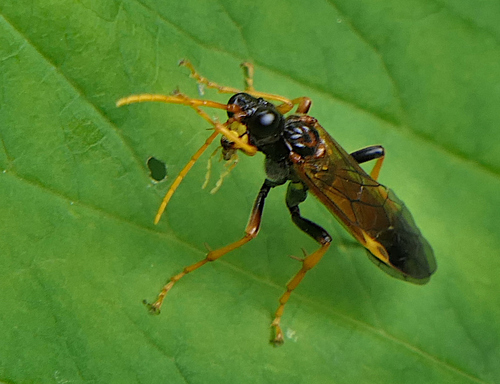
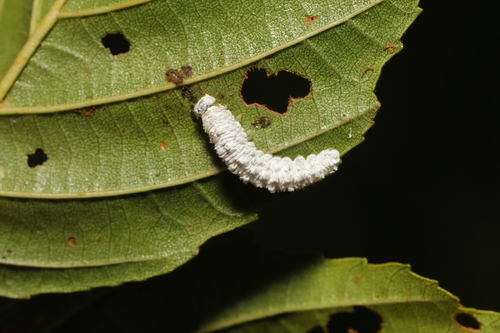
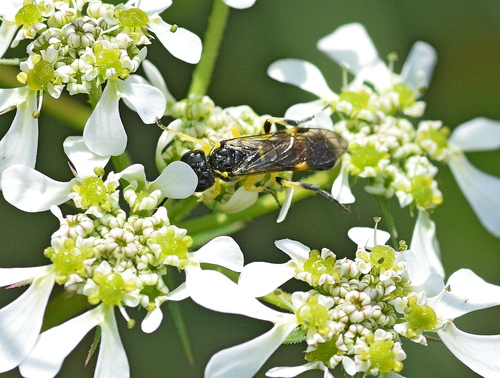
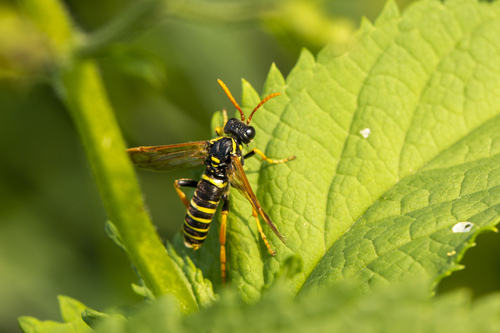
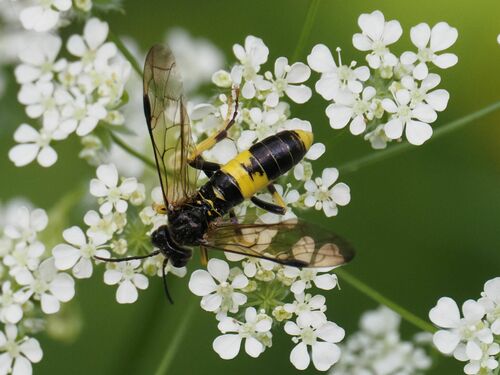
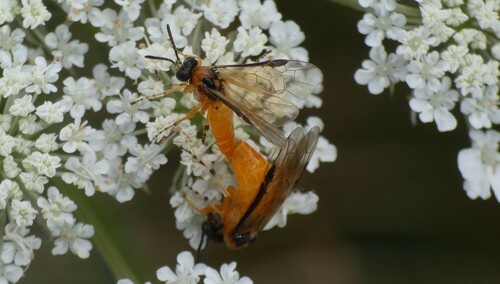
Athalia rosae, the turnip sawfly, cabbage leaf sawfly or beet sawfly, is a typical sawfly with dark green or blackish 18–25 mm long larvae that feed on plants of the brassica family, and can sometimes be a pest. It winters below the ground, emerging in early summer as a 7–8 mm adult with a mainly orange body and a black head. The adult feeds on nectar.

The turnip sawfly was found to result in diploid males and females after sister-brother matings. This differs from normal haplodiploid hymenoptera and after a further cross causing triploid males, resulted in evidence that sex determination is controlled by a single locus. The sawflies have been found to sequester glucosinolates like many insects in larval stages. Removal of various glucosinolates has been shown to reduce sensitivity to host plants in later adult stages. The fact that glucosinolates being removed causes reduced sensitivity to future possible host plants has been used to argue that these chemicals are important in specific larval patterning to future host plant options. Due to no current primitive Hymenoptera, the turnip sawfly is being worked on for genome sequencing. This effort will add to the planned i5K, the effort to sequence 5,000 insect genomes in 5 years. Wikipedia →

Global Distribution

Parks Where Found

# Park Country Daily sighting probability
1 Wadden Sea National Park 🇩🇪 Germany
~10%
2 Bavarian Forest National Park 🇩🇪 Germany
~10%

Cities Where Found

# City Country Daily sighting probability
1 Helsinki 🇫🇮 Finland
~10%
2 Birmingham 🇬🇧 United Kingdom
~10%
3 Kyiv 🇺🇦 Ukraine
~10%
4 Brussels 🇧🇪 Belgium
~10%
5 Warsaw 🇵🇱 Poland
~10%
6 Copenhagen 🇩🇰 Denmark
~10%
7 Berlin 🇩🇪 Germany
~10%
8 Cologne 🇩🇪 Germany
~10%
9 Rotterdam [The Hague] 🇳🇱 Netherlands
~10%
10 London 🇬🇧 United Kingdom
~10%

Before you go

What are the chances of seeing a Turnip Sawfly in Warsaw?

With luck

About 10% of wildlife watchers report a Turnip Sawfly sighting in Warsaw on a given day, based on 22 verified sightings from GBIF citizen-science data. It is the 200th most-seen of the 580 insects we can rate there. Over three days the chance rises to about 20%, and over a week to about 40%, if each day is a fresh chance.

When is the best time to see a Turnip Sawfly in Warsaw?

May and July–October

In those months about 10% of wildlife watchers report a Turnip Sawfly in Warsaw on a given day, against under 5% in June and November–April, the lowest months.

What time of day is best to see a Turnip Sawfly?

Between 11 am and 2 pm

Across all the parks we cover, that three-hour window holds the most Turnip Sawfly sightings with a recorded time, and about 8 in 10 of them come between 6 am and 6 pm: it is a daytime animal.

Is Warsaw the best place to see a Turnip Sawfly?

Among the best

Of the 25 cities where we can rate Turnip Sawfly sightings, Warsaw ranks 5th at about 10%, level with the leaders once rounded. The best odds are in Helsinki (Finland, about 10%), Birmingham (United Kingdom, about 10%) and Kyiv (Ukraine, about 10%).

Which relatives of the Turnip Sawfly live in Warsaw?

Same family: Tenthredinidae

The closest relatives of the Turnip Sawfly that you can see in Warsaw (family Tenthredinidae, Common Sawflies) are Saddleback Grass-Cutter (about 10%) and Tenthredo campestris (about 10%), with each one's daily chance of a sighting.

Where does the Turnip Sawfly sighting chance come from?

GBIF citizen-science records

It is estimated from how often the Turnip Sawfly is recorded against all the insects logged in Warsaw (22 verified sightings), calibrated against known sighting rates. Figures are rounded to the nearest 10% because citizen-science data supports honest approximations, not decimals, and months with records from fewer than five people show "—". How it works.
← Back to Warsaw