Dragonhunter

Dragonhunter

Hagenius brevistylus

Daily sighting probability ~10% · With luck
at Congaree National Park

In 3 days ~30% in a week ~50%

7 Verified sightings at Congaree National Park From 2019 to 2026
55 In all 5 parks
June Best month
☀️ Diurnal When it's spotted

About the Dragonhunter

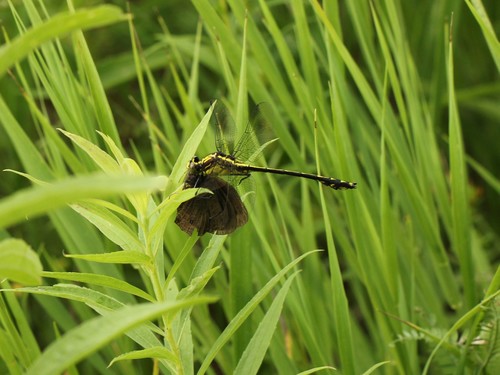
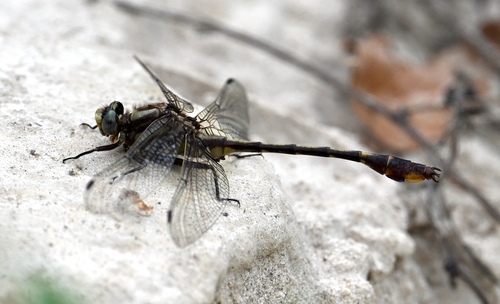
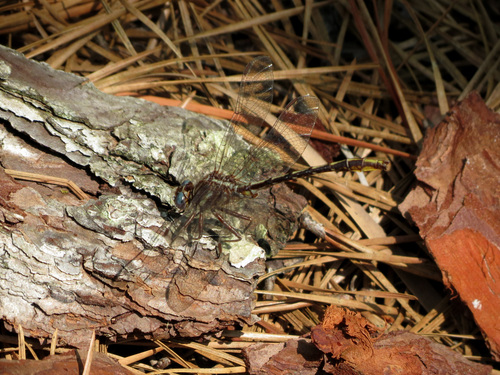
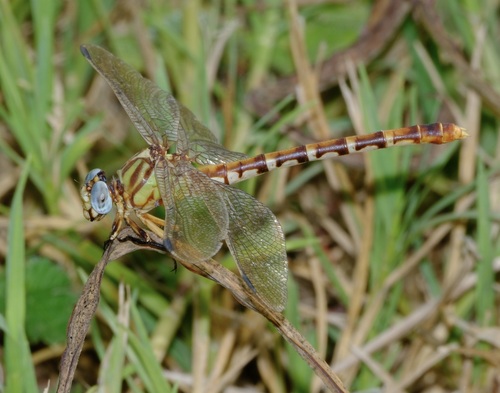
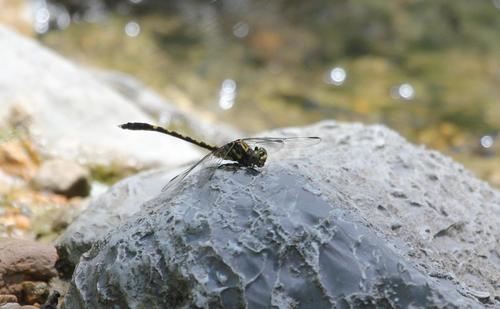
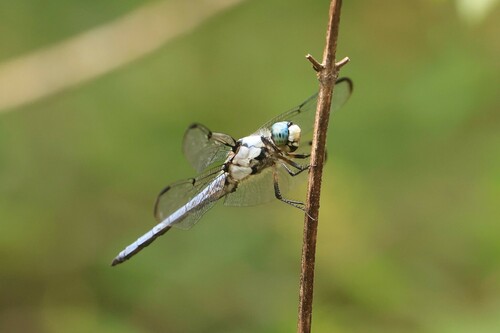
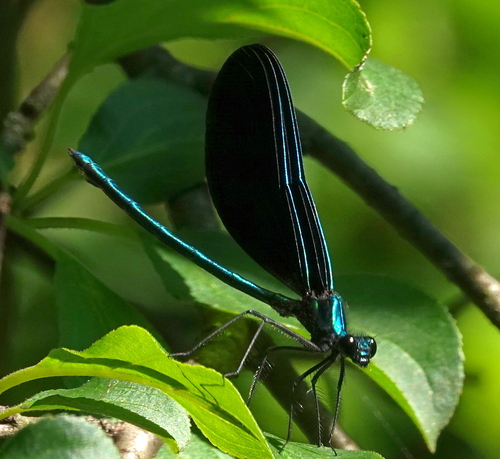
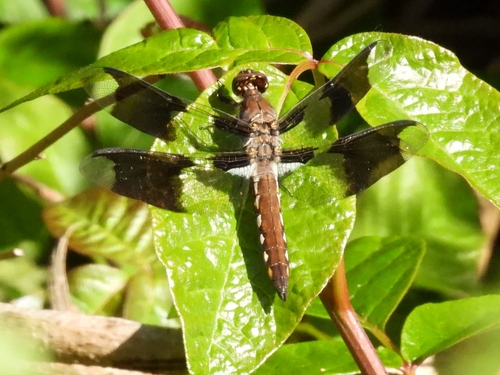
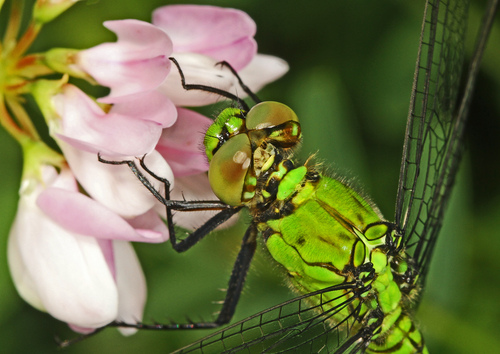
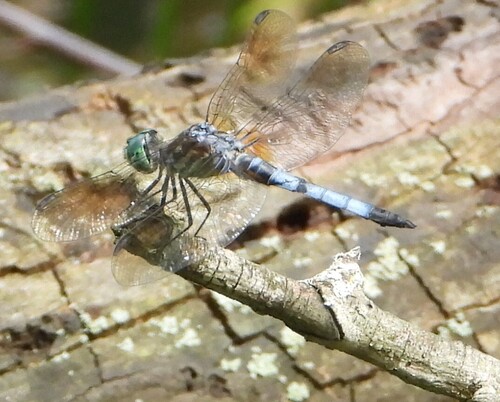
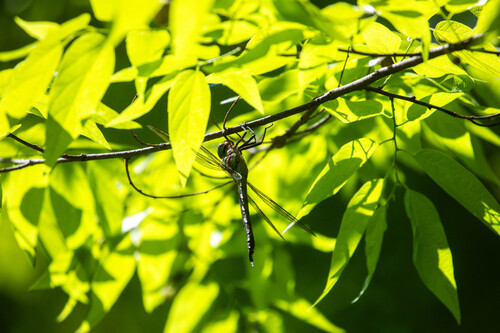
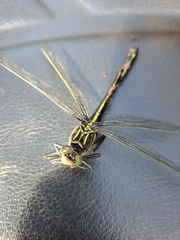
The dragonhunter (Hagenius brevistylus) is a clubtail dragonfly of the eastern United States and southeastern Canada. The dragonfly is much larger than any other North American clubtail, at 3.3 inches (84 mm), with black and yellow markings and green eyes. Males can be distinguished at a distance by their habit of curling their abdomens under while flying, forming a sideways J shape.

The dragonhunter is the only member of genus Hagenius. Its closest relatives are Asian dragonflies of genus Sieboldius, which are also sometimes called "dragonhunters". Together, the two genera form the subfamily Hageniinae.

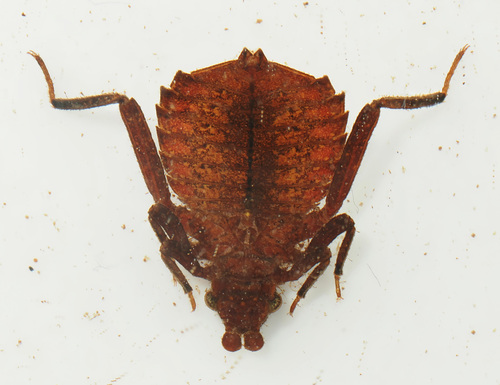
The nymph is unusual, with a very flat, wide body. It is slow-moving and lives among bark and leaf litter at the edges of streams, where its dark color provides camouflage. The adult feeds on large insects, including darner and clubtail dragonflies, sometimes ambushing them from above. It also takes monarch butterflies, eating the thorax and abdomen first to avoid the greatest concentration of cardenolide toxins.

The genus name Hagenius was coined by Edmond de Sélys Longchamps in 1854 in honor of his collaborator and fellow entomologist Hermann August Hagen. The... Wikipedia →
Global Distribution

Parks Where Found

# Park Country Daily sighting probability
1 Voyageurs National Park 🇺🇸 United States
~30%
2 Congaree National Park 🇺🇸 United States
~10%
3 Great Smoky Mountains National Park 🇺🇸 United States
~10%
4 Shenandoah National Park 🇺🇸 United States
~10%
5 Acadia National Park 🇺🇸 United States
<5%

Cities Where Found

# City Country Daily sighting probability
1 Baltimore 🇺🇸 United States
<5%
2 Austin 🇺🇸 United States
<5%
3 Washington 🇺🇸 United States
<5%

Before you go

What are the chances of seeing a Dragonhunter in Congaree National Park?

With luck

About 10% of wildlife watchers report a Dragonhunter sighting in Congaree National Park on a given day, based on 7 verified sightings from GBIF citizen-science data from 2019 to 2026. It is the 99th most-seen of the 145 insects we can rate there. Over three days the chance rises to about 30%, and over a week to about 50%, if each day is a fresh chance.

When is the best time to see a Dragonhunter in Congaree National Park?

June

In that month about 30% of wildlife watchers report a Dragonhunter in Congaree National Park on a given day, against under 5% in August to April, the lowest months.

What time of day is best to see a Dragonhunter?

Between 11 am and 2 pm

Across all the parks we cover, that three-hour window holds the most Dragonhunter sightings with a recorded time, and nearly all of them come between 6 am and 6 pm: it is a daytime animal.

Is Congaree National Park the best place to see a Dragonhunter?

2nd of 5

Of the 5 parks where we can rate Dragonhunter sightings, Congaree National Park ranks 2nd at about 10%. The best odds are in Voyageurs National Park (United States, about 30%).

Which relatives of the Dragonhunter live in Congaree National Park?

Same family: Gomphidae

The closest relatives of the Dragonhunter that you can see in Congaree National Park (family Gomphidae, Clubtails) are Black-Shouldered Spinyleg (about 20%), Cocoa Clubtail (about 10%) and Lancet Clubtail (about 10%), with each one's daily chance of a sighting.

Where does the Dragonhunter sighting chance come from?

GBIF citizen-science records

It is estimated from how often the Dragonhunter is recorded against all the insects logged in Congaree National Park (7 verified sightings from 2019 to 2026), calibrated against known sighting rates. Figures are rounded to the nearest 10% because citizen-science data supports honest approximations, not decimals, and months with records from fewer than five people show "—". How it works.

← Back to Congaree National Park