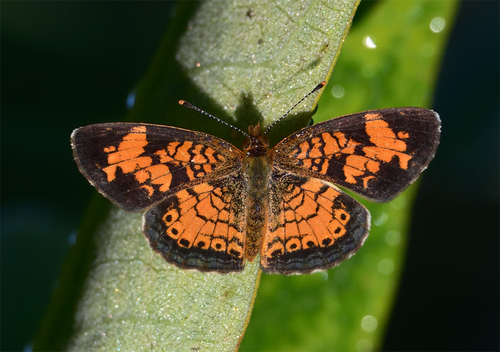
Florida Predatory Stink Bug

Florida Predatory Stink Bug

Euthyrhynchus floridanus

Daily sighting probability ~10% · With luck
at Congaree National Park

In 3 days ~20% in a week ~50%

5 Verified sightings at Congaree National Park From 2019 to 2026
44 In all 5 parks
September Best month
☀️ Diurnal When it's spotted

About the Florida Predatory Stink Bug

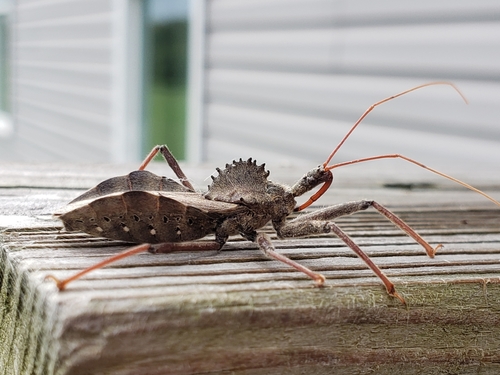
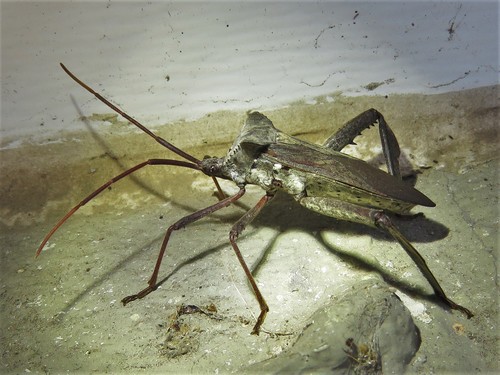
Euthyrhynchus floridanus, the Florida predatory stink bug, is a species of carnivorous shield bug in the family Pentatomidae, the only species in the genus Euthyrhynchus. It is native to the hottest parts of the southeastern United States and is considered beneficial because its diet includes many species of pest insects.

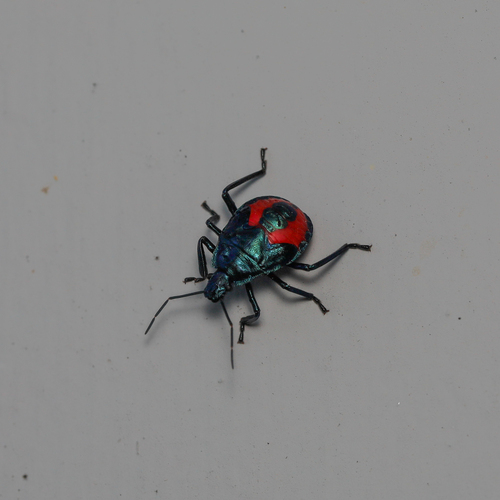
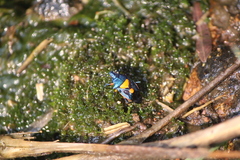
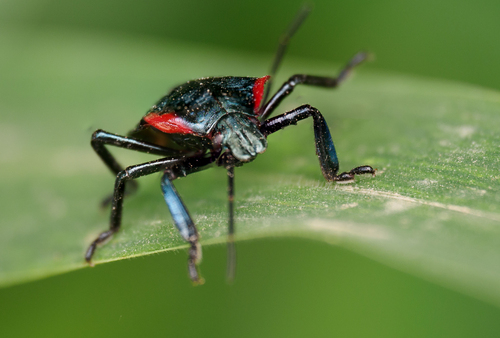
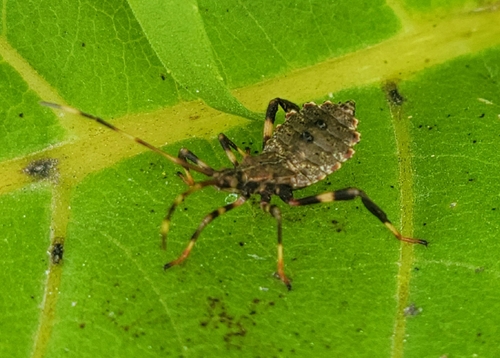
The adult male Florida predatory stink bug is approximately 12 mm (0.5 in) long while the female can reach 17 mm (0.7 in) in length. The appearance is somewhat variable, but the ground colour is usually bluish-black or purplish-brown, and there are characteristic red spots at the sides and rear of the scutellum. There is also a distinctive spine on the humerus, but this species lacks the spine on the underside of the femur on the front leg that exists in other similar species found in Florida. The first segment of the beak-like mouthparts is short and thick which is in contrast to the slender mouthparts of its herbivorous, sap-sucking relatives.

The female lays batches of between twenty and ninety eggs. These are barrel-shaped and have a number of small projections at the edge of the operculum. The nymphs go through five instars in... Wikipedia →

Global Distribution

Parks Where Found

# Park Country Daily sighting probability
1 Lago de Yojoa 🇭🇳 Honduras
~10%
2 Congaree National Park 🇺🇸 United States
~10%
3 Great Smoky Mountains National Park 🇺🇸 United States
~10%
4 Monteverde Cloud Forest Reserve 🇨🇷 Costa Rica
~10%
5 Cumbres de Monterrey National Park 🇲🇽 Mexico
<5%

Cities Where Found

# City Country Daily sighting probability
1 Washington 🇺🇸 United States
~10%
2 Baltimore 🇺🇸 United States
~10%
3 San José 🇨🇷 Costa Rica
~10%
4 Guadalajara 🇲🇽 México
<5%
5 Miami 🇺🇸 United States
<5%

Before you go

What are the chances of seeing a Florida Predatory Stink Bug in Congaree National Park?

With luck

About 10% of wildlife watchers report a Florida Predatory Stink Bug sighting in Congaree National Park on a given day, based on 5 verified sightings from GBIF citizen-science data from 2019 to 2026. It is the 131st most-seen of the 145 insects we can rate there. Over three days the chance rises to about 20%, and over a week to about 50%, if each day is a fresh chance.

When is the best time to see a Florida Predatory Stink Bug in Congaree National Park?

May and September

In those months about 20% of wildlife watchers report a Florida Predatory Stink Bug in Congaree National Park on a given day, against under 5% in June–August and October–March, the lowest months.

What time of day is best to see a Florida Predatory Stink Bug?

Between 9 am and noon

Across all the parks we cover, that three-hour window holds the most Florida Predatory Stink Bug sightings with a recorded time, and about 9 in 10 of them come between 6 am and 6 pm: it is a daytime animal.

Is Congaree National Park the best place to see a Florida Predatory Stink Bug?

Among the best

Of the 5 parks where we can rate Florida Predatory Stink Bug sightings, Congaree National Park ranks 2nd at about 10%, level with the leaders once rounded. The best odds are in Lago de Yojoa (Honduras, about 10%).

Which relatives of the Florida Predatory Stink Bug live in Congaree National Park?

Same family: Pentatomidae

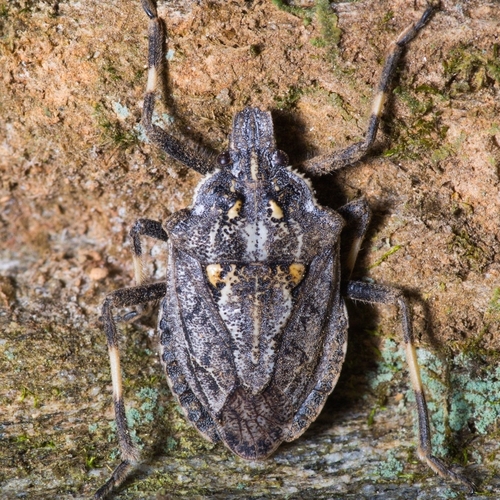
The closest relatives of the Florida Predatory Stink Bug that you can see in Congaree National Park (family Pentatomidae, Stink Bugs) are Giant Strong-Nosed Stink Bug (about 10%) and Brochymena myops (about 10%), with each one's daily chance of a sighting.

Where does the Florida Predatory Stink Bug sighting chance come from?

GBIF citizen-science records

It is estimated from how often the Florida Predatory Stink Bug is recorded against all the insects logged in Congaree National Park (5 verified sightings from 2019 to 2026), calibrated against known sighting rates. Figures are rounded to the nearest 10% because citizen-science data supports honest approximations, not decimals, and months with records from fewer than five people show "—". How it works.

← Back to Congaree National Park