


Completed


Reticulated Glass Frog
Hyalinobatrachium valerioi
Silhouette: Jose Carlos Arenas-Monroy · PhyloPic
- KingdomAnimalia (Animals)
- PhylumChordata (Chordates)
- ClassAmphibia (Amphibians)
- OrderAnura (Frogs and Toads)
- FamilyCentrolenidae (Glass Frogs)
- GenusHyalinobatrachium
- SpeciesHyalinobatrachium valerioi (Reticulated Glass Frog)
In 3 days ~30% in a week ~60%
18 Verified sightings at Corcovado National Park From 2019 to 2026
96 In all 4 parks
September Best month
☀️🌙 Day & Night When it's spotted
About the Reticulated Glass Frog
Hyalinobatrachium valerioi, sometimes known as the La Palma glass frog, is a species of frog in the family Centrolenidae. It is found in central Costa Rica and south to Panama and the Pacific lowlands and slopes of western Colombia and Ecuador; also in the Magdalena River Valley of Colombia (Colombian distribution is poorly resolved).
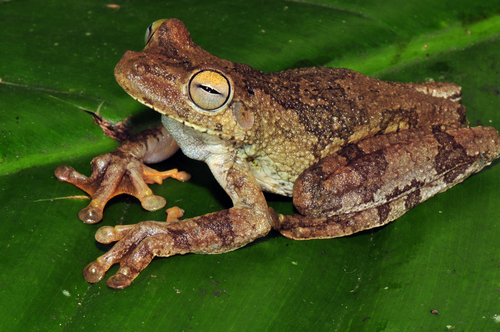
Males grow to 24 mm (0.94 in) and females to 26 mm (1.0 in) in snout–vent length. The dorsum is spotted yellow, with green reticulations between the spots. There might be some small dark spots in the green areas. The ventral surface is transparent, however the heart is covered by white tissue and is not visible. Also the liver and digestive tract are white. Their eye color is gold.
Hyalinobatrachium valerioi glass frogs are carnivores, their diet mainly including small insects like crickets, moths, flies, spiders, and other smaller frogs. The egg clutches, containing no more than 40 eggs, are laid on the underside of leaves over streams. Contrary to most other glass frogs, the male remains with its egg clutches also during daylight hours, performing 24-hour egg attendance.
Its natural habitats are moist... Wikipedia →
Recent sightings of Reticulated Glass Frog in Corcovado National Park
LIVEiNaturalistGlobal Distribution
Parks Where Found
| # | Park | Country | Daily sighting probability |
|---|---|---|---|
| 1 | Piedras Blancas National Park | 🇨🇷 Costa Rica | |
| 2 | Arenal Volcano National Park | 🇨🇷 Costa Rica | |
| 3 | Corcovado National Park | 🇨🇷 Costa Rica | |
| 4 | Braulio Carrillo National Park | 🇨🇷 Costa Rica |
Zoos & Centres Where Found
| # | Zoo / Centre | Country | |
|---|---|---|---|
| 1 | Vancouver Aquarium | 🇨🇦 Canada |
Closest Relatives at Corcovado National Park




Before you go
What are the chances of seeing a Reticulated Glass Frog in Corcovado National Park?
With luck
About 10% of wildlife watchers report a Reticulated Glass Frog sighting in Corcovado National Park on a given day, based on 18 verified sightings from GBIF citizen-science data from 2019 to 2026. It is the 17th most-seen of the 27 amphibians we can rate there. Over three days the chance rises to about 30%, and over a week to about 60%, if each day is a fresh chance.
When is the best time to see a Reticulated Glass Frog in Corcovado National Park?
September
In that month about 40% of wildlife watchers report a Reticulated Glass Frog in Corcovado National Park on a given day, against under 5% in February, April, June, August and November, the lowest months.
What time of day is best to see a Reticulated Glass Frog?
Between 7 and 10 pm
Across all the parks we cover, that three-hour window holds the most Reticulated Glass Frog sightings with a recorded time, and about 7 in 10 of them come between 6 pm and 6 am: it is seen both by day and at night.
Is Corcovado National Park the best place to see a Reticulated Glass Frog?
3rd of 4
Of the 4 parks where we can rate Reticulated Glass Frog sightings, Corcovado National Park ranks 3rd at about 10%. The best odds are in Piedras Blancas National Park (Costa Rica, about 30%) and Arenal Volcano National Park (Costa Rica, about 20%).
Which relatives of the Reticulated Glass Frog live in Corcovado National Park?
Same family: Centrolenidae
The closest relatives of the Reticulated Glass Frog that you can see in Corcovado National Park (family Centrolenidae, Glass Frogs) are Yellow-flecked Glassfrog (about 10%), Chiriqui Glass Frog (about 10%) and Grainy Cochran Frog (about 10%), with each one's daily chance of a sighting.
Where does the Reticulated Glass Frog sighting chance come from?
GBIF citizen-science records
It is estimated from how often the Reticulated Glass Frog is recorded against all the amphibians logged in Corcovado National Park (18 verified sightings from 2019 to 2026), calibrated against known sighting rates. Figures are rounded to the nearest 10% because citizen-science data supports honest approximations, not decimals, and months with records from fewer than five people show "—". How it works.
