Yellow stingray

Yellow stingray

Urobatis jamaicensis

Silhouette: M Kolmann · PhyloPic

Daily sighting probability ~70% · Very likely
at Arrecifes de Cozumel National Park

In 3 days >90%

124 Verified sightings at Arrecifes de Cozumel National Park From 2019 to 2026
124 In 1 park
October Best month
☀️ Diurnal When it's spotted

About the Yellow stingray

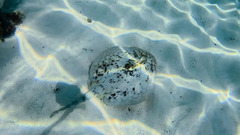
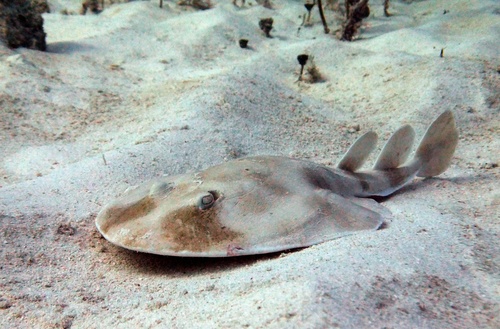
The yellow stingray (Urobatis jamaicensis) is a species of stingray in the family Urotrygonidae, found in the tropical western Atlantic Ocean from North Carolina to Trinidad. This bottom-dwelling species inhabits sandy, muddy, or seagrass bottoms in shallow inshore waters, commonly near coral reefs.

Female yellow stingrays are larger than males. Females reach about a maximum length of about 26 inches whereas the male will reach a maximum length of about 15 inches across. The yellow stingray has a round pectoral fin disc and a short tail with a well-developed caudal fin. It has a highly variable but distinctive dorsal color pattern consisting of either light-on-dark or dark-on-light reticulations forming spots and blotches, and can rapidly change the tonality of this coloration to improve its camouflage.

Relatively sedentary during the day, the yellow stingray feeds on small invertebrates and bony fishes. When hunting it may undulate its disc to uncover buried prey, or lift the front of its disc to form a "cave" attractive to shelter-seeking organisms. This species is aplacental viviparous, meaning that the developing embryos are sustained initially by yolk and later by histotroph ("uterine milk"). Females bear two litters of up to seven young per year in seagrass, following a gestation period of 5–6 months. Though innocuous towards humans, the yellow stingray can inflict a painful injury with its venomous tail spine. This species is taken as bycatch by commercial fisheries and collected for the aquarium trade; it may also be negatively affected by habitat degradation. Nevertheless, it remains common and widespread, which has led the International Union for Conservation of Nature (IUCN) to list it under Least Concern. Wikipedia →

Global Distribution

Parks Where Found

# Park Country Daily sighting probability
1 Arrecifes de Cozumel National Park 🇲🇽 Mexico
~70%

More parks will be added in future updates.

Zoos & Centres Where Found

# Zoo / Centre Country
1 SeaWorld Orlando 🇺🇸 United States In captivity
2 Kansas City Zoo 🇺🇸 United States In captivity
3 Xcaret 🇲🇽 Mexico In captivity
4 Fort Worth Zoo 🇺🇸 United States In captivity
5 Zoo Aquarium de Madrid 🇪🇸 Spain In captivity
6 Riverbanks Zoo 🇺🇸 United States In captivity
7 Discovery Cove 🇺🇸 United States In captivity
8 Mystic Aquarium & Institute for Exploration 🇺🇸 United States In captivity
9 North Carolina Aquarium at Fort Fisher 🇺🇸 United States In captivity
10 The Living Planet Aquarium 🇺🇸 United States In captivity
11 Mississippi Aquarium 🇺🇸 United States In captivity
12 Adventure Aquarium 🇺🇸 United States In captivity
13 Aquarium of the Americas 🇺🇸 United States In captivity
14 Clearwater Marine Aquarium 🇺🇸 United States In captivity
15 Florida Aquarium 🇺🇸 United States In captivity
16 Mote SEA 🇺🇸 United States In captivity
17 Ripley's Aquarium of the Smokies 🇺🇸 United States In captivity
18 SEA LIFE Orlando Aquarium 🇺🇸 United States In captivity
19 Texas State Aquarium 🇺🇸 United States In captivity
20 Wonders of Wildlife Museum & Aquarium 🇺🇸 United States In captivity
21 North Carolina Aquarium on Roanoke Island 🇺🇸 United States In captivity
22 Maritime Aquarium at Norwalk 🇺🇸 United States In captivity
23 Albuquerque Aquarium 🇺🇸 United States In captivity
24 Seaquarium du Grau-du-Roi 🇫🇷 France In captivity
25 Sobela Ocean Aquarium 🇺🇸 United States In captivity
26 Key West Aquarium 🇺🇸 United States In captivity
27 Shark Reef at Mandalay Bay 🇺🇸 United States In captivity
28 Miami Seaquarium 🇺🇸 United States In captivity
29 Rio Grande Botanic Garden 🇺🇸 United States In captivity
30 Sea Life Aquarium Kansas City 🇺🇸 United States In captivity
31 Sea Life Grapevine 🇺🇸 United States In captivity
32 Sea Life Kansas City 🇺🇸 United States In captivity
33 Sea Life Michigan 🇺🇸 United States In captivity
34 The Dig 🇧🇸 Bahamas In captivity

Before you go

What are the chances of seeing a Yellow stingray in Arrecifes de Cozumel National Park?

Very likely

About 70% of wildlife watchers report a Yellow stingray sighting in Arrecifes de Cozumel National Park on a given day, based on 124 verified sightings from GBIF citizen-science data from 2019 to 2026. It is the 2nd most-seen of the 6 sharks and rays we can rate there. Over three days the chance rises to over 90%, if each day is a fresh chance.

When is the best time to see a Yellow stingray in Arrecifes de Cozumel National Park?

Any time of year

In every month with enough records, about 90% of wildlife watchers report a Yellow stingray in Arrecifes de Cozumel National Park on a given day, so our monthly data shows no clear season.

What time of day is best to see a Yellow stingray?

Between 3 and 6 pm

Across all the parks we cover, that three-hour window holds the most Yellow stingray sightings with a recorded time, and about 7 in 10 of them come between 6 am and 6 pm: it is a daytime animal.

Where else can you see a Yellow stingray?

Only Arrecifes de Cozumel National Park, in our data

Arrecifes de Cozumel National Park is the only park on Wallace's Line with enough records to rate Yellow stingray sightings: about 70% of wildlife watchers there report one on a given day.

Which relatives of the Yellow stingray live in Arrecifes de Cozumel National Park?

Same order: Myliobatiformes

The closest relatives of the Yellow stingray that you can see in Arrecifes de Cozumel National Park (order Myliobatiformes, Stingrays) are Southern Stingray (about 80%) and Maylan (about 70%), with each one's daily chance of a sighting.

Where does the Yellow stingray sighting chance come from?

GBIF citizen-science records

It is estimated from how often the Yellow stingray is recorded against all the sharks and rays logged in Arrecifes de Cozumel National Park (124 verified sightings from 2019 to 2026), calibrated against known sighting rates. Figures are rounded to the nearest 10% because citizen-science data supports honest approximations, not decimals, and months with records from fewer than five people show "—". How it works.

← Back to Arrecifes de Cozumel National Park