




Completed

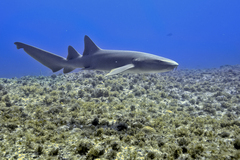


Nurse Shark
Ginglymostoma cirratum
Silhouette: based on photo by fokitochikito (https://www.inaturalist.org/observations/220751543) · PhyloPic
- KingdomAnimalia (Animals)
- PhylumChordata (Chordates)
- ClassElasmobranchii
- OrderOrectolobiformes (Carpet Sharks)
- FamilyGinglymostomatidae (Nurse Sharks)
- GenusGinglymostoma
- SpeciesGinglymostoma cirratum (Nurse Shark)
In 3 days >90%
81 Verified sightings at Arrecifes de Cozumel National Park From 2019 to 2026
89 In all 2 parks
July Best month
☀️ Diurnal When it's spotted
About the Nurse Shark
The nurse shark (Ginglymostoma cirratum) is an elasmobranch fish in the family Ginglymostomatidae. The conservation status of the nurse shark is globally assessed as vulnerable in the IUCN List of Threatened Species. They are considered to be a species of least concern in the United States and in The Bahamas, but considered to be near threatened in the western Atlantic Ocean because of their vulnerable status in South America and reported threats throughout many areas of Central America and the Caribbean. They are directly targeted in some fisheries and considered by-catch in others.
Nurse sharks are an important species for shark research. They are robust and able to tolerate capture, handling, and tagging extremely well. The nurse shark genus Ginglymostoma is derived from Greek language meaning hinged mouth, whereas the species cirratum is derived from Latin meaning having curled ringlets. Based on morphological similarities, Ginglymostoma is believed to be the sister genus of Nebrius, with both being placed in a clade that also include species Pseudoginglymostoma brevicaudatum, Rhincodon typus, and Stegostoma fasciatum.
The name "nurse" may have originated... Wikipedia →
Recent sightings of Nurse Shark in Arrecifes de Cozumel National Park
LIVEiNaturalistGlobal Distribution
Parks Where Found
| # | Park | Country | Daily sighting probability |
|---|---|---|---|
| 1 | Arrecifes de Cozumel National Park | 🇲🇽 Mexico | |
| 2 | Merritt Island National Wildlife Refuge | 🇺🇸 United States |
Zoos & Centres Where Found
Closest Relatives at Arrecifes de Cozumel National Park
No species of the same family or order lives in Arrecifes de Cozumel National Park, so these are its closest relatives here: other sharks & rays.



Before you go
What are the chances of seeing a Nurse Shark in Arrecifes de Cozumel National Park?
Likely
About 60% of wildlife watchers report a Nurse Shark sighting in Arrecifes de Cozumel National Park on a given day, based on 81 verified sightings from GBIF citizen-science data from 2019 to 2026. It is the 4th most-seen of the 6 sharks and rays we can rate there. Over three days the chance rises to over 90%, if each day is a fresh chance.
When is the best time to see a Nurse Shark in Arrecifes de Cozumel National Park?
January, April, July and September–October
In those months about 90% of wildlife watchers report a Nurse Shark in Arrecifes de Cozumel National Park on a given day, against about 80% in February–March, May–June, August and November–December, the lowest months.
What time of day is best to see a Nurse Shark?
Between 10 am and 1 pm
Across all the parks we cover, that three-hour window holds the most Nurse Shark sightings with a recorded time, and about 8 in 10 of them come between 6 am and 6 pm: it is a daytime animal.
Is Arrecifes de Cozumel National Park the best place to see a Nurse Shark?
Yes
Of the 2 parks where we can rate Nurse Shark sightings, Arrecifes de Cozumel National Park has the highest daily chance: about 60%. Next come Merritt Island National Wildlife Refuge (United States, about 30%).
Where does the Nurse Shark sighting chance come from?
GBIF citizen-science records
It is estimated from how often the Nurse Shark is recorded against all the sharks and rays logged in Arrecifes de Cozumel National Park (81 verified sightings from 2019 to 2026), calibrated against known sighting rates. Figures are rounded to the nearest 10% because citizen-science data supports honest approximations, not decimals, and months with records from fewer than five people show "—". How it works.
