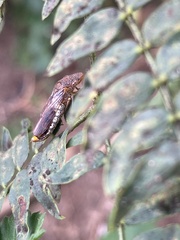
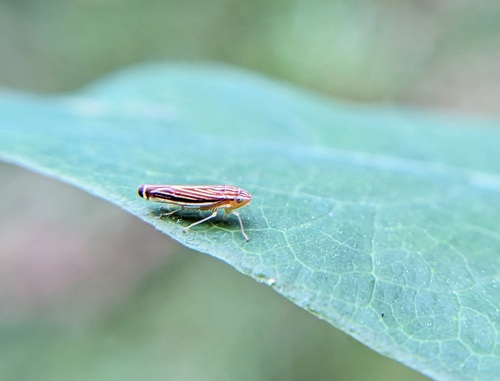
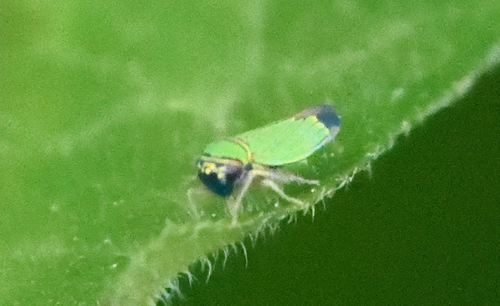
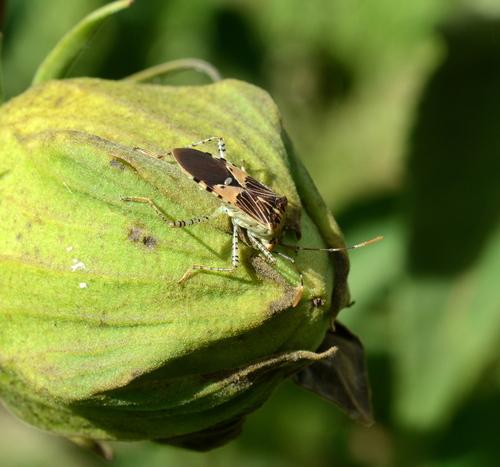
Glassy-Winged Sharpshooter

Glassy-Winged Sharpshooter

Homalodisca vitripennis

Daily sighting probability <5% · Rare
at Cumbres de Monterrey National Park

In 3 days ~10% in a week ~20%

6 Verified sightings at Cumbres de Monterrey National Park From 2019 to 2026
6 In 1 park
November Best month
☀️🌙 Day & Night When it's spotted

About the Glassy-Winged Sharpshooter

The glassy-winged sharpshooter (Homalodisca vitripennis, formerly known as H. coagulata) is a large leafhopper (family Cicadellidae), similar to other species of sharpshooter. It is native to southeastern United States. It is of economic concern in California because it can spread the plant-pathogenic bacterium Xylella fastidiosa.

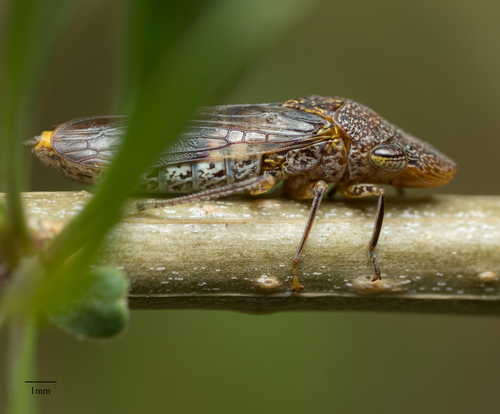
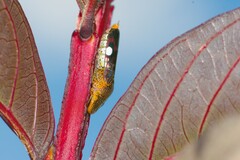
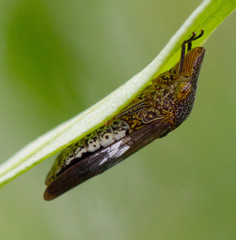
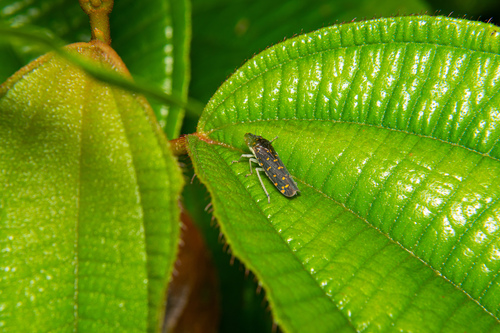
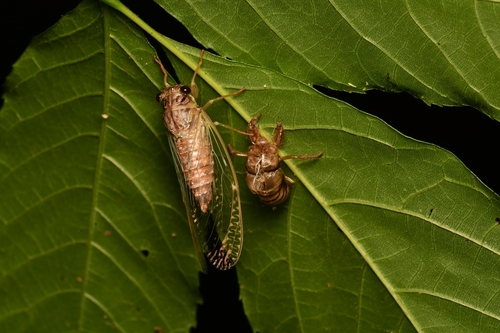
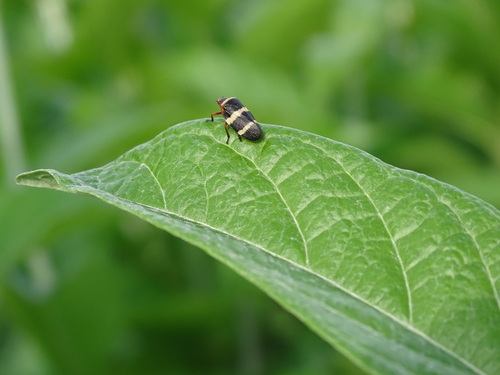
These sharpshooters are about 12 millimetres (0.5 in) in length. Their color is dark brown to black with black-and-yellow undersides, with yellow eyes, and the upper parts of the head and back are speckled with ivory or yellowish spots. The wings are transparent with reddish veins.

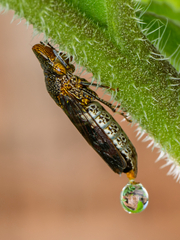
They have piercing, sucking mouthparts and rows of fine spines on their hind legs. They eject up to 300 times their body weight in liquid waste each day thanks to an energy-saving technique known as superpropulsion, where an oscillating surface ejects a liquid droplet at a speed higher than the surface itself.

Glassy-winged sharpshooters usually lay a mass of eggs on the underside of leaves, and they cover them with powdery white protective secretions kept in dry form (called "brochosomes") on the wings. After the nymphs hatch, the remaining... Wikipedia →

Global Distribution

Parks Where Found

# Park Country Daily sighting probability
1 Cumbres de Monterrey National Park 🇲🇽 Mexico
<5%

More parks will be added in future updates.

Cities Where Found

# City Country Daily sighting probability
1 Dallas 🇺🇸 United States
~10%
2 Austin 🇺🇸 United States
~10%
3 Houston 🇺🇸 United States
~10%
4 Los Angeles 🇺🇸 United States
~10%
5 San Antonio 🇺🇸 United States
<5%
6 Monterrey 🇲🇽 México
<5%
7 San Diego 🇺🇸 United States
<5%

Before you go

What are the chances of seeing a Glassy-Winged Sharpshooter in Cumbres de Monterrey National Park?

Rare

Under 5% of wildlife watchers report a Glassy-Winged Sharpshooter sighting in Cumbres de Monterrey National Park on a given day, based on 6 verified sightings from GBIF citizen-science data from 2019 to 2026. It is the 344th most-seen of the 431 insects we can rate there. Over three days the chance rises to about 10%, and over a week to about 20%, if each day is a fresh chance.

When is the best time to see a Glassy-Winged Sharpshooter in Cumbres de Monterrey National Park?

November

In that month about 10% of wildlife watchers report a Glassy-Winged Sharpshooter in Cumbres de Monterrey National Park on a given day, against under 5% in December to October, the lowest months. That is one of Cumbres de Monterrey National Park's driest months, with about 45 mm of rain against 180 mm in September.

What time of day is best to see a Glassy-Winged Sharpshooter?

Between 6 and 9 am

Across all the parks we cover, that three-hour window holds the most Glassy-Winged Sharpshooter sightings with a recorded time, and about 7 in 10 of them come between 6 am and 6 pm: it is seen both by day and at night.

Where else can you see a Glassy-Winged Sharpshooter?

Only Cumbres de Monterrey National Park, in our data

Cumbres de Monterrey National Park is the only park on Wallace's Line with enough records to rate Glassy-Winged Sharpshooter sightings: under 5% of wildlife watchers there report one on a given day.

Where does the Glassy-Winged Sharpshooter sighting chance come from?

GBIF citizen-science records

It is estimated from how often the Glassy-Winged Sharpshooter is recorded against all the insects logged in Cumbres de Monterrey National Park (6 verified sightings from 2019 to 2026), calibrated against known sighting rates. Figures are rounded to the nearest 10% because citizen-science data supports honest approximations, not decimals, and months with records from fewer than five people show "—". How it works.

← Back to Cumbres de Monterrey National Park