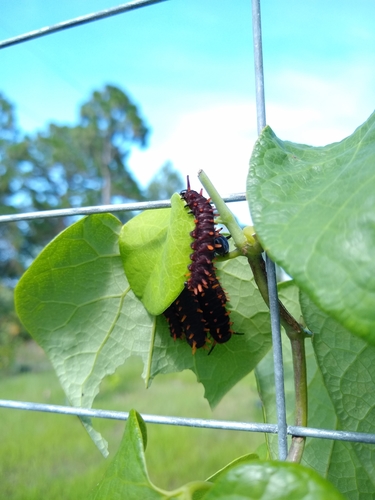
Palamedes Swallowtail

Palamedes Swallowtail

Papilio palamedes

Daily sighting probability ~20% · Possible
at Cumbres de Monterrey National Park

In 3 days ~50% in a week ~80%

167 Verified sightings at Cumbres de Monterrey National Park From 2019 to 2026
327 In all 5 parks
August Best month
☀️ Diurnal When it's spotted

About the Palamedes Swallowtail

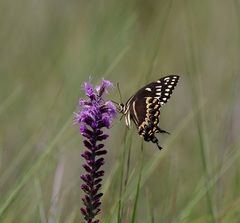
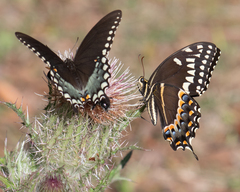
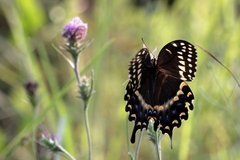
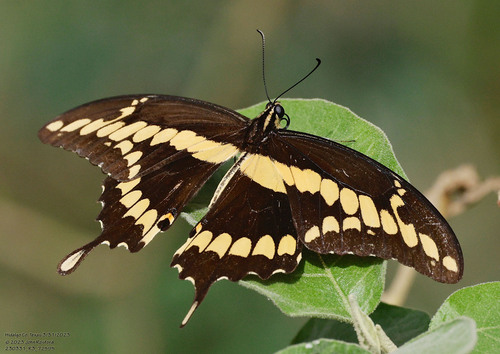
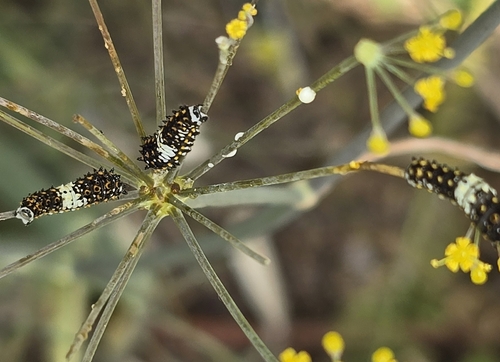
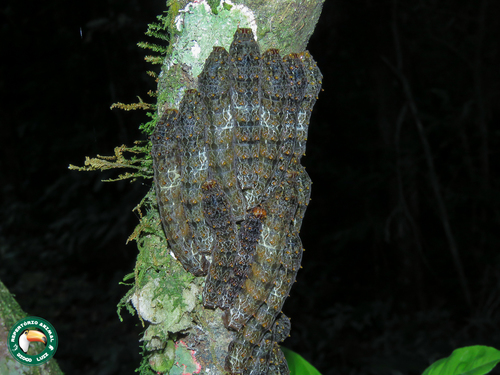
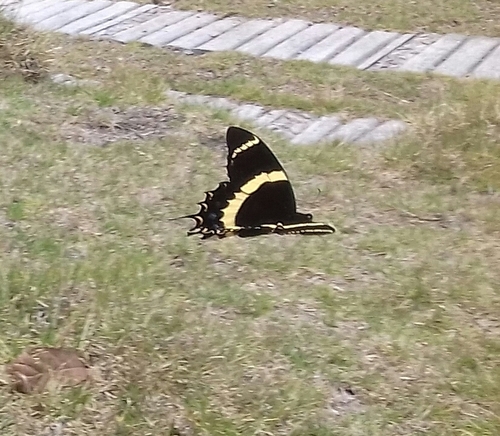
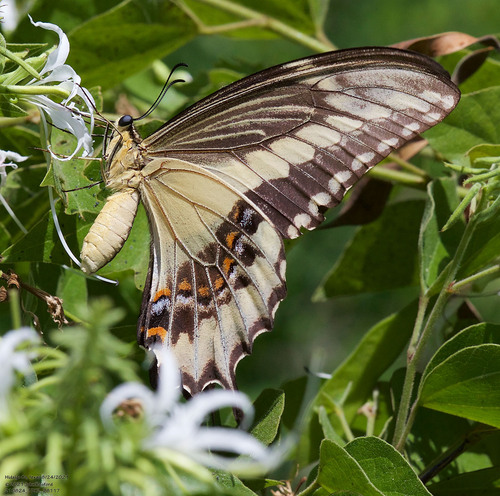
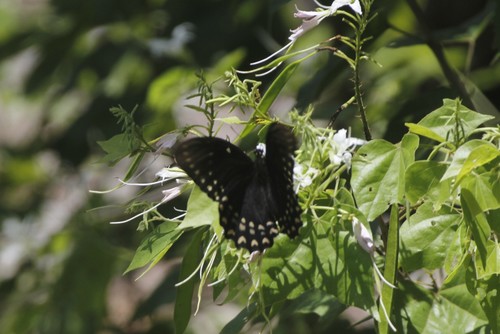
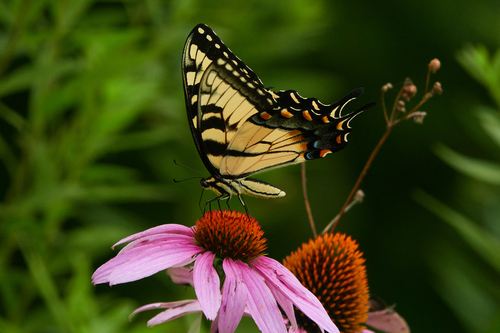
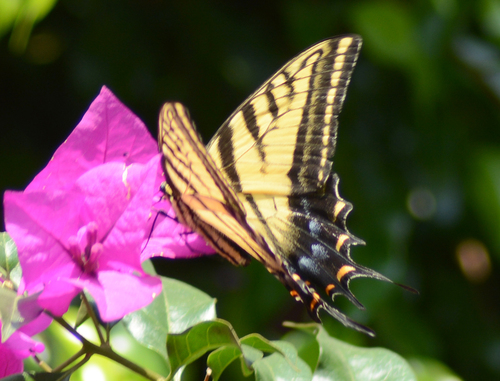
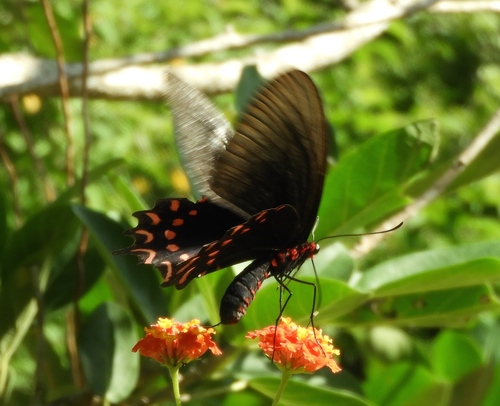
Papilio palamedes, the Palamedes swallowtail or laurel swallowtail, is a North American butterfly in the family Papilionidae. The upperside of the wings is blackish brown with both wings having a yellow postmedian band and a yellow submarginal band. There is a yellow bar at the end of the forewing cell. The underside of the wings is black with the forewing having a yellow postmedian band and a yellow submarginal band. The hindwing has a few colored bands; the first being cream; the second, orange; the third, blue; and the fourth, orange. There is a yellow streak on the inner margin of the hindwing which runs parallel to the body. The wingspan ranges from 4+1⁄2 to 5+1⁄8 inches (11 to 13 cm).

This species may be found in habitats such as cypress swamplands, coastal swamplands, wet riparian forests, bay forests, and savannas in the southeastern United States and northeastern Mexico. Their longer tongues allow for specific plant-pollinator relationships with plant species such as Platanthera ciliaris in coastal-plain habitats.

The Palamedes swallowtail is encountered from May to October in southeastern Virginia and from March to December... Wikipedia →

Global Distribution

Parks Where Found

# Park Country Daily sighting probability
1 Big Cypress National Preserve 🇺🇸 United States
~30%
2 Cumbres de Monterrey National Park 🇲🇽 Mexico
~20%
3 Congaree National Park 🇺🇸 United States
~20%
4 Everglades National Park 🇺🇸 United States
~10%
5 Merritt Island National Wildlife Refuge 🇺🇸 United States
~10%

Cities Where Found

# City Country Daily sighting probability
1 Monterrey 🇲🇽 México
~10%
2 Miami 🇺🇸 United States
<5%
3 Houston 🇺🇸 United States
<5%

Before you go

What are the chances of seeing a Palamedes Swallowtail in Cumbres de Monterrey National Park?

Possible

About 20% of wildlife watchers report a Palamedes Swallowtail sighting in Cumbres de Monterrey National Park on a given day, based on 167 verified sightings from GBIF citizen-science data from 2019 to 2026. It is the 13th most-seen of the 431 insects we can rate there. Over three days the chance rises to about 50%, and over a week to about 80%, if each day is a fresh chance.

When is the best time to see a Palamedes Swallowtail in Cumbres de Monterrey National Park?

June to August

In those months about 30% of wildlife watchers report a Palamedes Swallowtail in Cumbres de Monterrey National Park on a given day, against under 5% in November to January, the lowest months.

What time of day is best to see a Palamedes Swallowtail?

Between 10 am and 1 pm

Across all the parks we cover, that three-hour window holds the most Palamedes Swallowtail sightings with a recorded time, and nearly all of them come between 6 am and 6 pm: it is a daytime animal.

Is Cumbres de Monterrey National Park the best place to see a Palamedes Swallowtail?

2nd of 5

Of the 5 parks where we can rate Palamedes Swallowtail sightings, Cumbres de Monterrey National Park ranks 2nd at about 20%. The best odds are in Big Cypress National Preserve (United States, about 30%).

Which relatives of the Palamedes Swallowtail live in Cumbres de Monterrey National Park?

Same genus: Papilio

The closest relatives of the Palamedes Swallowtail that you can see in Cumbres de Monterrey National Park (genus Papilio, Common Swallowtails) are Western Giant Swallowtail (about 20%), Three-Tailed Tiger Swallowtail (about 10%) and Black Swallowtail (about 10%), with each one's daily chance of a sighting.

Where does the Palamedes Swallowtail sighting chance come from?

GBIF citizen-science records

It is estimated from how often the Palamedes Swallowtail is recorded against all the insects logged in Cumbres de Monterrey National Park (167 verified sightings from 2019 to 2026), calibrated against known sighting rates. Figures are rounded to the nearest 10% because citizen-science data supports honest approximations, not decimals, and months with records from fewer than five people show "—". How it works.

← Back to Cumbres de Monterrey National Park