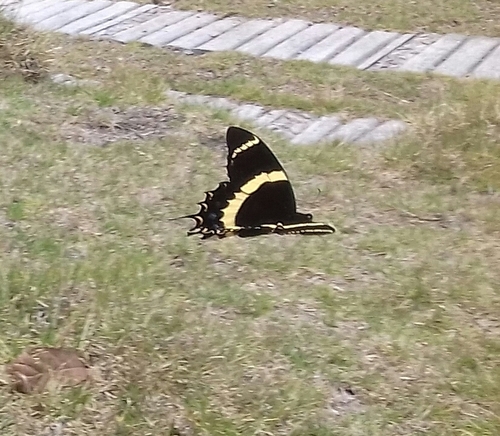
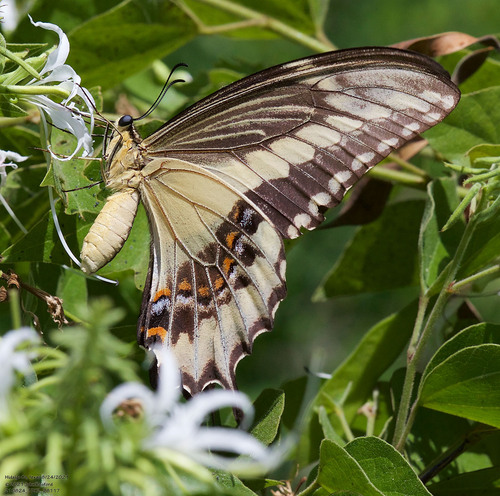
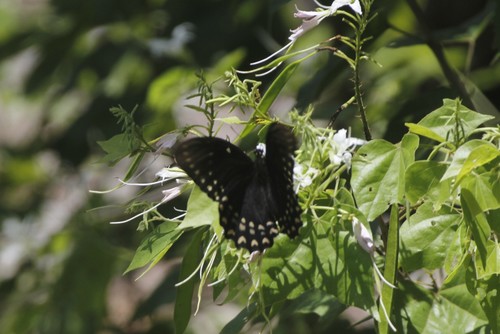
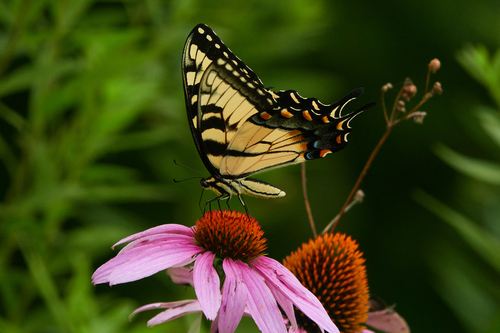
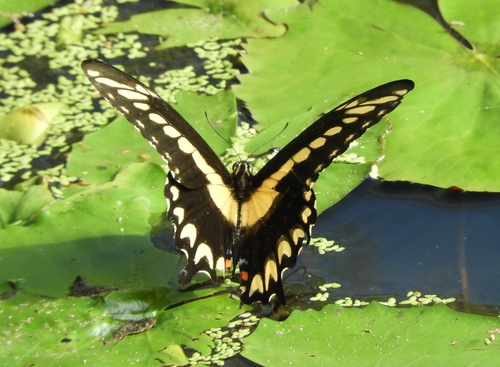
Polydamas Swallowtail

Polydamas Swallowtail

Battus polydamas

Daily sighting probability ~10% · With luck
at Cumbres de Monterrey National Park

In 3 days ~30% in a week ~50%

46 Verified sightings at Cumbres de Monterrey National Park From 2019 to 2026
243 In all 14 parks
October Best month
☀️ Diurnal When it's spotted

About the Polydamas Swallowtail

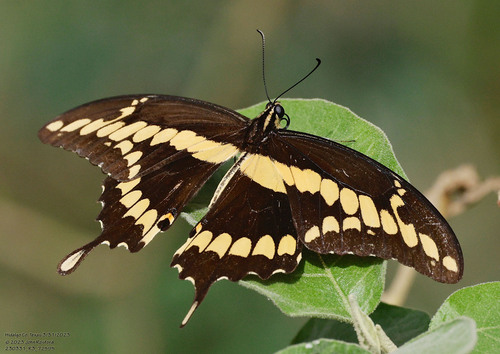
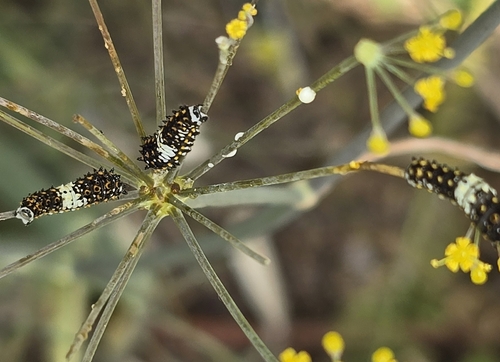
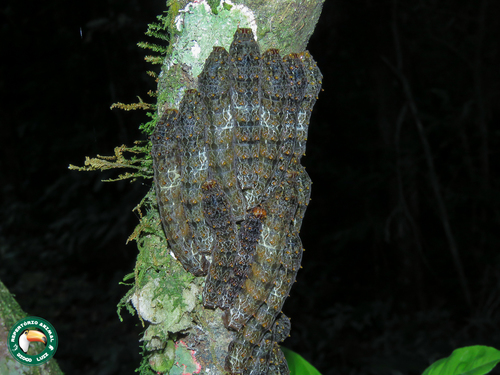
Battus polydamas, also known as the gold rim swallowtail, the Polydamas swallowtail or the tailless swallowtail, is a species of butterfly in the family Papilionidae. The species was first described by Carl Linnaeus in his 10th edition of Systema Naturae, published in 1758. Adults generally have black wings with yellow markings while the larval stage is mainly about consuming acids from toxic plants to make themselves unpalatable to predators. They are mainly found in the Neotropical region, and in many of the Caribbean islands.

The Polydamas swallowtail is widespread in the Neotropical realm throughout Mexico, Central and South America, the Caribbean, and in southern United States, including Texas and Florida. It also inhabits many Caribbean islands such as Jamaica, Cuba, Puerto Rico, Haiti and the Dominican Republic. Within this broad range, B. polydamas prefers habitats where they can access its larval host plants, particularly species in the genus Aristolochia. However, it is most often found in open woodlands, along the edges of forests, or abandoned fields, and occasionally in gardens with their preferable host plants.

The wingspan... Wikipedia →
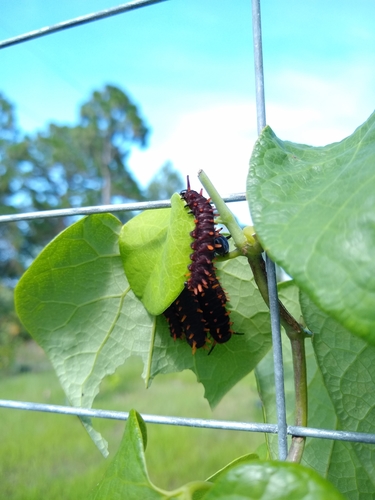
Global Distribution

Parks Where Found

# Park Country Daily sighting probability
1 Iguazú National Park 🇦🇷 Argentina
~20%
2 Iguaçu National Park 🇧🇷 Brazil
~20%
3 Henri Pittier National Park 🇻🇪 Venezuela
~10%
4 Main Ridge Forest Reserve 🇹🇹 Trinidad and Tobago
~10%
5 Carara National Park 🇨🇷 Costa Rica
~10%
6 Iberá National Park 🇦🇷 Argentina
~10%
7 Cumbres de Monterrey National Park 🇲🇽 Mexico
~10%
8 Parque Natural Metropolitano 🇵🇦 Panama
~10%
9 Soberanía National Park 🇵🇦 Panama
~10%
10 Braulio Carrillo National Park 🇨🇷 Costa Rica
~10%
11 Arenal Volcano National Park 🇨🇷 Costa Rica
~10%
12 Merritt Island National Wildlife Refuge 🇺🇸 United States
~10%
13 La Amistad International Park (Panama) 🇵🇦 Panama
<5%
14 Tijuca National Park 🇧🇷 Brazil
<5%

Cities Where Found

# City Country Daily sighting probability
1 Santa Cruz de la Sierra 🇧🇴 Bolivia
~40%
2 Asuncion 🇵🇾 Paraguay
~30%
3 Porto Alegre 🇧🇷 Brazil
~20%
4 Buenos Aires 🇦🇷 Argentina
~20%
5 San Pedro Sula 🇭🇳 Honduras
~20%
6 Fortaleza 🇧🇷 Brazil
~10%
7 Campo Grande 🇧🇷 Brazil
~10%
8 San José 🇨🇷 Costa Rica
~10%
9 Orlando 🇺🇸 United States
~10%
10 Montevideo 🇺🇾 Uruguay
~10%

Before you go

What are the chances of seeing a Polydamas Swallowtail in Cumbres de Monterrey National Park?

With luck

About 10% of wildlife watchers report a Polydamas Swallowtail sighting in Cumbres de Monterrey National Park on a given day, based on 46 verified sightings from GBIF citizen-science data from 2019 to 2026. It is the 60th most-seen of the 431 insects we can rate there. Over three days the chance rises to about 30%, and over a week to about 50%, if each day is a fresh chance.

When is the best time to see a Polydamas Swallowtail in Cumbres de Monterrey National Park?

October

In that month about 20% of wildlife watchers report a Polydamas Swallowtail in Cumbres de Monterrey National Park on a given day, against under 5% in January and April–May, the lowest months.

What time of day is best to see a Polydamas Swallowtail?

Between 10 am and 1 pm

Across all the parks we cover, that three-hour window holds the most Polydamas Swallowtail sightings with a recorded time, and about 9 in 10 of them come between 6 am and 6 pm: it is a daytime animal.

Is Cumbres de Monterrey National Park the best place to see a Polydamas Swallowtail?

7th of 14

Of the 14 parks where we can rate Polydamas Swallowtail sightings, Cumbres de Monterrey National Park ranks 7th at about 10%. The best odds are in Iguazú National Park (Argentina, about 20%), Iguaçu National Park (Brazil, about 20%) and Henri Pittier National Park (Venezuela, about 10%).

Where does the Polydamas Swallowtail sighting chance come from?

GBIF citizen-science records

It is estimated from how often the Polydamas Swallowtail is recorded against all the insects logged in Cumbres de Monterrey National Park (46 verified sightings from 2019 to 2026), calibrated against known sighting rates. Figures are rounded to the nearest 10% because citizen-science data supports honest approximations, not decimals, and months with records from fewer than five people show "—". How it works.

← Back to Cumbres de Monterrey National Park