Red Harvester Ant

Red Harvester Ant

Pogonomyrmex barbatus

Daily sighting probability <5% · Rare
at Cumbres de Monterrey National Park

In 3 days ~10% in a week ~30%

11 Verified sightings at Cumbres de Monterrey National Park From 2019 to 2026
38 In all 2 parks
April Best month
☀️ Diurnal When it's spotted

About the Red Harvester Ant

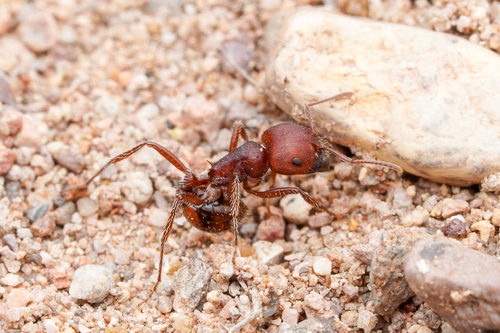
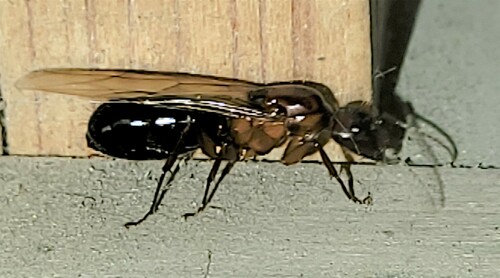
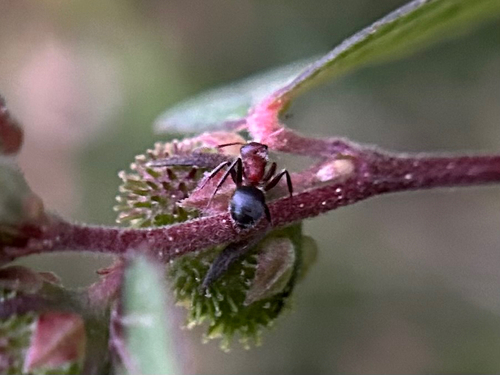
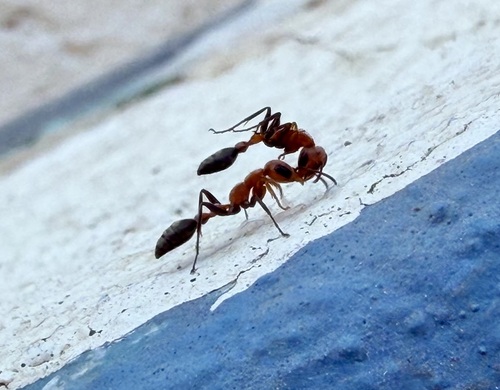
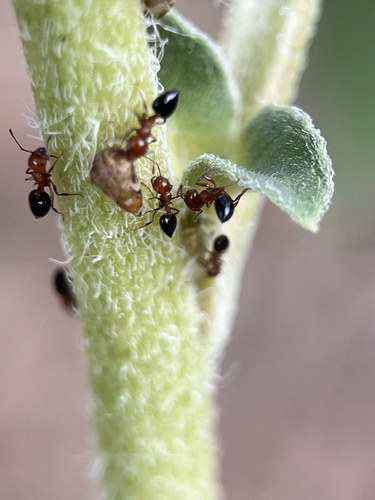
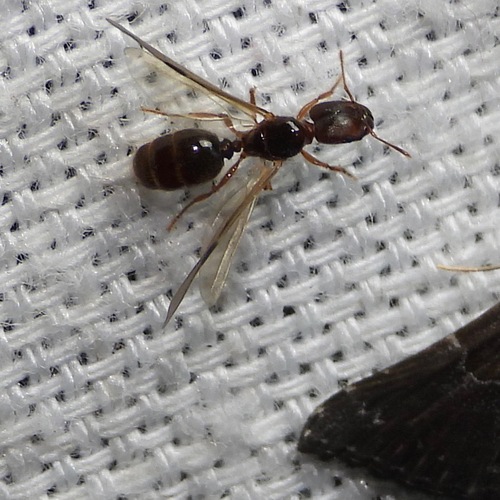
Pogonomyrmex barbatus is a species of harvester ant from the genus Pogonomyrmex. Its common names include red ant and red harvester ant. These large (5 to 7 mm) ants prefer arid chaparral habitats and are native to the Southwestern United States. Nests are made underground (up to 2.5 m deep) in exposed areas. Their diets consist primarily of seeds, and they consequently participate in myrmecochory, an ant-plant interaction through which the ants gain nutrients and the plants benefit through seed dispersal. Red harvester ants are often mistaken for fire ants, but are not closely related to any fire ant species, native or introduced.

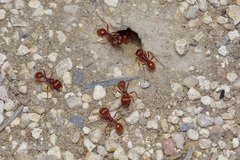
Red harvester ant nests are characterized by a lack of plant growth and small pebbles surrounding the entrance to the tunnel, which usually descends at a pronounced angle. Hulls of seeds may be found scattered around the nest. In grassland areas, such as ranches, the lack of plant life makes red harvester ant colonies very easy to spot, and where they are very plentiful, they may make serious inroads into the grazing available to livestock. The mounds are typically flat and broad, up to 100 mm (3.9 in) high, and 300 to 1,200 mm (12 to 47... Wikipedia →

Global Distribution

Parks Where Found

# Park Country Daily sighting probability
1 Saguaro National Park 🇺🇸 United States
~10%
2 Cumbres de Monterrey National Park 🇲🇽 Mexico
<5%

Cities Where Found

# City Country Daily sighting probability
1 Mesa 🇺🇸 United States
~10%
2 Monterrey 🇲🇽 México
~10%
3 Mexico City 🇲🇽 México
~10%
4 Austin 🇺🇸 United States
~10%
5 Guadalajara 🇲🇽 México
<5%
6 San Antonio 🇺🇸 United States
<5%
7 Houston 🇺🇸 United States
<5%

Before you go

What are the chances of seeing a Red Harvester Ant in Cumbres de Monterrey National Park?

Rare

Under 5% of wildlife watchers report a Red Harvester Ant sighting in Cumbres de Monterrey National Park on a given day, based on 11 verified sightings from GBIF citizen-science data from 2019 to 2026. It is the 252nd most-seen of the 431 insects we can rate there. Over three days the chance rises to about 10%, and over a week to about 30%, if each day is a fresh chance.

When is the best time to see a Red Harvester Ant in Cumbres de Monterrey National Park?

January, April–May and September

In those months about 10% of wildlife watchers report a Red Harvester Ant in Cumbres de Monterrey National Park on a given day, against under 5% in February–March, June–August and October–December, the lowest months.

What time of day is best to see a Red Harvester Ant?

Between 10 am and 1 pm

Across all the parks we cover, that three-hour window holds the most Red Harvester Ant sightings with a recorded time, and about 9 in 10 of them come between 6 am and 6 pm: it is a daytime animal.

Is Cumbres de Monterrey National Park the best place to see a Red Harvester Ant?

2nd of 2

Of the 2 parks where we can rate Red Harvester Ant sightings, Cumbres de Monterrey National Park ranks 2nd at under 5%. The best odds are in Saguaro National Park (United States, about 10%).

Where does the Red Harvester Ant sighting chance come from?

GBIF citizen-science records

It is estimated from how often the Red Harvester Ant is recorded against all the insects logged in Cumbres de Monterrey National Park (11 verified sightings from 2019 to 2026), calibrated against known sighting rates. Figures are rounded to the nearest 10% because citizen-science data supports honest approximations, not decimals, and months with records from fewer than five people show "—". How it works.

← Back to Cumbres de Monterrey National Park