Coastal Snake-eyed Skink

Coastal Snake-eyed Skink

Cryptoblepharus litoralis

Silhouette: David Orr · PhyloPic

LCLeast ConcernNTVUENCR
Daily sighting probability ~10% · With luck
at Daintree National Park

In 3 days ~20% in a week ~40%

5 Verified sightings at Daintree National Park From 2019 to 2026
5 In 1 park
March Best month
☀️ Diurnal When it's spotted

About the Coastal Snake-eyed Skink

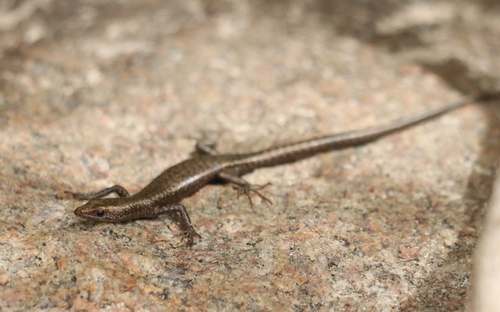
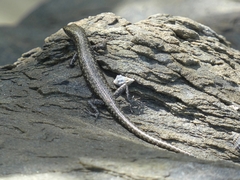
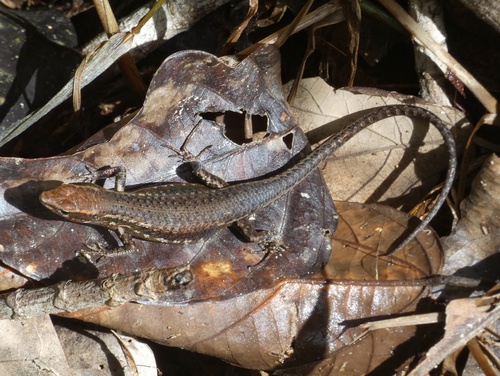
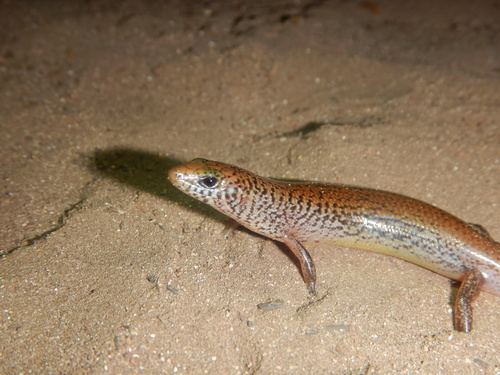
Cryptoblepharus litoralis, the coastal snake-eyed skink or supralittoral shinning-skink, is a small skink found in North Queensland, Australia and New Guinea. They are generally found darting around the rocky outcrops on beaches and headlands, not far from the water, hunting for small insects. Its genus name means "hidden eyelid", and its species name "intertidal". It is commonly known as the coastal tree skink.

Cryptoblepharus litoralis is around 55 mm snout to vent, and dark-brown to black in colour with white to beige spots. The lower surface of the feet are shiny black. Cryptoblepharus plagiocephalus is a very similar species, but has brownish lower surfaces on the feet. Wikipedia →

Global Distribution

Parks Where Found

# Park Country Daily sighting probability
1 Daintree National Park 🇦🇺 Australia
~10%

More parks will be added in future updates.

Closest Relatives at Daintree National Park

Before you go

What are the chances of seeing a Coastal Snake-eyed Skink in Daintree National Park?

With luck

About 10% of wildlife watchers report a Coastal Snake-eyed Skink sighting in Daintree National Park on a given day, based on 5 verified sightings from GBIF citizen-science data from 2019 to 2026. It is the 30th most-seen of the 31 reptiles we can rate there. Over three days the chance rises to about 20%, and over a week to about 40%, if each day is a fresh chance.

When is the best time to see a Coastal Snake-eyed Skink in Daintree National Park?

March

In that month about 20% of wildlife watchers report a Coastal Snake-eyed Skink in Daintree National Park on a given day, against under 5% in April–June, September–October and December–February, the lowest months. That is one of Daintree National Park's wettest months, with about 330 mm of rain against 50 mm in September.

What time of day is best to see a Coastal Snake-eyed Skink?

Between 10 am and 1 pm

Across all the parks we cover, that three-hour window holds the most Coastal Snake-eyed Skink sightings with a recorded time, and about 9 in 10 of them come between 6 am and 6 pm: it is a daytime animal.

Where else can you see a Coastal Snake-eyed Skink?

Only Daintree National Park, in our data

Daintree National Park is the only park on Wallace's Line with enough records to rate Coastal Snake-eyed Skink sightings: about 10% of wildlife watchers there report one on a given day.

Where does the Coastal Snake-eyed Skink sighting chance come from?

GBIF citizen-science records

It is estimated from how often the Coastal Snake-eyed Skink is recorded against all the reptiles logged in Daintree National Park (5 verified sightings from 2019 to 2026), calibrated against known sighting rates. Figures are rounded to the nearest 10% because citizen-science data supports honest approximations, not decimals, and months with records from fewer than five people show "—". How it works.

← Back to Daintree National Park