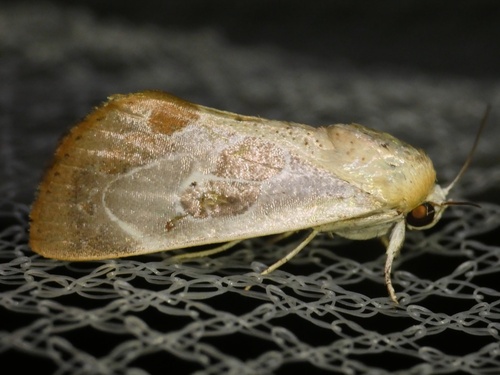
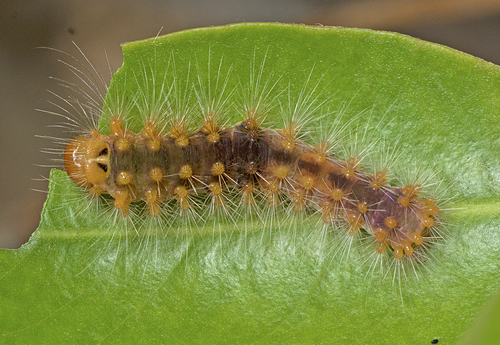
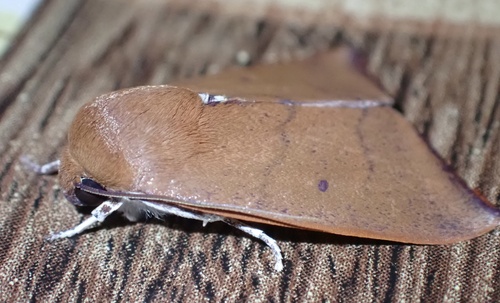
Pigeonpea Pod Borer

Pigeonpea Pod Borer

Etanna breviuscula

Daily sighting probability ~10% · With luck
at Daintree National Park

In 3 days ~20% in a week ~40%

7 Verified sightings at Daintree National Park From 2019 to 2026
7 In 1 park
July Best month
🌙 Nocturnal When it's spotted

About the Pigeonpea Pod Borer

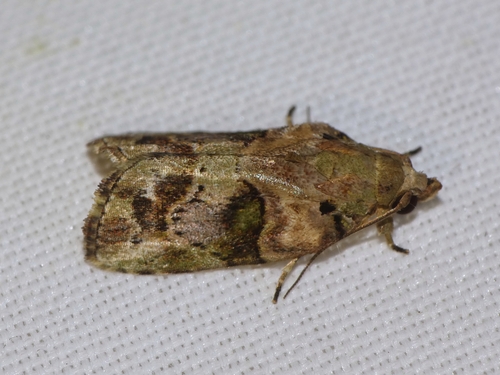
Etanna breviuscula, the pigeonpea pod borer, is a moth species of the family Nolidae. It is found from Sri Lanka and India east to Samoa. In Australia it is found in the Kimberleys in Western Australia, the northern part of the Northern Territory and from the Torres Strait Islands and Queensland to Sydney in New South Wales.

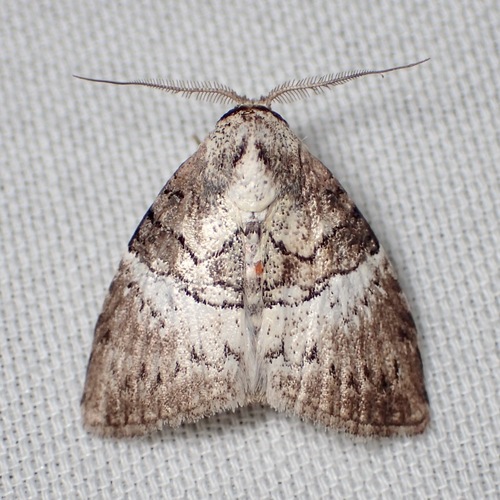
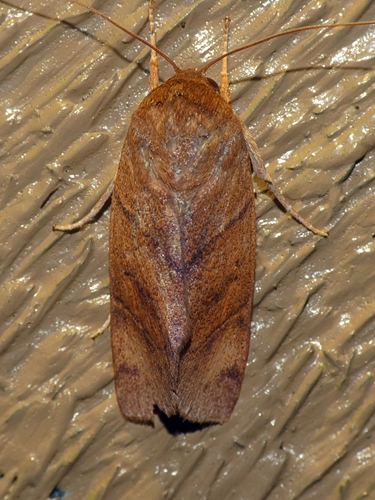
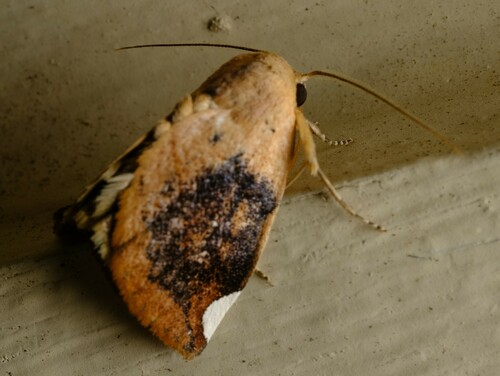
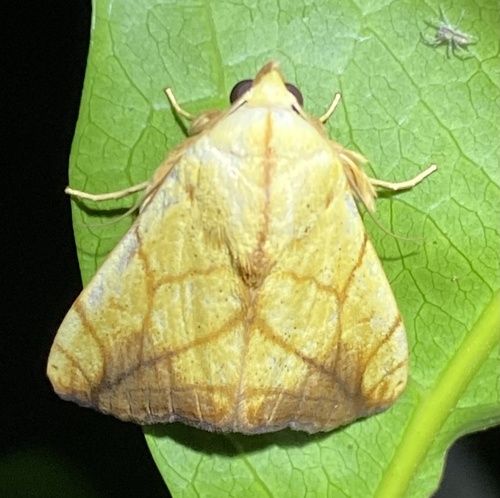
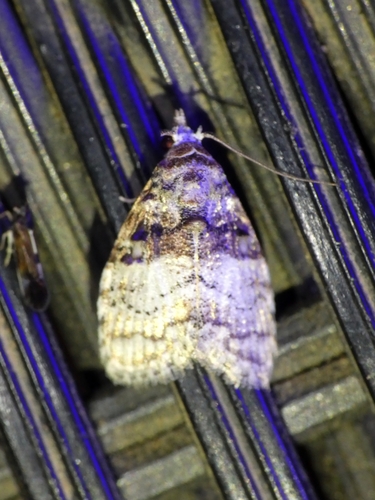
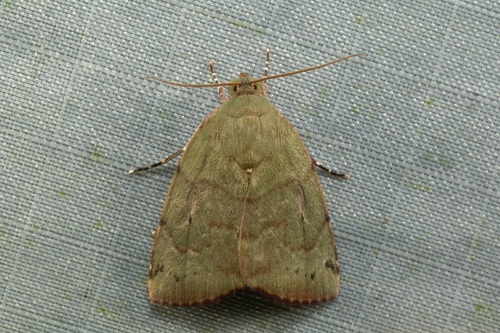
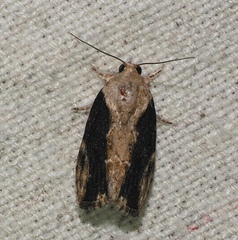
The wingspan is about 20–24 mm. Forewing with vein 10 stalked with veins 7,8 and 9. Hindwings with veins 3,4 stalked. Head, thorax and abdomen pale brown. Forewings pale red brown. There is an oblique black and streak runs from costa near base to above centre of inner margin. A waved antemedial pale line, and a postmedial line angled outwards beyond the cell can be seen. Inner area greyish from the base to the postmedial line. The apical area suffused with white and three black costal striae runs before the apex. Two black streaks above outer angle, which is suffused with black and white. Hindwings white, and slightly suffused with fuscous outer margin.

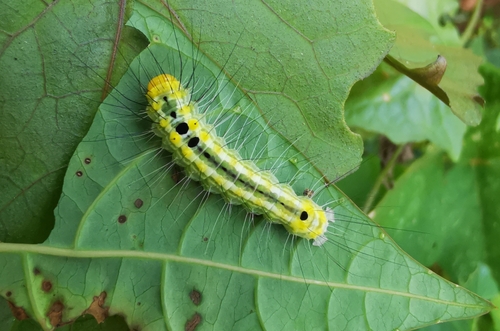
It is a minor pest, where the larvae feed on a wide range of plants, including Grevillea glauca, Desmodium species and the flowers of Mangifera indica. Australian... Wikipedia →
Global Distribution

Parks Where Found

# Park Country Daily sighting probability
1 Daintree National Park 🇦🇺 Australia
~10%

More parks will be added in future updates.

Cities Where Found

# City Country Daily sighting probability
1 Hong Kong 🇨🇳 China
~10%
2 Guangzhou 🇨🇳 China
<5%

Before you go

What are the chances of seeing a Pigeonpea Pod Borer in Daintree National Park?

With luck

About 10% of wildlife watchers report a Pigeonpea Pod Borer sighting in Daintree National Park on a given day, based on 7 verified sightings from GBIF citizen-science data from 2019 to 2026. It is the 567th most-seen of the 856 insects we can rate there. Over three days the chance rises to about 20%, and over a week to about 40%, if each day is a fresh chance.

When is the best time to see a Pigeonpea Pod Borer in Daintree National Park?

July

In that month about 20% of wildlife watchers report a Pigeonpea Pod Borer in Daintree National Park on a given day, against under 5% in February–May, August and October–December, the lowest months. That is one of Daintree National Park's driest months, with about 60 mm of rain against 380 mm in January.

What time of day is best to see a Pigeonpea Pod Borer?

Between 9 pm and midnight

Across all the parks we cover, that three-hour window holds the most Pigeonpea Pod Borer sightings with a recorded time, and about 9 in 10 of them come between 6 pm and 6 am: it is mostly seen at night.

Where else can you see a Pigeonpea Pod Borer?

Only Daintree National Park, in our data

Daintree National Park is the only park on Wallace's Line with enough records to rate Pigeonpea Pod Borer sightings: about 10% of wildlife watchers there report one on a given day.

Where does the Pigeonpea Pod Borer sighting chance come from?

GBIF citizen-science records

It is estimated from how often the Pigeonpea Pod Borer is recorded against all the insects logged in Daintree National Park (7 verified sightings from 2019 to 2026), calibrated against known sighting rates. Figures are rounded to the nearest 10% because citizen-science data supports honest approximations, not decimals, and months with records from fewer than five people show "—". How it works.

← Back to Daintree National Park