Transverse Moth

Transverse Moth

Xanthodes transversa

Daily sighting probability ~10% · With luck
at Daintree National Park

In 3 days ~30% in a week ~50%

13 Verified sightings at Daintree National Park From 2019 to 2026
19 In all 2 parks
February Best month
☀️🌙 Day & Night When it's spotted

About the Transverse Moth

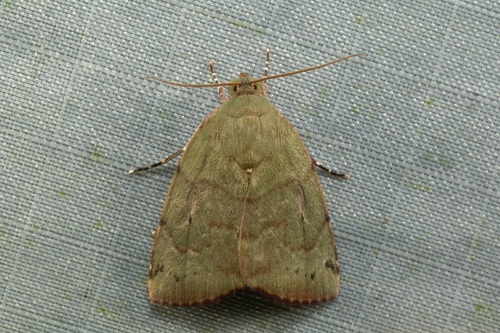
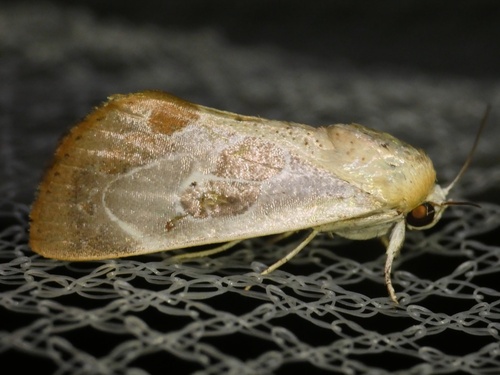
Xanthodes transversa, the transverse moth or hibiscus caterpillar, is a moth of the family Nolidae. The species was first described by Achille Guenée in 1852. It is found in India, Sri Lanka, the Andaman Islands, the Nicobar Islands, China, Hong Kong, Vanuatu, Java, New Guinea, Japan, the Ryukyu Islands, Singapore, Indonesia and Australia.

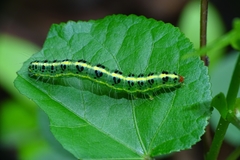
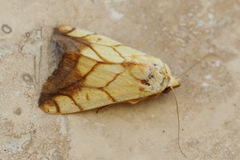
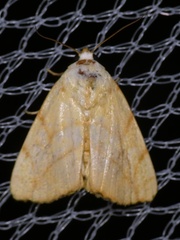
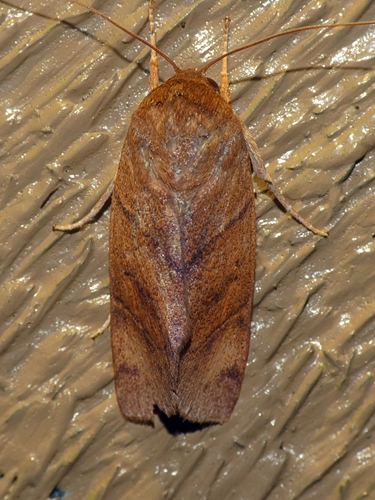
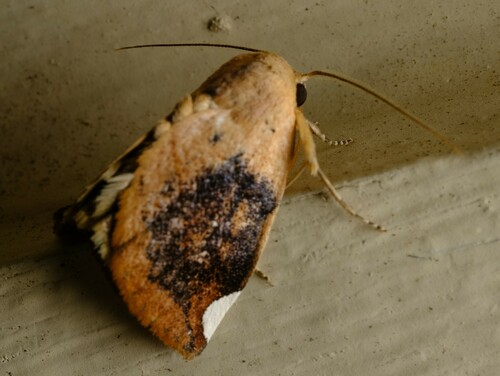
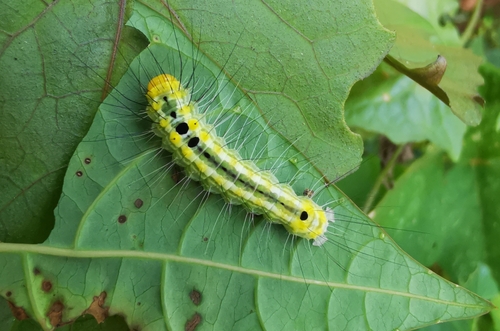
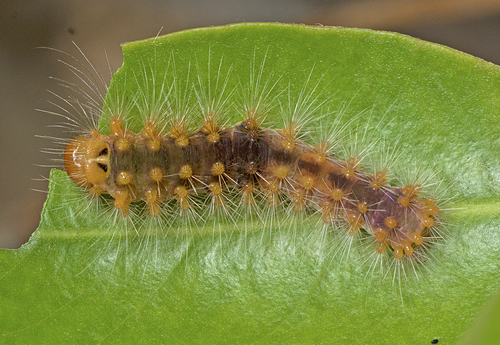
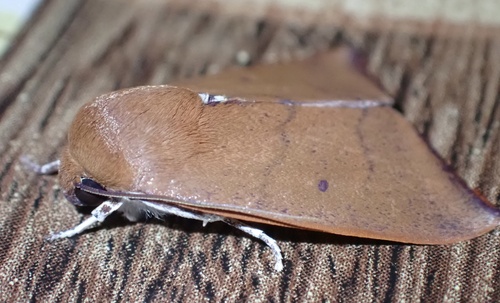
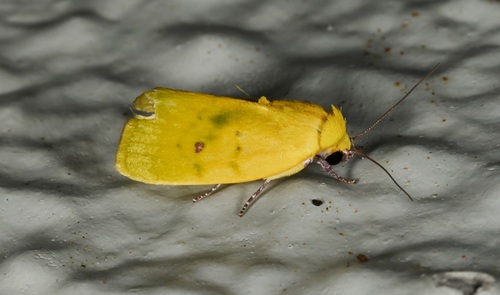
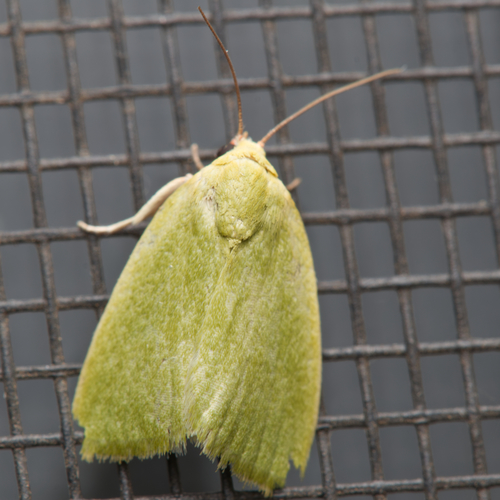
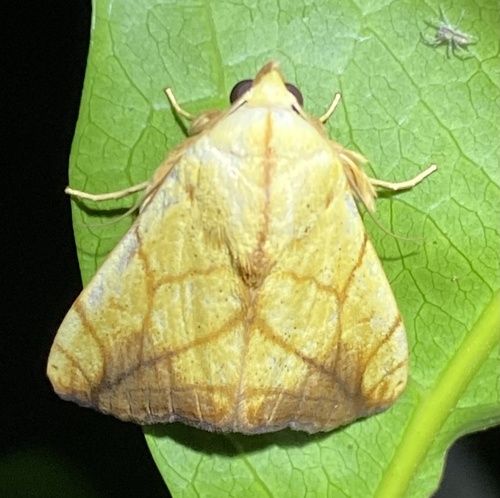
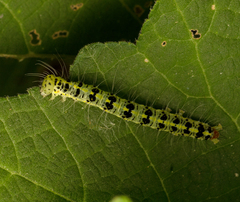
The wingspan of the female is 36 mm and male is 35–42 mm. Palpi reddish brown and porrect (extending forward). Head, thorax and abdomen bright canary yellow. Vertex of thorax rufous. Legs reddish brown. Tibia with long hairs. Forewings bright yellowish with distinct three brown arrow-shaped lines across each forewing. The caterpillars show remarkable color variations. A large bright rufous triangular patch is found over the whole outer area of the forewings. A black sub-apical speck visible. Cilia rufous. Hindwings reddish brown suffusion with rufous outer margin. The caterpillar is 35–40 mm in length.

It is a multivoltine moth species, where organism having more than two broods or generations per year. The caterpillar is a pest on several economically important crops such as Hibiscus mutabilis, Hibiscus heterophyllus, Hibiscus rosa... Wikipedia →
Global Distribution

Parks Where Found

# Park Country Daily sighting probability
1 Daintree National Park 🇦🇺 Australia
~10%
2 Blue Mountains National Park 🇦🇺 Australia
<5%

Cities Where Found

# City Country Daily sighting probability
1 Kochi 🇮🇳 India
~10%
2 Brisbane 🇦🇺 Australia
<5%
3 Mumbai 🇮🇳 India
<5%
4 Tokyo 🇯🇵 Japan
<5%

Before you go

What are the chances of seeing a Transverse Moth in Daintree National Park?

With luck

About 10% of wildlife watchers report a Transverse Moth sighting in Daintree National Park on a given day, based on 13 verified sightings from GBIF citizen-science data from 2019 to 2026. It is the 306th most-seen of the 856 insects we can rate there. Over three days the chance rises to about 30%, and over a week to about 50%, if each day is a fresh chance.

When is the best time to see a Transverse Moth in Daintree National Park?

February

In that month about 20% of wildlife watchers report a Transverse Moth in Daintree National Park on a given day, against under 5% in June–July and December, the lowest months. That is one of Daintree National Park's wettest months, with about 240 mm of rain against 50 mm in September.

What time of day is best to see a Transverse Moth?

Between 7 and 10 pm

Across all the parks we cover, that three-hour window holds the most Transverse Moth sightings with a recorded time, and about 6 in 10 of them come between 6 pm and 6 am: it is seen both by day and at night.

Is Daintree National Park the best place to see a Transverse Moth?

Yes

Of the 2 parks where we can rate Transverse Moth sightings, Daintree National Park has the highest daily chance: about 10%. Next come Blue Mountains National Park (Australia, under 5%).

Which relatives of the Transverse Moth live in Daintree National Park?

Same family: Nolidae

The closest relatives of the Transverse Moth that you can see in Daintree National Park (family Nolidae, Tufted Moths) are Acatapaustus mesoleuca (about 10%), Aiteta iridias (about 10%) and Negeta contrariata (about 10%), with each one's daily chance of a sighting.

Where does the Transverse Moth sighting chance come from?

GBIF citizen-science records

It is estimated from how often the Transverse Moth is recorded against all the insects logged in Daintree National Park (13 verified sightings from 2019 to 2026), calibrated against known sighting rates. Figures are rounded to the nearest 10% because citizen-science data supports honest approximations, not decimals, and months with records from fewer than five people show "—". How it works.

← Back to Daintree National Park