About the Rice Case Bearer
Parapoynx stagnalis, the rice case bearer or rice caseworm, is a species of moth in the family Crambidae. It has a wide distribution and is found in India, Sri Lanka, South-East Asia, South Africa, South America, southern Europe (Spain and Greece), Russia and Australia (the Northern Territory and Queensland).
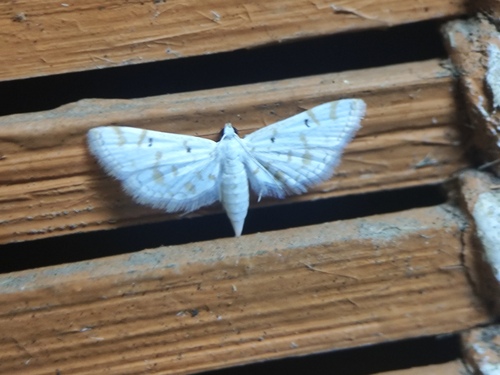
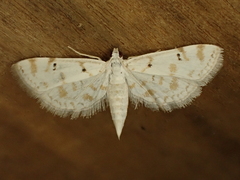
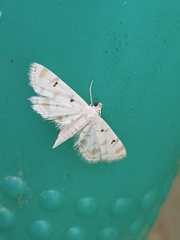
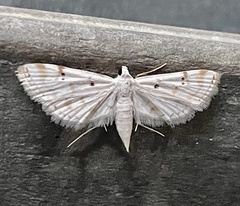
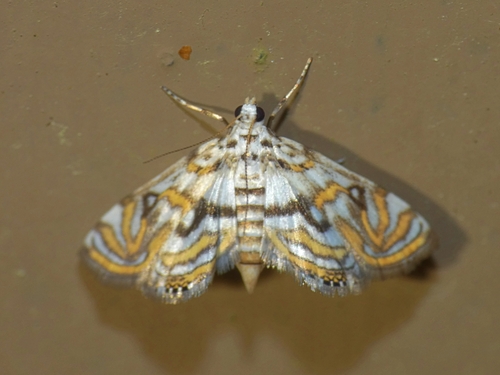
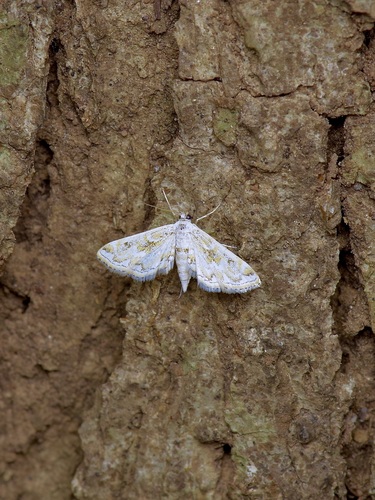
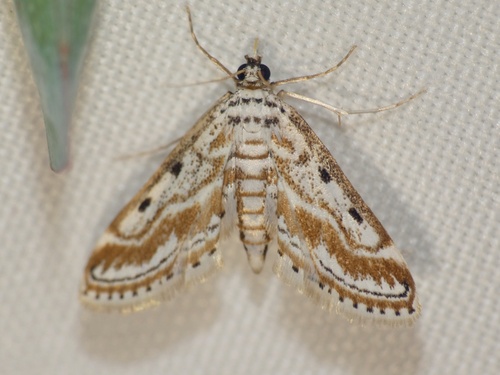
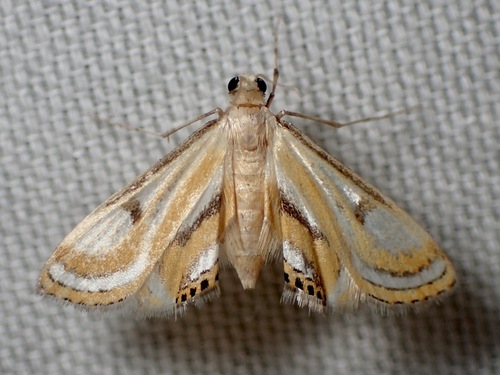
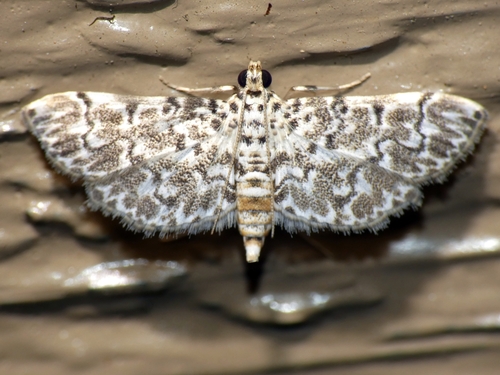
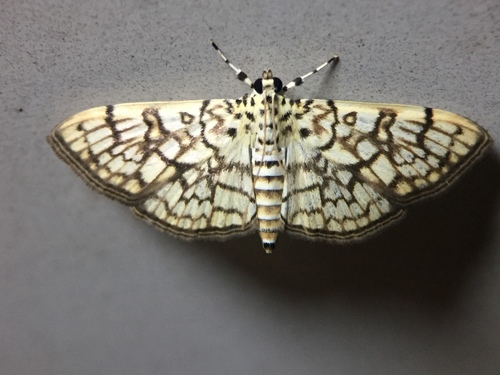
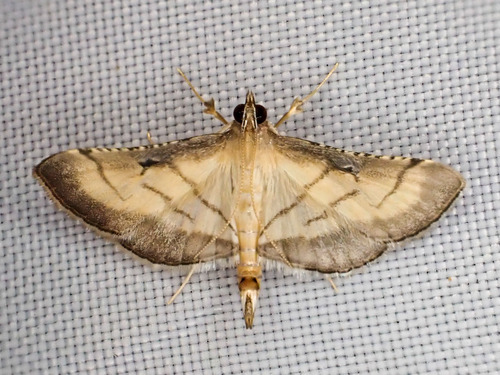
The life cycle is completed in about 35–40 days. The length of the forewings is 15 mm. Adult has whitish wings with pale brown wavy markings. There are two black comma-shaped marks on each forewing. Male can be identified by narrow and uniform abdomen, whereas female abdomen is widest at the middle but tapering posteriorly. Female usually lay 150 eggs and first instar larvae emerge after a week. Final larva emerge after 20 days, and reaches its maximum length of 10-12mm. The moth has six larval instars. Due to branched tubular gills, caterpillars can respire in aquatic media. Therefore, instar can disperse through water. Pupation occurs when the pupal case is attached to the leaf sheath above the water level. After a week of pupation, adult emerges.
As its common name implies, rice caseworm is one of the major pests of rice throughout the world.... Wikipedia →