Cape Canary

Cape Canary

Serinus canicollis

Silhouette: Sheatherius · PhyloPic

LCLeast ConcernNTVUENCR
Daily sighting probability ~20% · Possible
at De Hoop Nature Reserve

In 3 days ~50% in a week ~80%

82 Verified sightings at De Hoop Nature Reserve From 2019 to 2026
3,361 In all 6 parks
January Best month
☀️ Diurnal When it's spotted

About the Cape Canary

The Cape canary (Serinus canicollis) is a small passerine bird in the finch family. It is a resident breeder in southern Africa and has been introduced to Mauritius and Réunion. It is a residential bird but shows seasonal and altitudinal movements, sometimes forming large flocks outside the breeding season.

Its habitat is fynbos, grassland and gardens, preferably in highland areas. It builds a compact cup nest in a scrub. It inhabits a variety of terrestrial habitats, from forest edges to montane areas, foraging mainly on seeds in pairs or flocks. Breeding occurs from August to February. Nest are built by females and both parents feed chicks, which typically fledge in 2-3 weeks.

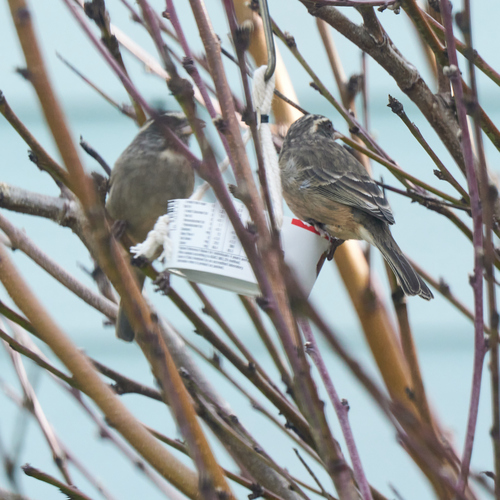
The Cape canary is 11–13 cm in length. The adult male has a green back with black edging to the wing feathers wings and tail. The underparts, rump and tail sides are yellow, and the lower belly is white. The rear head and neck are grey, and the face is cinnamon. The female is similar, but with less grey on the head. The juvenile has greenish-yellow underparts with heavy brown streaking. This species is easily distinguished from the yellow-fronted canary by its lack of black face markings.

The Cape canary is a common and gregarious seed-eater. Its call is tsit-it-it, and the song is warbled goldfinch-like trills and whistles given in display flight or from a high perch. This species is listed as least concern by the International Union for Conservation of Nature Red List categories, with a stable population across a large range. Wikipedia →

Sounds

Song0:24

South Africa · 2019

© Frank Lambert · XC519453 · CC BY-NC-ND 4.0

Call0:48

South Africa · 2018

© Lynette Rudman · XC428885 · CC BY-NC-SA 4.0

Call0:47

South Africa · 2017

© Peter Boesman · XC392703 · CC BY-NC-ND 4.0

Global Distribution

Parks Where Found

# Park Country Daily sighting probability
1 Golden Gate Highlands National Park 🇿🇦 South Africa
~40%
2 Table Mountain National Park 🇿🇦 South Africa
~40%
3 De Hoop Nature Reserve 🇿🇦 South Africa
~20%
4 Garden Route National Park 🇿🇦 South Africa
~10%
5 West Coast National Park 🇿🇦 South Africa
~10%
6 Kruger National Park 🇿🇦 South Africa
<5%

Cities Where Found

# City Country Daily sighting probability
1 Cape Town 🇿🇦 South Africa
~30%

Before you go

What are the chances of seeing a Cape Canary in De Hoop Nature Reserve?

Possible

About 20% of wildlife watchers report a Cape Canary sighting in De Hoop Nature Reserve on a given day, based on 82 verified sightings from GBIF citizen-science data from 2019 to 2026. It is the 89th most-seen of the 189 birds we can rate there. Over three days the chance rises to about 50%, and over a week to about 80%, if each day is a fresh chance.

When is the best time to see a Cape Canary in De Hoop Nature Reserve?

January

In that month about 30% of wildlife watchers report a Cape Canary in De Hoop Nature Reserve on a given day, against about 10% in February–May, July and December, the lowest months. June has too few records to rate.

What time of day is best to see a Cape Canary?

Between 9 am and noon

Across all the parks we cover, that three-hour window holds the most Cape Canary sightings with a recorded time, and about 9 in 10 of them come between 6 am and 6 pm: it is a daytime animal.

Is De Hoop Nature Reserve the best place to see a Cape Canary?

3rd of 6

Of the 6 parks where we can rate Cape Canary sightings, De Hoop Nature Reserve ranks 3rd at about 20%. The best odds are in Golden Gate Highlands National Park (South Africa, about 40%) and Table Mountain National Park (South Africa, about 40%).

Which relatives of the Cape Canary live in De Hoop Nature Reserve?

Same family: Fringillidae

The closest relatives of the Cape Canary that you can see in De Hoop Nature Reserve (family Fringillidae, Finches, Euphonias, and Allies) are Yellow Canary (about 40%), White-throated Canary (about 30%) and Brimstone Canary (about 20%), with each one's daily chance of a sighting.

Where does the Cape Canary sighting chance come from?

GBIF citizen-science records

It is estimated from how often the Cape Canary is recorded against all the birds logged in De Hoop Nature Reserve (82 verified sightings from 2019 to 2026), calibrated against known sighting rates. Figures are rounded to the nearest 10% because citizen-science data supports honest approximations, not decimals, and months with records from fewer than five people show "—". How it works.

← Back to De Hoop Nature Reserve