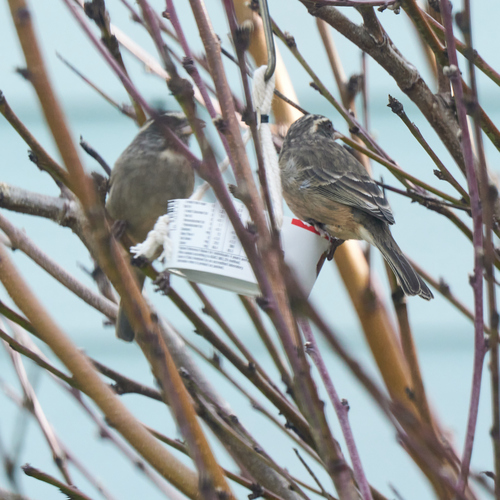
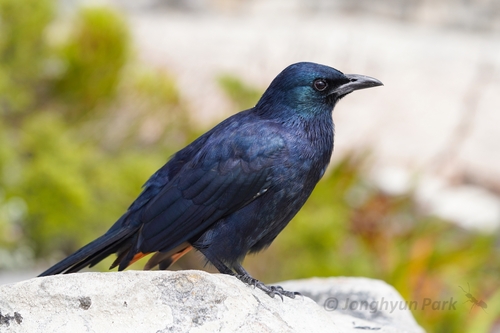
Yellow Canary

Yellow Canary

Crithagra flaviventris

Silhouette: Sheatherius · PhyloPic

LCLeast ConcernNTVUENCR
Daily sighting probability ~40% · Likely
at De Hoop Nature Reserve

In 3 days ~80% in a week >90%

262 Verified sightings at De Hoop Nature Reserve From 2019 to 2026
1,685 In all 11 parks
January Best month
☀️ Diurnal When it's spotted

About the Yellow Canary

The yellow canary (Crithagra flaviventris) is a small passerine bird in the true finch family. It is a resident breeder in much of the western and central regions of southern Africa and has been introduced to Ascension and St Helena islands.

The yellow canary was formally described in 1789 by the German naturalist Johann Friedrich Gmelin in his revised and expanded edition of Carl Linnaeus's Systema Naturae. He placed it with the crossbills in the genus Loxia and coined the binomial name Loxia flaviventris. He specified the location as the Cape of Good Hope. The specific epithet flaviventris is from Latin flavus meaning "yellow" and venter (genitive ventris) meaning "belly". Gmelin based his account on the "Le Gros-bec jaune du Cap de Bonne Espérance" that had been described and illustrated in 1760 by the French zoologist Mathurin Jacques Brisson.

The yellow canary was formerly placed in the genus Serinus but a phylogenetic study published in 2012 found that the genus was polyphyletic. In the reorganisation to create monophyletic genera, Serinus was split and a number of species including the yellow canary were moved to the resurrected genus Crithagra that had originally... Wikipedia →

Sounds

Song1:20

South Africa · 2023

© Dawie de Swardt · XC832604 · CC BY-NC-SA 4.0

Call0:13

South Africa · 2017

© Peter Boesman · XC392445 · CC BY-NC-ND 4.0

Flight call0:06

South Africa · 2017

© Faansie Peacock · XC382902 · CC BY-NC-SA 4.0

Global Distribution

Parks Where Found

# Park Country Daily sighting probability
1 West Coast National Park 🇿🇦 South Africa
~60%
2 Kgalagadi Transfrontier Park 🇿🇦 South Africa
~60%
3 De Hoop Nature Reserve 🇿🇦 South Africa
~40%
4 Namib-Naukluft National Park 🇳🇦 Namibia
~10%
5 Etosha National Park 🇳🇦 Namibia
~10%
6 Pilanesberg National Park 🇿🇦 South Africa
~10%
7 Moremi Game Reserve 🇧🇼 Botswana
<5%
8 Addo Elephant National Park 🇿🇦 South Africa
<5%
9 Garden Route National Park 🇿🇦 South Africa
<5%
10 Chobe National Park 🇧🇼 Botswana
<5%
11 Kruger National Park 🇿🇦 South Africa
<5%

Cities Where Found

# City Country Daily sighting probability
1 Pretoria 🇿🇦 South Africa
<5%
2 Johannesburg 🇿🇦 South Africa
<5%
3 Cape Town 🇿🇦 South Africa
<5%

Before you go

What are the chances of seeing a Yellow Canary in De Hoop Nature Reserve?

Likely

About 40% of wildlife watchers report a Yellow Canary sighting in De Hoop Nature Reserve on a given day, based on 262 verified sightings from GBIF citizen-science data from 2019 to 2026. It is the 37th most-seen of the 189 birds we can rate there. Over three days the chance rises to about 80%, and over a week to over 90%, if each day is a fresh chance.

When is the best time to see a Yellow Canary in De Hoop Nature Reserve?

January

In that month about 60% of wildlife watchers report a Yellow Canary in De Hoop Nature Reserve on a given day, against about 30% in May and November, the lowest months. June has too few records to rate.

What time of day is best to see a Yellow Canary?

Between 8 and 11 am

Across all the parks we cover, that three-hour window holds the most Yellow Canary sightings with a recorded time, and nearly all of them come between 6 am and 6 pm: it is a daytime animal.

Is De Hoop Nature Reserve the best place to see a Yellow Canary?

3rd of 11

Of the 11 parks where we can rate Yellow Canary sightings, De Hoop Nature Reserve ranks 3rd at about 40%. The best odds are in West Coast National Park (South Africa, about 60%) and Kgalagadi Transfrontier Park (South Africa, about 60%).

Which relatives of the Yellow Canary live in De Hoop Nature Reserve?

Same genus: Crithagra

The closest relatives of the Yellow Canary that you can see in De Hoop Nature Reserve (genus Crithagra, African Seedeaters, Serins, Canaries, and Citrils) are White-throated Canary (about 30%), Brimstone Canary (about 20%) and Streaky-headed Seedeater (about 10%), with each one's daily chance of a sighting.

Where does the Yellow Canary sighting chance come from?

GBIF citizen-science records

It is estimated from how often the Yellow Canary is recorded against all the birds logged in De Hoop Nature Reserve (262 verified sightings from 2019 to 2026), calibrated against known sighting rates. Figures are rounded to the nearest 10% because citizen-science data supports honest approximations, not decimals, and months with records from fewer than five people show "—". How it works.

← Back to De Hoop Nature Reserve