Western Leaf-nosed Snake

Western Leaf-nosed Snake

Phyllorhynchus decurtatus

Silhouette: Alex Slavenko · PhyloPic

LCLeast ConcernNTVUENCR
Daily sighting probability ~10% · With luck
at Death Valley National Park

In 3 days ~30% in a week ~60%

9 Verified sightings at Death Valley National Park From 2019 to 2026
22 In all 2 parks
August Best month
🌙 Nocturnal When it's spotted

About the Western Leaf-nosed Snake

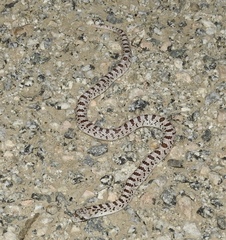
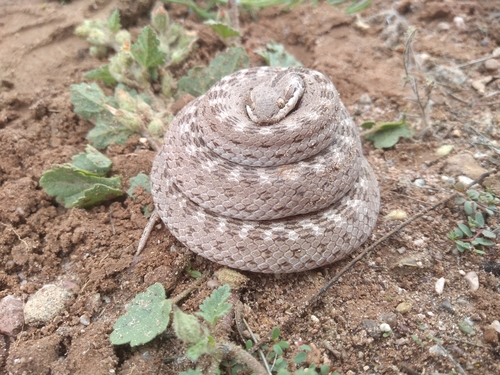
Phyllorhynchus decurtatus, the spotted leafnose snake, is a species of snake in the family Colubridae. The snake is found in the United States and Mexico. Phyllorhynchus decurtatus is a small snake ranging from around 150–450 mm (5.9–17.7 in) in length. The dorsal half of its body varies in color but is generally light brown, with some individuals appearing more cream, pink, or grey colored. Its patterning consists of dark, irregular blotches down the length of its back, and the amount of spots varies between individuals and populations. Markings come in various shades of brown, and are darker along their borders. The amount of blotches on the body range from 18 to 60, and the amount on the tail ranges from 2-15. This species has a dark band running across both of the eyes, which have vertical pupils. It also has a large rostral scale, hence the common name leafnose snake.

The range of Phyllorhynchus decurtatus extends throughout the southwestern United States in the states of California, Nevada, and Arizona, with a single specimen having been spotted in southern Utah. In Mexico it can be found along the coastline of the Gulf of California... Wikipedia →

Global Distribution

Parks Where Found

# Park Country Daily sighting probability
1 Death Valley National Park 🇺🇸 United States
~10%
2 Joshua Tree National Park 🇺🇸 United States
~10%

Before you go

What are the chances of seeing a Western Leaf-nosed Snake in Death Valley National Park?

With luck

About 10% of wildlife watchers report a Western Leaf-nosed Snake sighting in Death Valley National Park on a given day, based on 9 verified sightings from GBIF citizen-science data from 2019 to 2026. It is the 26th most-seen of the 30 reptiles we can rate there. Over three days the chance rises to about 30%, and over a week to about 60%, if each day is a fresh chance.

When is the best time to see a Western Leaf-nosed Snake in Death Valley National Park?

August

In that month about 40% of wildlife watchers report a Western Leaf-nosed Snake in Death Valley National Park on a given day, against under 5% in June–July and September–March, the lowest months. That is one of Death Valley National Park's wettest months, with about 30 mm of rain against 5 mm in June.

What time of day is best to see a Western Leaf-nosed Snake?

Between 9 pm and midnight

Across all the parks we cover, that three-hour window holds the most Western Leaf-nosed Snake sightings with a recorded time, and nearly all of them come between 6 pm and 6 am: it is mostly seen at night.

Is Death Valley National Park the best place to see a Western Leaf-nosed Snake?

Yes

Of the 2 parks where we can rate Western Leaf-nosed Snake sightings, Death Valley National Park has the highest daily chance: about 10%. Next come Joshua Tree National Park (United States, about 10%).

Which relatives of the Western Leaf-nosed Snake live in Death Valley National Park?

Same family: Colubridae

The closest relatives of the Western Leaf-nosed Snake that you can see in Death Valley National Park (family Colubridae, Colubrid Snakes) are Coachwhip (about 30%), Gopher Snake (about 30%) and Western Patch-nosed Snake (about 30%), with each one's daily chance of a sighting.

Where does the Western Leaf-nosed Snake sighting chance come from?

GBIF citizen-science records

It is estimated from how often the Western Leaf-nosed Snake is recorded against all the reptiles logged in Death Valley National Park (9 verified sightings from 2019 to 2026), calibrated against known sighting rates. Figures are rounded to the nearest 10% because citizen-science data supports honest approximations, not decimals, and months with records from fewer than five people show "—". How it works.

← Back to Death Valley National Park