Slender Burnished Brass

Slender Burnished Brass

Thysanoplusia orichalcea

Daily sighting probability ~10% · With luck
at Egmont National Park

In 3 days ~30% in a week ~50%

6 Verified sightings at Egmont National Park From 2019 to 2026
16 In all 2 parks
March Best month
🌅 Crepuscular When it's spotted

About the Slender Burnished Brass

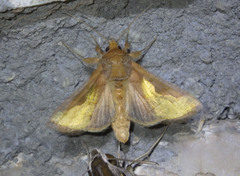
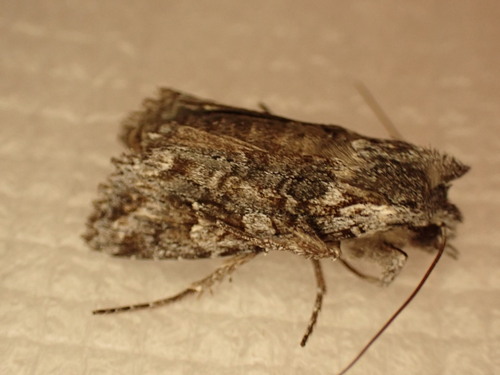
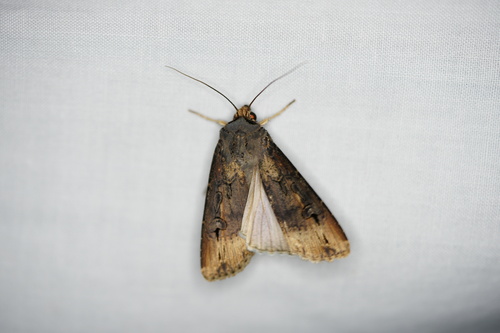
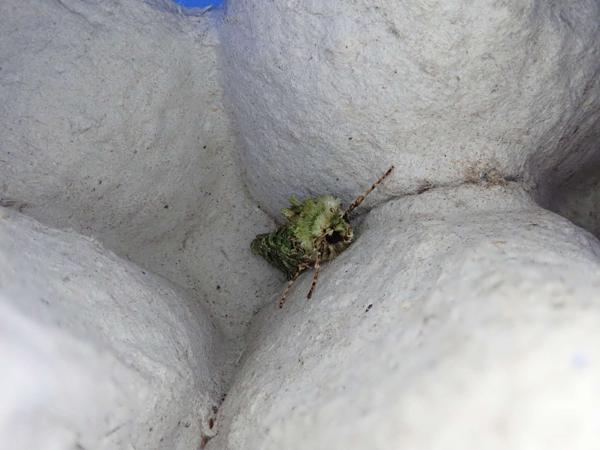
Thysanoplusia orichalcea, the slender burnished brass, is a moth of the family Noctuidae. The species was first described by Johan Christian Fabricius in 1775. It is a polyphagous pest of vegetable crops that originated in Indonesia, from where it spread to Europe, South Asia, India, Sri Lanka, Africa, Australia and New Zealand. In northern Europe it is a migrant species.

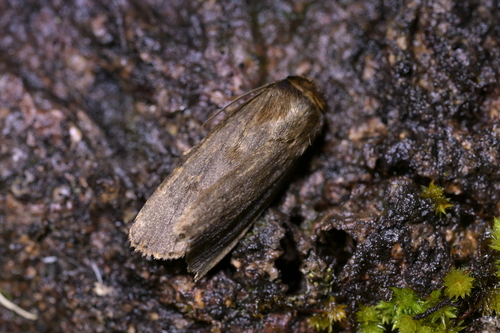
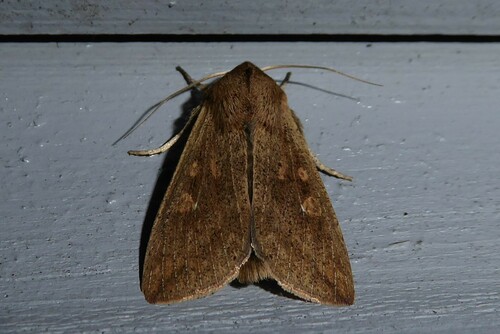
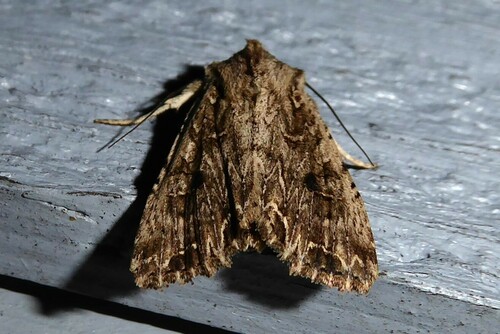
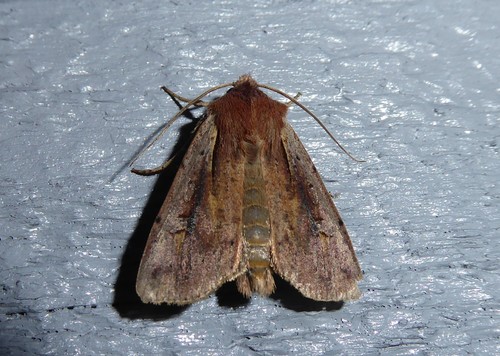
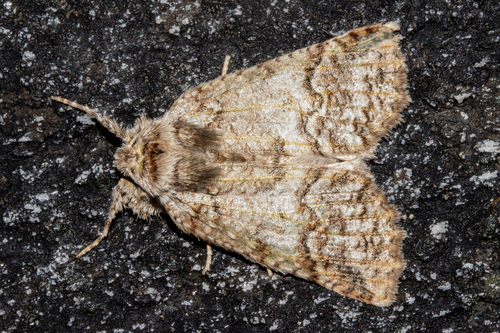
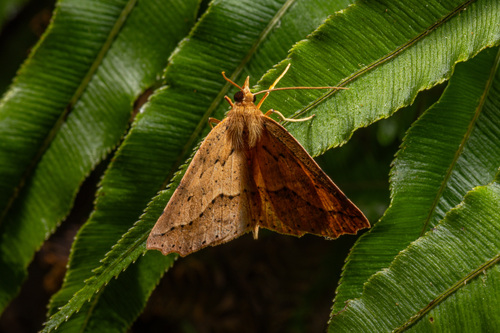
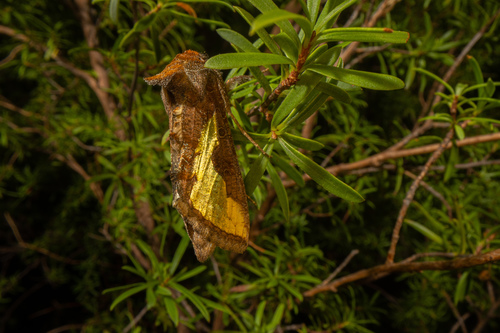
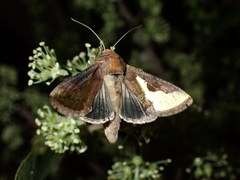
The wingspan is 36–44 mm. Its head, collar and the vertex of its head are reddish orange. Tegulae and forewings pale reddish brown. The forewings are extensively covered with a metallic golden shimmering surface. Only the costal field and hem are brown. Sub-basal, antemedial and postmedial waved lines very indistinct, fine and whitish in colour. The sub-marginal line irregularly lunulate. The reniform and orbicular stains are small and white bordered. The unpatterned hindwings are grey brown, somewhat darker at the margin. The thorax is furry and with some hair tufts, the proboscis is well developed.

Larva bluish green with a few short dorsal hairs. There are slender dorsal white lines and a prominent lateral line. The moth flies from August to October, depending on the location. The... Wikipedia →
Global Distribution

Parks Where Found

# Park Country Daily sighting probability
1 Egmont National Park 🇳🇿 New Zealand
~10%
2 Kruger National Park 🇿🇦 South Africa
<5%

Cities Where Found

# City Country Daily sighting probability
1 Pretoria 🇿🇦 South Africa
~10%
2 Auckland 🇳🇿 New Zealand
~10%
3 Porto 🇵🇹 Portugal
~10%
4 Johannesburg 🇿🇦 South Africa
~10%
5 Lisbon 🇵🇹 Portugal
<5%
6 Brisbane 🇦🇺 Australia
<5%
7 Sydney 🇦🇺 Australia
<5%

Before you go

What are the chances of seeing a Slender Burnished Brass in Egmont National Park?

With luck

About 10% of wildlife watchers report a Slender Burnished Brass sighting in Egmont National Park on a given day, based on 6 verified sightings from GBIF citizen-science data from 2019 to 2026. It is the 123rd most-seen of the 191 insects we can rate there. Over three days the chance rises to about 30%, and over a week to about 50%, if each day is a fresh chance.

When is the best time to see a Slender Burnished Brass in Egmont National Park?

February and March

In those months about 20% of wildlife watchers report a Slender Burnished Brass in Egmont National Park on a given day, against under 5% in May to January, the lowest months.

What time of day is best to see a Slender Burnished Brass?

Between 7 and 10 pm

Across all the parks we cover, that three-hour window holds the most Slender Burnished Brass sightings with a recorded time, and about 6 in 10 of them come between 6 pm and 6 am: it is most active around dawn and dusk.

Is Egmont National Park the best place to see a Slender Burnished Brass?

Yes

Of the 2 parks where we can rate Slender Burnished Brass sightings, Egmont National Park has the highest daily chance: about 10%. Next come Kruger National Park (South Africa, under 5%).

Which relatives of the Slender Burnished Brass live in Egmont National Park?

Same family: Noctuidae

The closest relatives of the Slender Burnished Brass that you can see in Egmont National Park (family Noctuidae, Cutworm Moths and Allies) are New Zealand Cutworm (about 20%), Ipsilon Dart Moth (about 20%) and Feredayia grammosa (about 20%), with each one's daily chance of a sighting.

Where does the Slender Burnished Brass sighting chance come from?

GBIF citizen-science records

It is estimated from how often the Slender Burnished Brass is recorded against all the insects logged in Egmont National Park (6 verified sightings from 2019 to 2026), calibrated against known sighting rates. Figures are rounded to the nearest 10% because citizen-science data supports honest approximations, not decimals, and months with records from fewer than five people show "—". How it works.

← Back to Egmont National Park