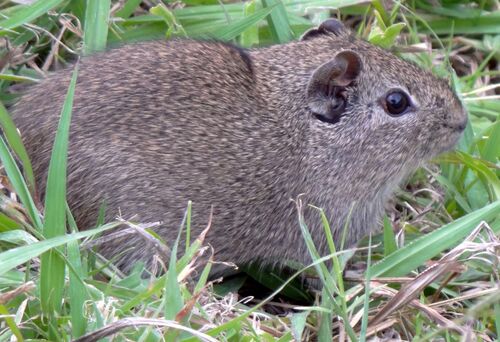
Chacoan Mara

Chacoan Mara

Dolichotis salinicola

Silhouette: PhyloPic

LCLeast ConcernNTVUENCR
Daily sighting probability ~60% · Likely
at El Impenetrable National Park

In 3 days ~90% in a week >90%

24 Verified sightings at El Impenetrable National Park From 2019 to 2026
24 In 1 park
November Best month
🌅 Crepuscular When it's spotted

About the Chacoan Mara

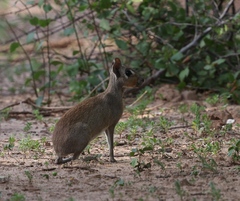
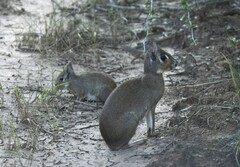
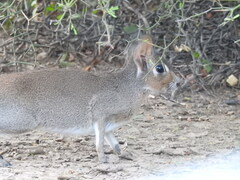
The Chacoan mara (Dolichotis salinicola) or Chacoan cavy is a relatively large South American rodent of the cavy family. They are a close relative of the better known Patagonian mara. The Chacoan mara is the sole member of the genus Dolichotis.

Until recently Pediolagus was considered synonymous with Dolichotis and the Chacoan mara was a member of that genus. However, a 2020 study by the American Society of Mammalogists found significant difference between the two mara species to warrant resurrecting Pediolagus. Conversely, a 2021 study indicated that Pediolagus should be included in Dolichotis alongside the fossil species D. chapalmalense, D. major, and D. intermedia, and that the retention of Pediolagus would cause taxonomic issues and confusion for these fossil species. The American Society of Mammalogists and IUCN continue to recognize this species as a member of Dolichotis.

The Chacoan mara lives in the South American Chaco, the dry thorny forests and grasslands of Argentina, Paraguay, and Bolivia. Maras dig a burrow to sleep in at night. The Chacoan mara eat grasses and other herbage. They will eat nearly any available vegetation. Specifically... Wikipedia →

Global Distribution

Parks Where Found

# Park Country Daily sighting probability
1 El Impenetrable National Park 🇦🇷 Argentina
~60%

More parks will be added in future updates.

Zoos & Centres Where Found

# Zoo / Centre Country
1 Moscow Zoo 🇷🇺 Russia In captivity
2 Prague Zoo 🇨🇿 Czechia In captivity
3 Tierpark Berlin 🇩🇪 Germany In captivity
4 Ostrava Zoo 🇨🇿 Czechia In captivity
5 Zoo Pilsen 🇨🇿 Czechia In captivity
6 The Green Zoo Wuppertal 🇩🇪 Germany In captivity
7 Budapest Zoo & Botanical Garden 🇭🇺 Hungary In captivity
8 Tierpark Limbach-Oberfrohna 🇩🇪 Germany In captivity
9 Rákosův pavilon 🇨🇿 Czechia In captivity
10 Velemlokárium 🇨🇿 Czechia In captivity
11 Тульский экзотариум (новая экспозиция) 🇷🇺 Russia In captivity

Before you go

What are the chances of seeing a Chacoan Mara in El Impenetrable National Park?

Likely

About 60% of wildlife watchers report a Chacoan Mara sighting in El Impenetrable National Park on a given day, based on 24 verified sightings from GBIF citizen-science data from 2019 to 2026. It is the most-seen of the 13 mammals we can rate there. Over three days the chance rises to about 90%, and over a week to over 90%, if each day is a fresh chance.

When is the best time to see a Chacoan Mara in El Impenetrable National Park?

March, July and November

In those months about 70% of wildlife watchers report a Chacoan Mara in El Impenetrable National Park on a given day, against about 10% in December, the lowest month.

What time of day is best to see a Chacoan Mara?

Between 3 and 6 pm

Across all the parks we cover, that three-hour window holds the most Chacoan Mara sightings with a recorded time, and about 7 in 10 of them come between 6 am and 6 pm: it is most active around dawn and dusk.

Where else can you see a Chacoan Mara?

Only El Impenetrable National Park, in our data

El Impenetrable National Park is the only park on Wallace's Line with enough records to rate Chacoan Mara sightings: about 60% of wildlife watchers there report one on a given day.

Which relatives of the Chacoan Mara live in El Impenetrable National Park?

Same family: Caviidae

The closest relatives of the Chacoan Mara that you can see in El Impenetrable National Park (family Caviidae, Cavies) are Capybara (about 40%) and Common Yellow-toothed Cavy (about 30%), with each one's daily chance of a sighting.

Where does the Chacoan Mara sighting chance come from?

GBIF citizen-science records

It is estimated from how often the Chacoan Mara is recorded against all the mammals logged in El Impenetrable National Park (24 verified sightings from 2019 to 2026), calibrated against known sighting rates. Figures are rounded to the nearest 10% because citizen-science data supports honest approximations, not decimals, and months with records from fewer than five people show "—". How it works.

← Back to El Impenetrable National Park