Cope's Leopard Lizard

Cope's Leopard Lizard

Gambelia copeii

Silhouette: Jose Carlos Arenas-Monroy · PhyloPic

LCLeast ConcernNTVUENCR
Daily sighting probability ~10% · With luck
at El Vizcaíno Biosphere Reserve

In 3 days ~40% in a week ~70%

8 Verified sightings at El Vizcaíno Biosphere Reserve From 2019 to 2026
8 In 1 park
May Best month
☀️ Diurnal When it's spotted

About the Cope's Leopard Lizard

The Baja California leopard lizard (Gambelia copeii), also known commonly as Cope's leopard lizard, is a species of lizard in the family Crotaphytidae. The species is endemic to Baja California and adjacent southern California.

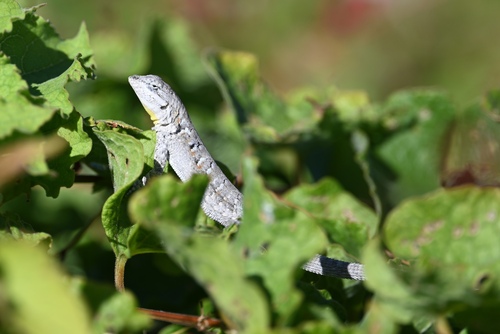
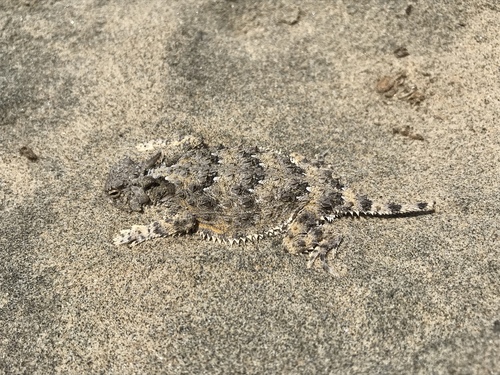
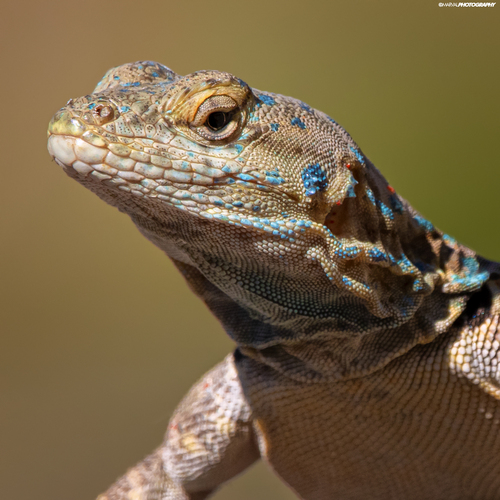
The specific name, copeii, is in honor of American herpetologist and paleontologist Edward Drinker Cope. Gambelia copeii is between 8 and 14 cm (3.1 and 5.5 in) in snout-to-vent length (SVL), and has a smoky gray color and darker gray or black dorsal spots, edged in a lighter shade. The dorsal pattern appears mottled or ocellated. There are light crossbars on the dorsum, and light gray or white on the venter. It has small granular scales. The large head is distinct from the neck, and the lining of the mouth and throat is purplish-black. Juvenile lizards are similar to adults, but have more distinct banding across the dorsum. Females develop red-orange blotches on the ventral side during breeding season. Males have femoral pores.

The Baja California leopard lizard is an uncommon species. It is a powerful bipedal runner. An adult can inflict a painful bite. It prefers chaparral habitats with an open understory.... Wikipedia →

Global Distribution

Parks Where Found

# Park Country Daily sighting probability
1 El Vizcaíno Biosphere Reserve 🇲🇽 Mexico
~10%

More parks will be added in future updates.

Closest Relatives at El Vizcaíno Biosphere Reserve

No species of the same family or order lives in El Vizcaíno Biosphere Reserve, so these are its closest relatives here: other reptiles.

Before you go

What are the chances of seeing a Cope's Leopard Lizard in El Vizcaíno Biosphere Reserve?

With luck

About 10% of wildlife watchers report a Cope's Leopard Lizard sighting in El Vizcaíno Biosphere Reserve on a given day, based on 8 verified sightings from GBIF citizen-science data from 2019 to 2026. It is the 16th most-seen of the 20 reptiles we can rate there. Over three days the chance rises to about 40%, and over a week to about 70%, if each day is a fresh chance.

When is the best time to see a Cope's Leopard Lizard in El Vizcaíno Biosphere Reserve?

April and May

In those months about 30% of wildlife watchers report a Cope's Leopard Lizard in El Vizcaíno Biosphere Reserve on a given day, against under 5% in July to February, the lowest months.

What time of day is best to see a Cope's Leopard Lizard?

Between 10 am and 1 pm

Across all the parks we cover, that three-hour window holds the most Cope's Leopard Lizard sightings with a recorded time, and about 9 in 10 of them come between 6 am and 6 pm: it is a daytime animal.

Where else can you see a Cope's Leopard Lizard?

Only El Vizcaíno Biosphere Reserve, in our data

El Vizcaíno Biosphere Reserve is the only park on Wallace's Line with enough records to rate Cope's Leopard Lizard sightings: about 10% of wildlife watchers there report one on a given day.

Where does the Cope's Leopard Lizard sighting chance come from?

GBIF citizen-science records

It is estimated from how often the Cope's Leopard Lizard is recorded against all the reptiles logged in El Vizcaíno Biosphere Reserve (8 verified sightings from 2019 to 2026), calibrated against known sighting rates. Figures are rounded to the nearest 10% because citizen-science data supports honest approximations, not decimals, and months with records from fewer than five people show "—". How it works.

← Back to El Vizcaíno Biosphere Reserve