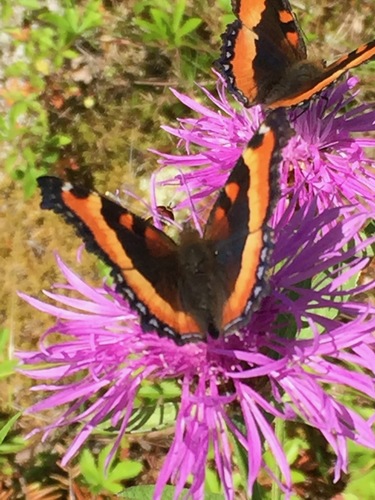
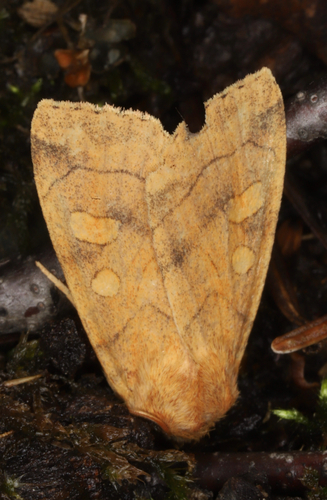
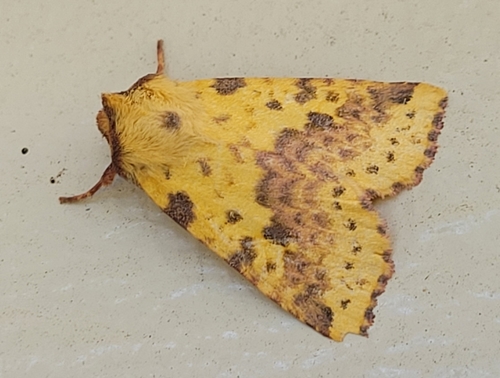
Aspen Twoleaf Tier Moth

Aspen Twoleaf Tier Moth

Enargia decolor

Daily sighting probability ~20% · Possible
at Elk Island National Park

In 3 days ~40% in a week ~70%

12 Verified sightings at Elk Island National Park From 2019 to 2026
12 In 1 park
August Best month
☀️🌙 Day & Night When it's spotted

About the Aspen Twoleaf Tier Moth

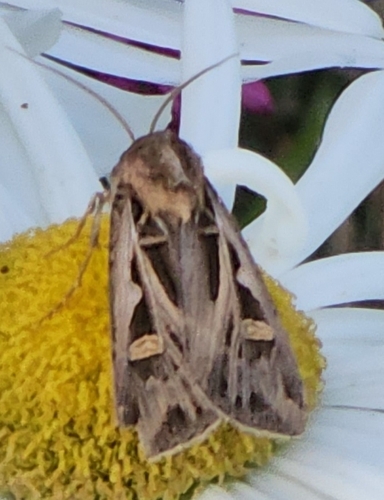
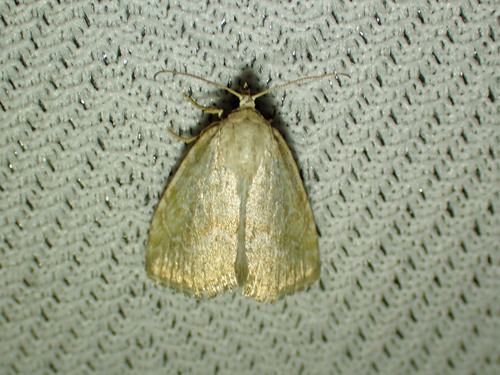
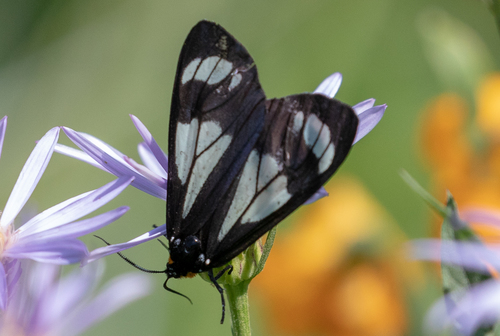
The pale enargia or aspen twoleaf tier (Enargia decolor) is a moth of the family Noctuidae. It has a boreal-transcontinental distribution, occurring across the Canadian boreal plain and then southward through the western cordillera at higher elevations, where it is presumably limited by the availability of trembling aspen and possibly other poplars. Records range from northernmost British Columbia and south-western Northwest Territories east to New Brunswick. It has also been reported from Nova Scotia, Ohio and New York. In the western United States it is known from western Montana, Idaho, Washington, Oregon, Nevada, Utah, Wyoming (Albany and Carbon counties), western Colorado, New Mexico (Grant Co.), and Arizona (Graham Co.). There are no records from the Rocky Mountain front ranges of Colorado, where it would be expected to be widespread if there is a continuous distribution southward into New Mexico and Arizona. The populations from west of the Rocky Mountains south to New Mexico and Arizona may represent a distinct species.

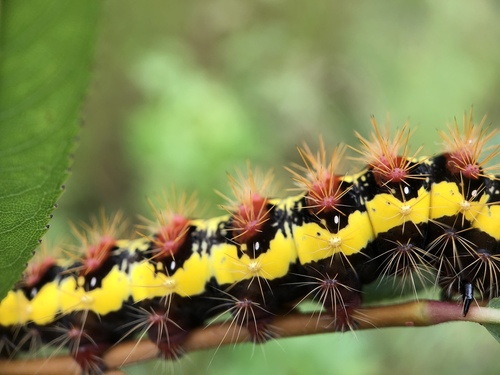
The wingspan is 30–40 mm. Adults are on wing from late July to early September with most records after mid-August. Larvae have been recorded on Betula papyrifera, Populus balsamifera, Salix species, Populus grandidentata and Alnus rugosa, but can reach population levels high enough to cause extensive defoliation of Populus tremuloides stands in boreal forests. Wikipedia →
Global Distribution

Parks Where Found

# Park Country Daily sighting probability
1 Elk Island National Park 🇨🇦 Canada
~20%

More parks will be added in future updates.

Cities Where Found

# City Country Daily sighting probability
1 Edmonton 🇨🇦 Canada
<5%
2 Calgary 🇨🇦 Canada
<5%

Before you go

What are the chances of seeing an Aspen Twoleaf Tier Moth in Elk Island National Park?

Possible

About 20% of wildlife watchers report an Aspen Twoleaf Tier Moth sighting in Elk Island National Park on a given day, based on 12 verified sightings from GBIF citizen-science data from 2019 to 2026. It is the 40th most-seen of the 112 insects we can rate there. Over three days the chance rises to about 40%, and over a week to about 70%, if each day is a fresh chance.

When is the best time to see an Aspen Twoleaf Tier Moth in Elk Island National Park?

August

In that month about 40% of wildlife watchers report an Aspen Twoleaf Tier Moth in Elk Island National Park on a given day, against under 5% in October to July, the lowest months. That is one of Elk Island National Park's wettest months, with about 75 mm of rain against 20 mm in December.

What time of day is best to see an Aspen Twoleaf Tier Moth?

Between 7 and 10 am

Across all the parks we cover, that three-hour window holds the most Aspen Twoleaf Tier Moth sightings with a recorded time, and about 7 in 10 of them come between 6 am and 6 pm: it is seen both by day and at night.

Where else can you see an Aspen Twoleaf Tier Moth?

Only Elk Island National Park, in our data

Elk Island National Park is the only park on Wallace's Line with enough records to rate Aspen Twoleaf Tier Moth sightings: about 20% of wildlife watchers there report one on a given day.

Which relatives of the Aspen Twoleaf Tier Moth live in Elk Island National Park?

Same family: Noctuidae

The closest relatives of the Aspen Twoleaf Tier Moth that you can see in Elk Island National Park (family Noctuidae, Cutworm Moths and Allies) are Pink-Banded Sallow (about 10%), Smeared Dagger (about 10%) and Dingy Cutworm Moth (about 10%), with each one's daily chance of a sighting.

Where does the Aspen Twoleaf Tier Moth sighting chance come from?

GBIF citizen-science records

It is estimated from how often the Aspen Twoleaf Tier Moth is recorded against all the insects logged in Elk Island National Park (12 verified sightings from 2019 to 2026), calibrated against known sighting rates. Figures are rounded to the nearest 10% because citizen-science data supports honest approximations, not decimals, and months with records from fewer than five people show "—". How it works.

← Back to Elk Island National Park