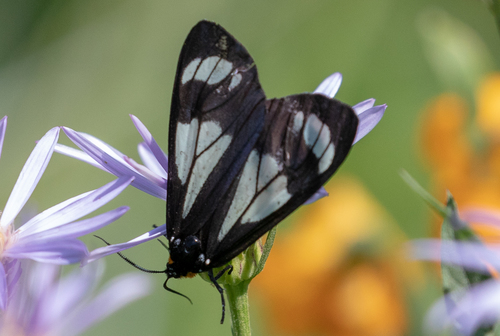
Smeared Dagger

Smeared Dagger

Acronicta oblinita

Daily sighting probability ~10% · With luck
at Elk Island National Park

In 3 days ~30% in a week ~60%

9 Verified sightings at Elk Island National Park From 2019 to 2026
48 In all 3 parks
August Best month
☀️ Diurnal When it's spotted

About the Smeared Dagger

Acronicta oblinita, the smeared dagger moth or arioch dagger, is a moth of the family Noctuidae. Its larva, the smartweed caterpillar, has urticating hairs. The species was first described by James Edward Smith in 1797.

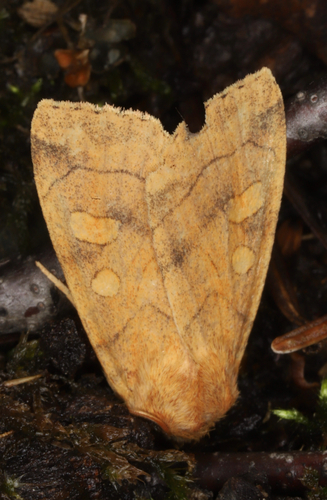
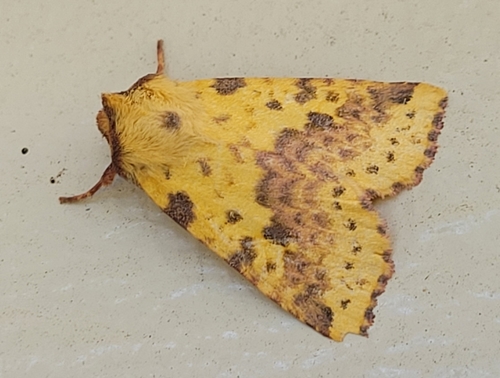
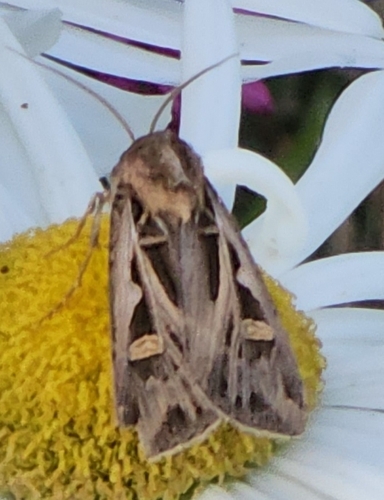
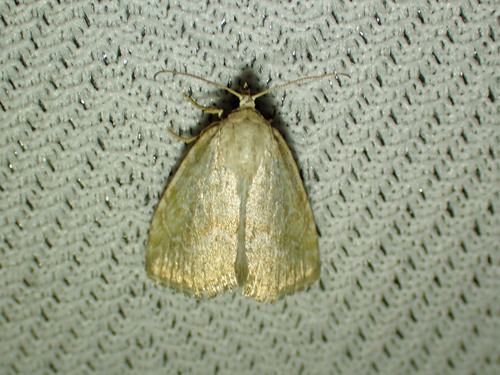
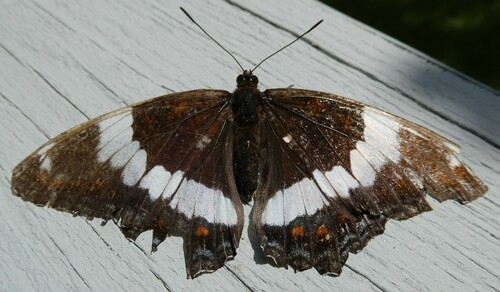
The smeared dagger moth adult has a wingspan of 3.6–5.4 centimetres (1.4–2.1 in). The forewings have a mottled gray appearance, with orbicular and reniform spots on each dorsal surface that are incompletely outlined and indistinct. Smeared-appearing dark wedge spots are present along the postmedial line with their apices pointed inward. There is a terminal line of dark spots on the forewing. The hindwings are white and also have small dark spots along their terminal line.

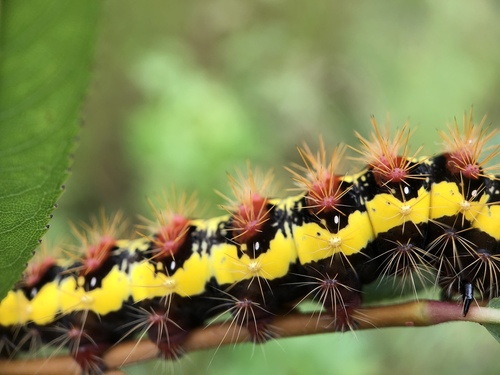
The larva is a caterpillar up to 4 centimetres (1.6 in) long that bears numerous tufts of irritating setae on wart-like protuberances along its thoracic and abdominal segments. There are bright yellow blotches in the shape of carets (inverted "V" shapes) between the laterally-positioned spiracles.

The smeared dagger moth is found across Canada as far north as Lake Athabasca. In the United States, the moth is found in the Pacific Northwest and east of the Rocky Mountains... Wikipedia →
Global Distribution

Parks Where Found

# Park Country Daily sighting probability
1 Point Pelee National Park 🇨🇦 Canada
~20%
2 Elk Island National Park 🇨🇦 Canada
~10%
3 Cape Breton Highlands National Park 🇨🇦 Canada
~10%

Cities Where Found

# City Country Daily sighting probability
1 Washington 🇺🇸 United States
~10%
2 Philadelphia 🇺🇸 United States
<5%
3 New York City 🇺🇸 United States
<5%
4 Toronto 🇨🇦 Canada
<5%
5 Chicago 🇺🇸 United States
<5%
6 Houston 🇺🇸 United States
<5%

Before you go

What are the chances of seeing a Smeared Dagger in Elk Island National Park?

With luck

About 10% of wildlife watchers report a Smeared Dagger sighting in Elk Island National Park on a given day, based on 9 verified sightings from GBIF citizen-science data from 2019 to 2026. It is the 65th most-seen of the 112 insects we can rate there. Over three days the chance rises to about 30%, and over a week to about 60%, if each day is a fresh chance.

When is the best time to see a Smeared Dagger in Elk Island National Park?

August

In that month about 30% of wildlife watchers report a Smeared Dagger in Elk Island National Park on a given day, against under 5% in September to June, the lowest months. That is one of Elk Island National Park's wettest months, with about 75 mm of rain against 20 mm in December.

What time of day is best to see a Smeared Dagger?

Between 11 am and 2 pm

Across all the parks we cover, that three-hour window holds the most Smeared Dagger sightings with a recorded time, and about 9 in 10 of them come between 6 am and 6 pm: it is a daytime animal.

Is Elk Island National Park the best place to see a Smeared Dagger?

2nd of 3

Of the 3 parks where we can rate Smeared Dagger sightings, Elk Island National Park ranks 2nd at about 10%. The best odds are in Point Pelee National Park (Canada, about 20%).

Which relatives of the Smeared Dagger live in Elk Island National Park?

Same family: Noctuidae

The closest relatives of the Smeared Dagger that you can see in Elk Island National Park (family Noctuidae, Cutworm Moths and Allies) are Aspen Twoleaf Tier Moth (about 20%), Pink-Banded Sallow (about 10%) and Dingy Cutworm Moth (about 10%), with each one's daily chance of a sighting.

Where does the Smeared Dagger sighting chance come from?

GBIF citizen-science records

It is estimated from how often the Smeared Dagger is recorded against all the insects logged in Elk Island National Park (9 verified sightings from 2019 to 2026), calibrated against known sighting rates. Figures are rounded to the nearest 10% because citizen-science data supports honest approximations, not decimals, and months with records from fewer than five people show "—". How it works.

← Back to Elk Island National Park