
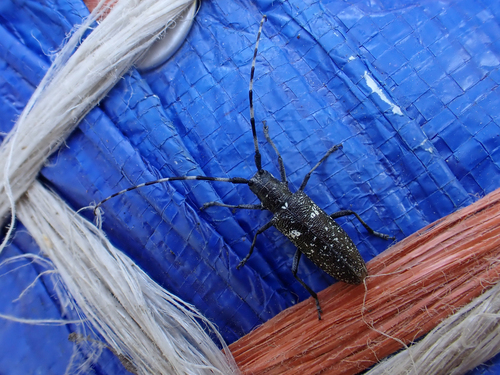
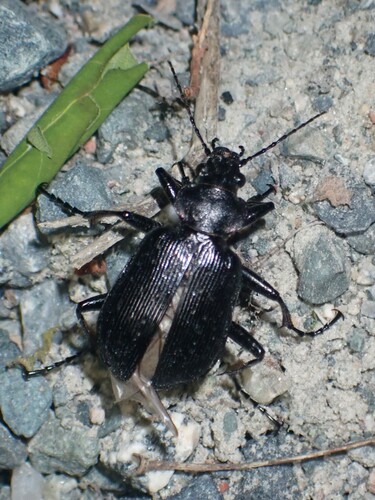
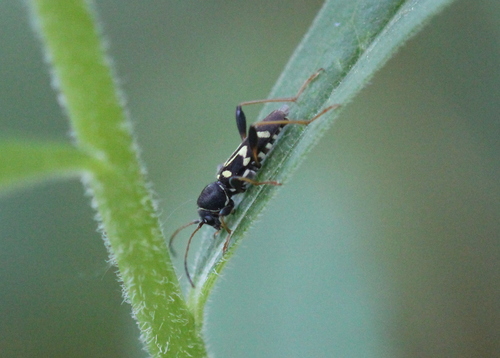
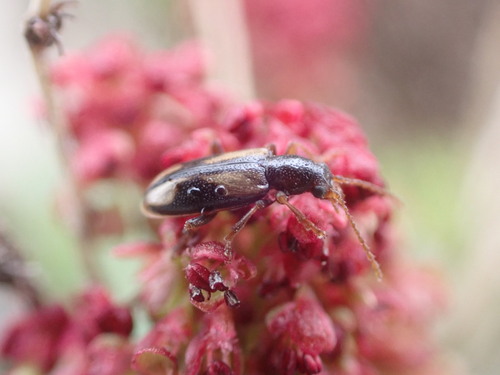
Thistle Tortoise Beetle

Thistle Tortoise Beetle

Cassida rubiginosa

Daily sighting probability ~10% · With luck
at Elk Island National Park

In 3 days ~30% in a week ~60%

7 Verified sightings at Elk Island National Park From 2019 to 2026
35 In all 5 parks
July Best month
☀️ Diurnal When it's spotted

About the Thistle Tortoise Beetle

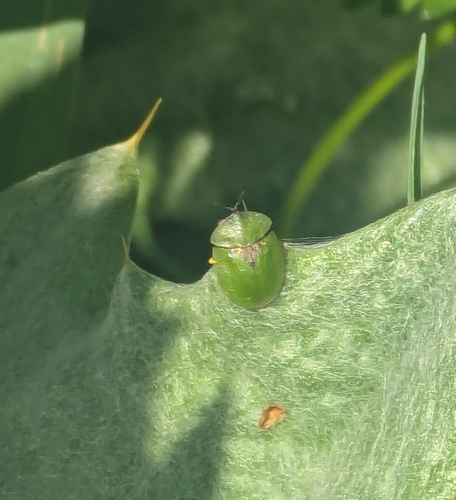
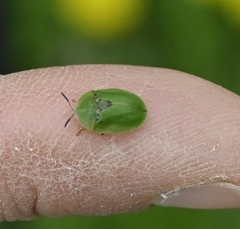
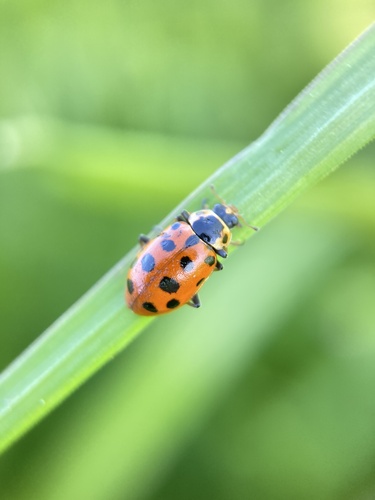
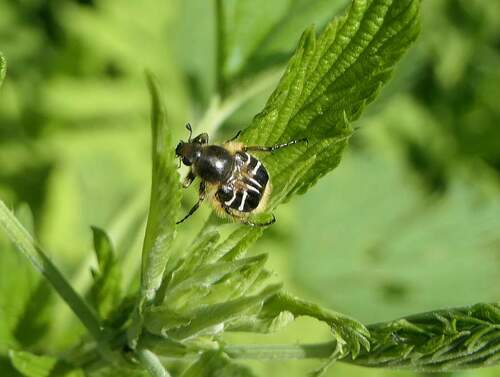
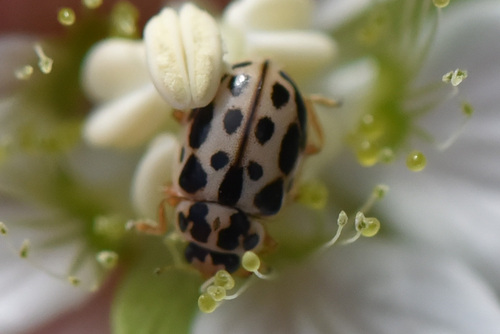
The thistle tortoise beetle (Cassida rubiginosa) is a species of beetle in the subfamily Cassidinae (tortoise beetles) and the genus Cassida. The thistle tortoise beetle can be recognized by its green, rounded back and it can be found on thistle plants in many regions of North America and Europe. The thistle tortoise beetle was first discovered in 1902 in Lévis, Quebec. In 1931, Nellie F. Paterson was the first to document the mature larva. Later, the instar larva of this species was first recorded in 2004 by Jolanta Świętojańska. The thistle tortoise beetle exhibits multiple defense behaviors, such as a flexible shield, providing a barrier against the mandibles of predators, and an excretion that protects the eggs as well.

Its ability to massively consume and damage thistle plants has also made this beetle a well known biological control agent in many countries, including the United States, Canada, and Switzerland. However, in some cases, the impact of these beetles has been limited due to parasitism preventing their accumulation in regions of thistle targeted for biological control.

The thistle tortioise beetles measure 6.0–8.0 mm in length. Like all Cassida, its... Wikipedia →

Global Distribution

Parks Where Found

# Park Country Daily sighting probability
1 Elk Island National Park 🇨🇦 Canada
~10%
2 Bavarian Forest National Park 🇩🇪 Germany
~10%
3 Shenandoah National Park 🇺🇸 United States
~10%
4 Wadden Sea National Park 🇩🇪 Germany
<5%
5 Pyrénées National Park 🇫🇷 France
<5%

Cities Where Found

# City Country Daily sighting probability
1 Birmingham 🇬🇧 United Kingdom
~10%
2 Rotterdam [The Hague] 🇳🇱 Netherlands
~10%
3 Manchester 🇬🇧 United Kingdom
~10%
4 Bucharest 🇷🇴 Romania
~10%
5 London 🇬🇧 United Kingdom
<5%
6 Helsinki 🇫🇮 Finland
<5%
7 Liverpool 🇬🇧 United Kingdom
<5%
8 Kyiv 🇺🇦 Ukraine
<5%
9 Edmonton 🇨🇦 Canada
<5%
10 Toronto 🇨🇦 Canada
<5%

Before you go

What are the chances of seeing a Thistle Tortoise Beetle in Elk Island National Park?

With luck

About 10% of wildlife watchers report a Thistle Tortoise Beetle sighting in Elk Island National Park on a given day, based on 7 verified sightings from GBIF citizen-science data from 2019 to 2026. It is the 76th most-seen of the 112 insects we can rate there. Over three days the chance rises to about 30%, and over a week to about 60%, if each day is a fresh chance.

When is the best time to see a Thistle Tortoise Beetle in Elk Island National Park?

May to September

In those months about 10% of wildlife watchers report a Thistle Tortoise Beetle in Elk Island National Park on a given day, against under 5% in October to April, the lowest months. Those are among Elk Island National Park's wettest months, with about 80 mm of rain a month against 20 mm in December.

What time of day is best to see a Thistle Tortoise Beetle?

Between 2 and 5 pm

Across all the parks we cover, that three-hour window holds the most Thistle Tortoise Beetle sightings with a recorded time, and nearly all of them come between 6 am and 6 pm: it is a daytime animal.

Is Elk Island National Park the best place to see a Thistle Tortoise Beetle?

Yes

Of the 5 parks where we can rate Thistle Tortoise Beetle sightings, Elk Island National Park has the highest daily chance: about 10%. Next come Bavarian Forest National Park (Germany, about 10%) and Shenandoah National Park (United States, about 10%).

Where does the Thistle Tortoise Beetle sighting chance come from?

GBIF citizen-science records

It is estimated from how often the Thistle Tortoise Beetle is recorded against all the insects logged in Elk Island National Park (7 verified sightings from 2019 to 2026), calibrated against known sighting rates. Figures are rounded to the nearest 10% because citizen-science data supports honest approximations, not decimals, and months with records from fewer than five people show "—". How it works.

← Back to Elk Island National Park