
Nilgiri Pipit

Nilgiri Pipit

Anthus nilghiriensis

Silhouette: Susan Murphy (original photograph), T. Michael Keesey (vectorization) · PhyloPic

LCNTVUVulnerableENCR Endemic
Daily sighting probability ~50% · Likely
at Eravikulam National Park

In 3 days ~90% in a week >90%

275 Verified sightings at Eravikulam National Park From 2019 to 2026
275 In 1 park
April Best month
☀️ Diurnal When it's spotted

About the Nilgiri Pipit

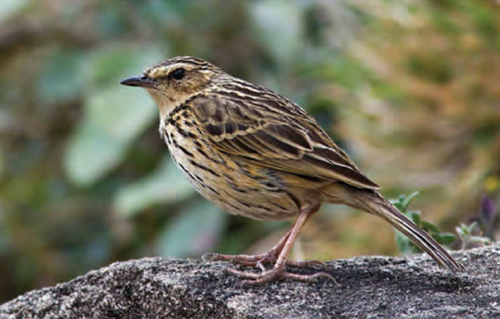
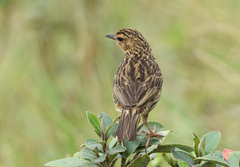
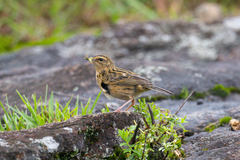
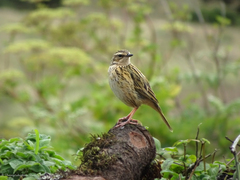
The Nilgiri pipit (Anthus nilghiriensis) is a distinctive species of pipit that is endemic to the high altitude hills of southern India. Richer brown in colour than other pipits in the region, it is distinctive in having the streaking on the breast continuing along the flanks. It is non-migratory and has a tendency to fly into low trees when disturbed and is closely related to the tree pipits Anthus hodgsoni and Anthus trivialis.

The Nilgiri pipit is about 12.6–14 centimetres (5.0–5.5 in) long and is richly coloured, has dark lores, a buff supercilium and throat. It lacks any malar stripes. The flanks, breast and sides of neck are brighter buff and that bill is completely dark. The crown is heavily streaked in black as are the upperparts. The outer tail feathers are also buff coloured and there is no white in the plumage. The streaking on the breast is fine and it extends along the flanks.

The first four primaries of the wing are almost equal and the fifth is about 1–2 mm shorter. The primaries from the second to the fifth are emarginate. The tail feathers are pointed and the second outer feather has a tapering triangle along the shaft and the third with a small triangle... Wikipedia →

Sounds

Call0:38

India · 2020

© Sathyan Meppayur · XC537477 · CC BY-NC-SA 4.0

Song0:18

India · 1996

© David Farrow · XC19782 · CC BY-NC-SA 3.0

Call0:13

India · 2018

© Viral joshi · XC422695 · CC BY-NC-SA 4.0

Global Distribution

Parks Where Found

# Park Country Daily sighting probability
1 Eravikulam National Park 🇮🇳 India
~50%

More parks will be added in future updates.

Before you go

What are the chances of seeing a Nilgiri Pipit in Eravikulam National Park?

Likely

About 50% of wildlife watchers report a Nilgiri Pipit sighting in Eravikulam National Park on a given day, based on 275 verified sightings from GBIF citizen-science data from 2019 to 2026. It is the 10th most-seen of the 116 birds we can rate there. Over three days the chance rises to about 90%, and over a week to over 90%, if each day is a fresh chance.

When is the best time to see a Nilgiri Pipit in Eravikulam National Park?

April

In that month about 70% of wildlife watchers report a Nilgiri Pipit in Eravikulam National Park on a given day, against about 20% in March, the lowest month. That is one of Eravikulam National Park's driest months, with about 110 mm of rain against 450 mm in July.

What time of day is best to see a Nilgiri Pipit?

Between 8 and 11 am

Across all the parks we cover, that three-hour window holds the most Nilgiri Pipit sightings with a recorded time, and about 9 in 10 of them come between 6 am and 6 pm: it is a daytime animal.

Where else can you see a Nilgiri Pipit?

Only Eravikulam National Park, in our data

Eravikulam National Park is the only park on Wallace's Line with enough records to rate Nilgiri Pipit sightings: about 50% of wildlife watchers there report one on a given day.

Which relatives of the Nilgiri Pipit live in Eravikulam National Park?

Same family: Motacillidae

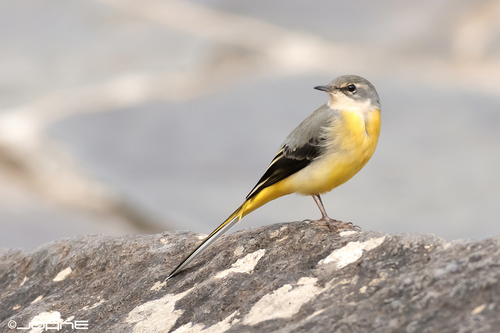
The closest relatives of the Nilgiri Pipit that you can see in Eravikulam National Park (family Motacillidae, Wagtails and Pipits) are Grey Wagtail (about 40%) and White-browed Wagtail (about 30%), with each one's daily chance of a sighting.

Where does the Nilgiri Pipit sighting chance come from?

GBIF citizen-science records

It is estimated from how often the Nilgiri Pipit is recorded against all the birds logged in Eravikulam National Park (275 verified sightings from 2019 to 2026), calibrated against known sighting rates. Figures are rounded to the nearest 10% because citizen-science data supports honest approximations, not decimals, and months with records from fewer than five people show "—". How it works.

← Back to Eravikulam National Park