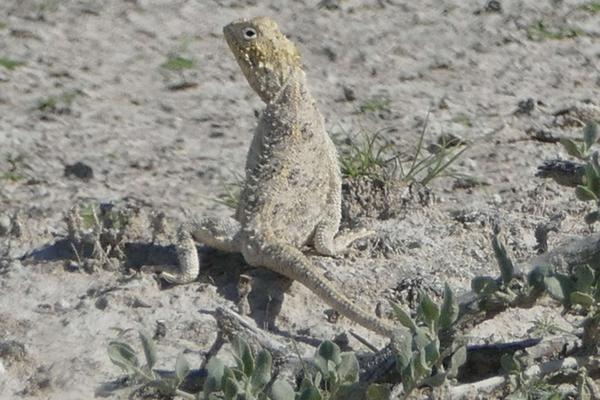
Western Barred Spitting Cobra

Western Barred Spitting Cobra

Naja nigricincta

Silhouette: V. Deepak · PhyloPic

LCLeast ConcernNTVUENCR
Daily sighting probability ~10% · With luck
at Etosha National Park

In 3 days ~30% in a week ~50%

8 Verified sightings at Etosha National Park From 2019 to 2026
14 In all 2 parks
April Best month
☀️ Diurnal When it's spotted

About the Western Barred Spitting Cobra

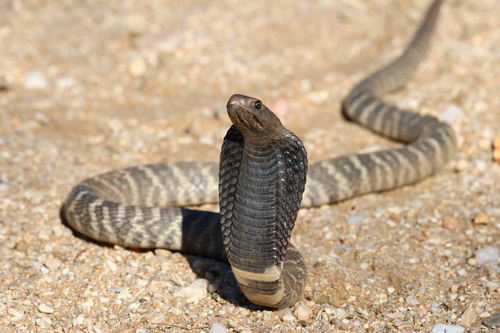
Naja nigricincta, or Western barred spitting cobra, is a species of spitting cobra in the genus Naja, belonging to the family Elapidae. The species is native to the deserts and drier regions of southern Africa. The species is largely nocturnal, and is often found while crossing roads at night. There are two recognized subspecies.

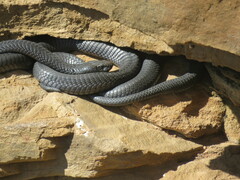
Naja nigricincta had long been considered to be a subspecies of the black-necked spitting cobra (Naja nigricollis), but morphological and genetic differences have led to its recognition as a separate species. Two subspecies are currently recognized under Naja nigricincta. The nominate subspecies N. n. nigricincta, commonly known as the zebra spitting cobra, zebra cobra, zebra snake or western barred spitting cobra, is given its name because of the dark crossbars that run the length of the snake's body. The subspecies N. n. woodi, commonly known as the black spitting cobra, woods black spitting cobra, is solid black and is found only in the desert areas of southern Africa. Both subspecies are smaller than N. nigricollis; with average adult lengths of less than 1.5 metres (4.9 ft).

Naja nigricincta is an oviparous... Wikipedia →

Global Distribution

Parks Where Found

# Park Country Daily sighting probability
1 Etosha National Park 🇳🇦 Namibia
~10%
2 Namib-Naukluft National Park 🇳🇦 Namibia
~10%

Zoos & Centres Where Found

# Zoo / Centre Country
1 Abilene Zoological Gardens 🇺🇸 United States In captivity
2 Omaha’s Henry Doorly Zoo and Aquarium 🇺🇸 United States In captivity
3 Indianapolis Zoo 🇺🇸 United States In captivity
4 The Abilene Zoo 🇺🇸 United States In captivity
5 Hartbeespoort Dam Snake and Animal Park 🇿🇦 South Africa In captivity
6 National Marine Aquarium of Namibia 🇳🇦 Namibia In captivity
7 Thrissur Zoo 🇮🇳 India In captivity
8 National Reptile Zoo 🇮🇪 Ireland In captivity

Before you go

What are the chances of seeing a Western Barred Spitting Cobra in Etosha National Park?

With luck

About 10% of wildlife watchers report a Western Barred Spitting Cobra sighting in Etosha National Park on a given day, based on 8 verified sightings from GBIF citizen-science data from 2019 to 2026. It is the 13th most-seen of the 22 reptiles we can rate there. Over three days the chance rises to about 30%, and over a week to about 50%, if each day is a fresh chance.

When is the best time to see a Western Barred Spitting Cobra in Etosha National Park?

April

In that month about 30% of wildlife watchers report a Western Barred Spitting Cobra in Etosha National Park on a given day, against under 5% in May–July, September–October and December–January, the lowest months. That is one of Etosha National Park's driest months, with about 10 mm of rain against 75 mm in January.

What time of day is best to see a Western Barred Spitting Cobra?

Between 9 am and noon

Across all the parks we cover, that three-hour window holds the most Western Barred Spitting Cobra sightings with a recorded time, and about 7 in 10 of them come between 6 am and 6 pm: it is a daytime animal.

Is Etosha National Park the best place to see a Western Barred Spitting Cobra?

Yes

Of the 2 parks where we can rate Western Barred Spitting Cobra sightings, Etosha National Park has the highest daily chance: about 10%. Next come Namib-Naukluft National Park (Namibia, about 10%).

Where does the Western Barred Spitting Cobra sighting chance come from?

GBIF citizen-science records

It is estimated from how often the Western Barred Spitting Cobra is recorded against all the reptiles logged in Etosha National Park (8 verified sightings from 2019 to 2026), calibrated against known sighting rates. Figures are rounded to the nearest 10% because citizen-science data supports honest approximations, not decimals, and months with records from fewer than five people show "—". How it works.

← Back to Etosha National Park