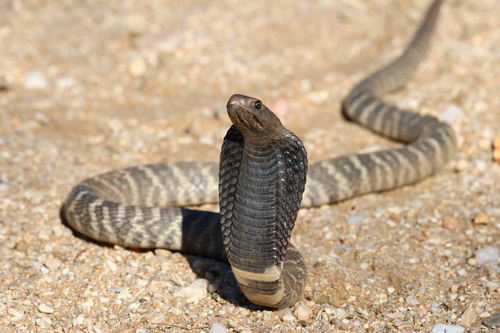
Bushveld Lizard

Bushveld Lizard

Heliobolus lugubris

Silhouette: Gustav Mützel · PhyloPic

LCLeast ConcernNTVUENCR
Daily sighting probability ~10% · With luck
at Etosha National Park

In 3 days ~30% in a week ~60%

10 Verified sightings at Etosha National Park From 2019 to 2026
30 In all 3 parks
January Best month
☀️ Diurnal When it's spotted

About the Bushveld Lizard

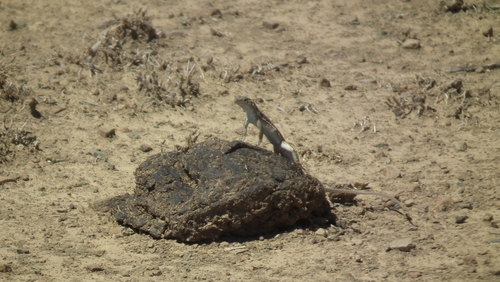
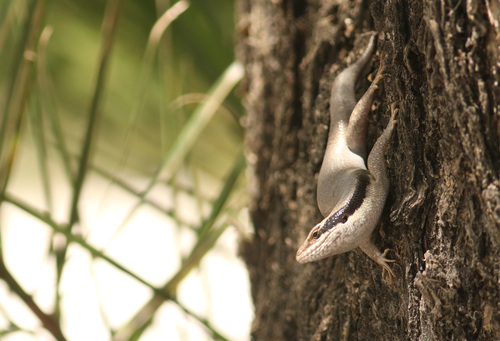
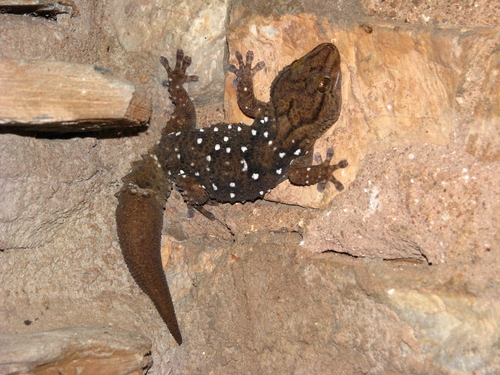
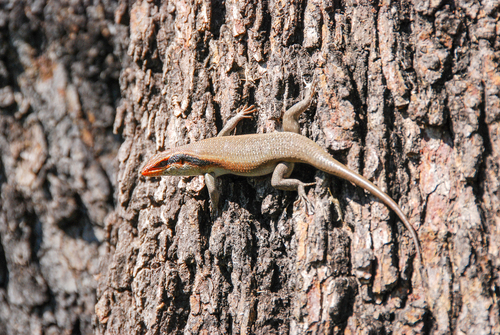
Heliobolus lugubris, also known commonly as the bushveld lizard, mourning racerunner, or the black and yellow sand lizard, is a species of lizard in the family Lacertidae. The species is found in Southern Africa: southern Angola, Namibia, Botswana, southwestern Zimbabwe, southern Mozambique, and south-central to northern South Africa.

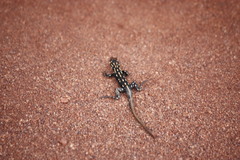
Juveniles of H. lugubris are black with light spots and move with a hunched gait, mimicking the appearance of Anthia ground beetles. This mimicry is thought to discourage predation, as the beetles spray formic acid as a defense mechanism and are thus less appealing targets for predators. This is one of very few recorded examples of a vertebrate mimicking an invertebrate.

Branch, Bill (2004). Field Guide to Snakes and other Reptiles of Southern Africa. Third Revised edition, Second impression. Sanibel Island, Florida: Ralph Curtis Books. 399 pp. ISBN 0-88359-042-5. (Heliobolus lugubris, p. 161 + Plate 57). Wikipedia →

Global Distribution

Parks Where Found

# Park Country Daily sighting probability
1 Waterberg Plateau Park 🇳🇦 Namibia
~40%
2 Etosha National Park 🇳🇦 Namibia
~10%
3 Kruger National Park 🇿🇦 South Africa
~10%

Before you go

What are the chances of seeing a Bushveld Lizard in Etosha National Park?

With luck

About 10% of wildlife watchers report a Bushveld Lizard sighting in Etosha National Park on a given day, based on 10 verified sightings from GBIF citizen-science data from 2019 to 2026. It is the 12th most-seen of the 22 reptiles we can rate there. Over three days the chance rises to about 30%, and over a week to about 60%, if each day is a fresh chance.

When is the best time to see a Bushveld Lizard in Etosha National Park?

January

In that month about 30% of wildlife watchers report a Bushveld Lizard in Etosha National Park on a given day, against under 5% in February–April, June–July and September–October, the lowest months. That is one of Etosha National Park's wettest months, with about 75 mm of rain against almost none in June.

What time of day is best to see a Bushveld Lizard?

Between 9 am and noon

Across all the parks we cover, that three-hour window holds the most Bushveld Lizard sightings with a recorded time, and about 9 in 10 of them come between 6 am and 6 pm: it is a daytime animal.

Is Etosha National Park the best place to see a Bushveld Lizard?

2nd of 3

Of the 3 parks where we can rate Bushveld Lizard sightings, Etosha National Park ranks 2nd at about 10%. The best odds are in Waterberg Plateau Park (Namibia, about 40%).

Which relatives of the Bushveld Lizard live in Etosha National Park?

Same family: Lacertidae

The closest relatives of the Bushveld Lizard that you can see in Etosha National Park (family Lacertidae, Wall Lizards) are Mayer’s Sand Lizard (about 10%) and Namaqua Sand Lizard (about 10%), with each one's daily chance of a sighting.

Where does the Bushveld Lizard sighting chance come from?

GBIF citizen-science records

It is estimated from how often the Bushveld Lizard is recorded against all the reptiles logged in Etosha National Park (10 verified sightings from 2019 to 2026), calibrated against known sighting rates. Figures are rounded to the nearest 10% because citizen-science data supports honest approximations, not decimals, and months with records from fewer than five people show "—". How it works.

← Back to Etosha National Park