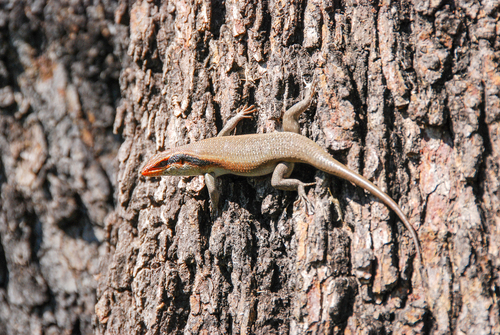
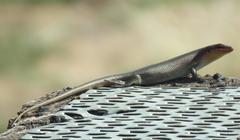
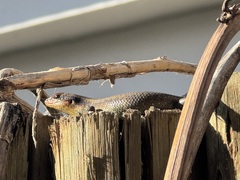
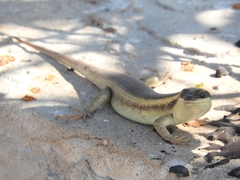
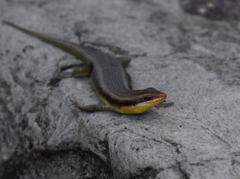

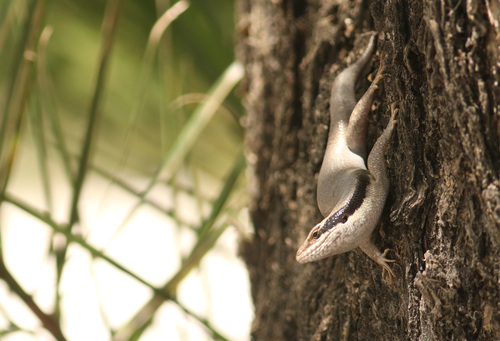
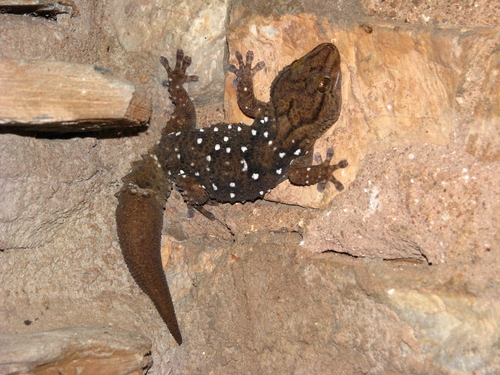
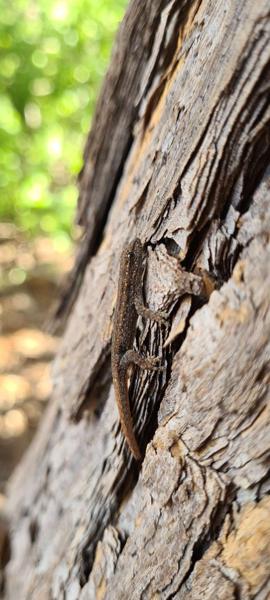
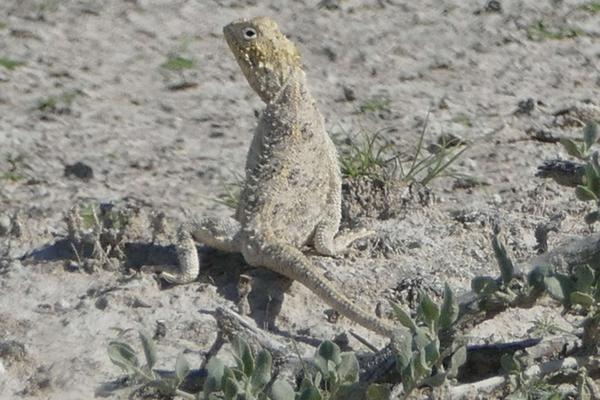
Wahlberg’s Striped Skink

Wahlberg’s Striped Skink

Trachylepis wahlbergii

Silhouette: David Orr · PhyloPic

Daily sighting probability ~20% · Possible
at Etosha National Park

In 3 days ~50% in a week ~80%

22 Verified sightings at Etosha National Park From 2019 to 2026
218 In all 10 parks
August Best month
☀️ Diurnal When it's spotted

About the Wahlberg’s Striped Skink

Trachylepis wahlbergii, also known commonly as Wahlberg's striped skink, is a species of lizard in the family Scincidae. The species is native to Southern Africa. Trachylepis wahlbergii has been considered a subspecies of Trachylepis striata. Whether T. wahlbergii is truly distinct from T. striata is not fully settled.

T. wahlbergii occurs in southern Angola, northern Botswana, northern Namibia, western Mozambique, Zambia, and northern, western and southern Zimbabwe. The specific name, wahlbergi, is in honour of Swedish Naturalist Johan August Wahlberg.

T. wahlbergii is viviparous. Peters W (1870). "Förteckning på de af J. Wahlberg i Damaralandet insamlade Reptilierna: Enumeratio Amphibiorum quae beat. J. Wahlberg anno 1854 ad 1855 in Africa occidentali (Damara) collegit ". Öfversigt af Kongl. Vetenskaps-Akademien Förhandlingar 26 (7): 657–662. (Euprepes wahlbergii, new species, p. 661). (in Swedish and Latin). Wikipedia →

Global Distribution

Parks Where Found

# Park Country Daily sighting probability
1 Waterberg Plateau Park 🇳🇦 Namibia
~50%
2 Kafue National Park 🇿🇲 Zambia
~50%
3 Moremi Game Reserve 🇧🇼 Botswana
~40%
4 Lower Zambezi National Park 🇿🇲 Zambia
~40%
5 South Luangwa National Park 🇿🇲 Zambia
~40%
6 Mana Pools National Park 🇿🇼 Zimbabwe
~40%
7 Hwange National Park 🇿🇼 Zimbabwe
~40%
8 Chobe National Park 🇧🇼 Botswana
~30%
9 Etosha National Park 🇳🇦 Namibia
~20%
10 Namib-Naukluft National Park 🇳🇦 Namibia
~10%

Cities Where Found

# City Country Daily sighting probability
1 Lusaka 🇿🇲 Zambia
~60%
2 Harare 🇿🇼 Zimbabwe
~40%

Before you go

What are the chances of seeing a Wahlberg’s Striped Skink in Etosha National Park?

Possible

About 20% of wildlife watchers report a Wahlberg’s Striped Skink sighting in Etosha National Park on a given day, based on 22 verified sightings from GBIF citizen-science data from 2019 to 2026. It is the 7th most-seen of the 22 reptiles we can rate there. Over three days the chance rises to about 50%, and over a week to about 80%, if each day is a fresh chance.

When is the best time to see a Wahlberg’s Striped Skink in Etosha National Park?

February, August and November

In those months about 30% of wildlife watchers report a Wahlberg’s Striped Skink in Etosha National Park on a given day, against under 5% in January and March–April, the lowest months.

What time of day is best to see a Wahlberg’s Striped Skink?

Between noon and 3 pm

Across all the parks we cover, that three-hour window holds the most Wahlberg’s Striped Skink sightings with a recorded time, and about 9 in 10 of them come between 6 am and 6 pm: it is a daytime animal.

Which relatives of the Wahlberg’s Striped Skink live in Etosha National Park?

Same genus: Trachylepis

The closest relatives of the Wahlberg’s Striped Skink that you can see in Etosha National Park (genus Trachylepis, Afro-Malagasy Mabuyas) are Kalahari Tree Skink (about 40%) and Bocage's Mabuya (about 30%), with each one's daily chance of a sighting.

Where does the Wahlberg’s Striped Skink sighting chance come from?

GBIF citizen-science records

It is estimated from how often the Wahlberg’s Striped Skink is recorded against all the reptiles logged in Etosha National Park (22 verified sightings from 2019 to 2026), calibrated against known sighting rates. Figures are rounded to the nearest 10% because citizen-science data supports honest approximations, not decimals, and months with records from fewer than five people show "—". How it works.

← Back to Etosha National Park