Red Saddlebags

Red Saddlebags

Tramea onusta

Daily sighting probability <5% · Rare
at Everglades National Park

In 3 days ~10% in a week ~30%

9 Verified sightings at Everglades National Park From 2019 to 2026
65 In all 5 parks
November Best month
☀️ Diurnal When it's spotted

About the Red Saddlebags

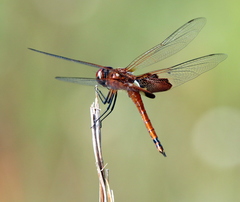
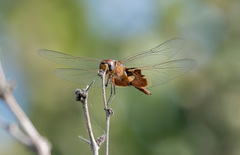
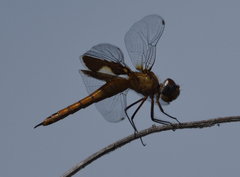
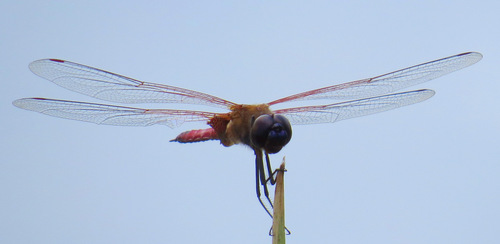
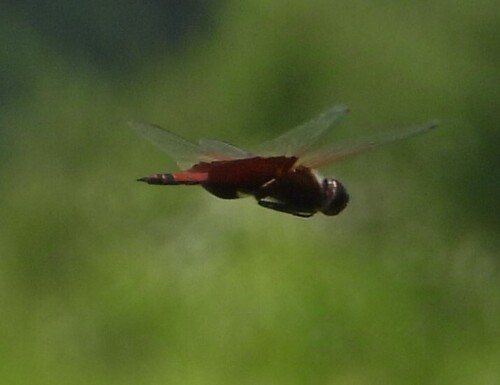
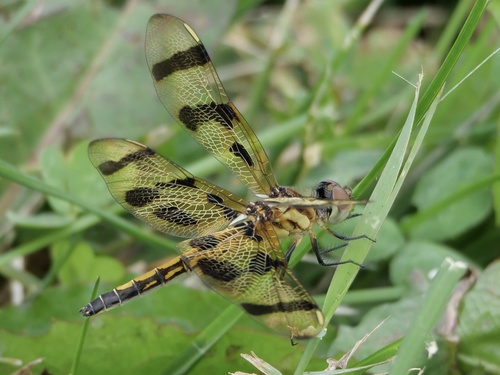
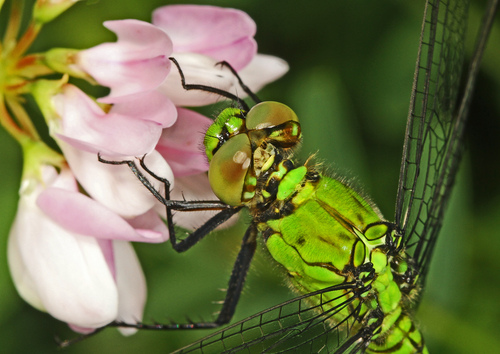
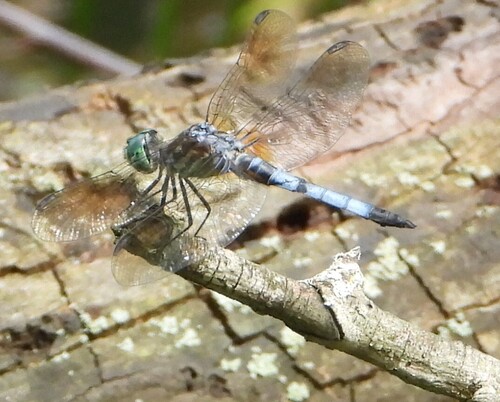
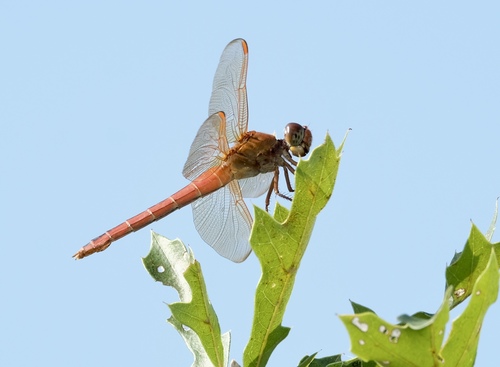
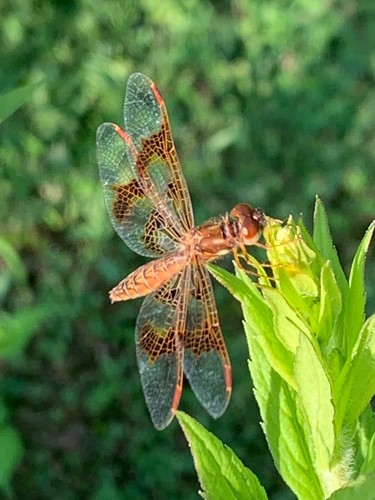
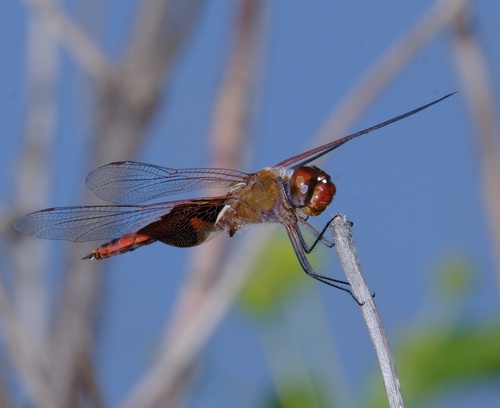
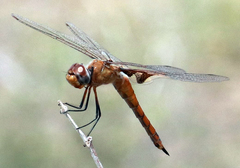
The red-mantled saddlebags or red saddlebags (Tramea onusta) is a species of skimmer dragonfly found in North America, Central America, and the Caribbean. It has translucent wings with red veins, and has characteristic dark red blotches at its proximal base, which makes the dragonfly look as if it is carrying saddlebags when flying. The last two bands and the cerci of these dragonflies are black.

Red saddlebags are strong, active daytime fliers that can be seen in tireless gliding flight over lawns and open areas such as parks and gardens. Their diet mainly consists of winged insects. Like their close relatives, the rainpool gliders (Pantala), saddlebag gliders have broad hindwings which are designed for hours of long distance gliding flight.

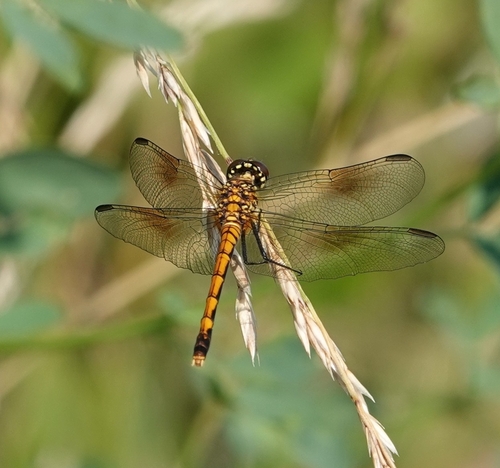
Female red-mantled saddlebags typically have bodies that are light brown or pale orange, with lighter white and brown eyes. Males have a distinctive red body color. This dragonfly has a wide distribution across North America; it is found south of San Francisco in the west and south of the Great Lakes in the east and as far south as Nicaragua and Puerto Rico. Wikipedia →
Global Distribution

Parks Where Found

# Park Country Daily sighting probability
1 Padre Island National Seashore 🇺🇸 United States
~20%
2 Big Bend National Park 🇺🇸 United States
<5%
3 Everglades National Park 🇺🇸 United States
<5%
4 Saguaro National Park 🇺🇸 United States
<5%
5 Cumbres de Monterrey National Park 🇲🇽 Mexico
<5%

Cities Where Found

# City Country Daily sighting probability
1 Austin 🇺🇸 United States
~10%
2 Mesa 🇺🇸 United States
~10%
3 Houston 🇺🇸 United States
~10%
4 Torreón 🇲🇽 México
~10%
5 Phoenix 🇺🇸 United States
<5%
6 Las Vegas 🇺🇸 United States
<5%
7 San Antonio 🇺🇸 United States
<5%
8 Dallas 🇺🇸 United States
<5%
9 Monterrey 🇲🇽 México
<5%
10 Guadalajara 🇲🇽 México
<5%

Before you go

What are the chances of seeing a Red Saddlebags in Everglades National Park?

Rare

Under 5% of wildlife watchers report a Red Saddlebags sighting in Everglades National Park on a given day, based on 9 verified sightings from GBIF citizen-science data from 2019 to 2026. It is the 292nd most-seen of the 496 insects we can rate there. Over three days the chance rises to about 10%, and over a week to about 30%, if each day is a fresh chance.

When is the best time to see a Red Saddlebags in Everglades National Park?

October and November

In those months about 10% of wildlife watchers report a Red Saddlebags in Everglades National Park on a given day, against under 5% in December to September, the lowest months.

What time of day is best to see a Red Saddlebags?

Between 2 and 5 pm

Across all the parks we cover, that three-hour window holds the most Red Saddlebags sightings with a recorded time, and about 9 in 10 of them come between 6 am and 6 pm: it is a daytime animal.

Is Everglades National Park the best place to see a Red Saddlebags?

3rd of 5

Of the 5 parks where we can rate Red Saddlebags sightings, Everglades National Park ranks 3rd at under 5%. The best odds are in Padre Island National Seashore (United States, about 20%) and Big Bend National Park (United States, under 5%).

Which relatives of the Red Saddlebags live in Everglades National Park?

Same genus: Tramea

The closest relatives of the Red Saddlebags that you can see in Everglades National Park (genus Tramea, Saddlebag Gliders) are Antillean Saddlebags (about 10%) and Carolina Saddlebags (about 10%), with each one's daily chance of a sighting.

Where does the Red Saddlebags sighting chance come from?

GBIF citizen-science records

It is estimated from how often the Red Saddlebags is recorded against all the insects logged in Everglades National Park (9 verified sightings from 2019 to 2026), calibrated against known sighting rates. Figures are rounded to the nearest 10% because citizen-science data supports honest approximations, not decimals, and months with records from fewer than five people show "—". How it works.

← Back to Everglades National Park