
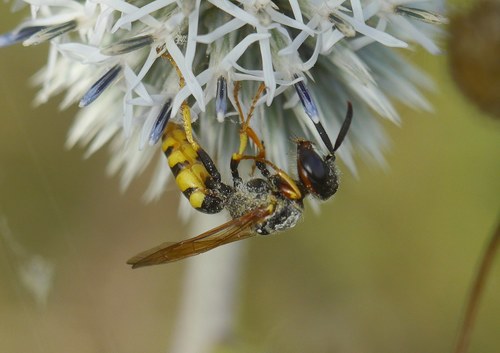
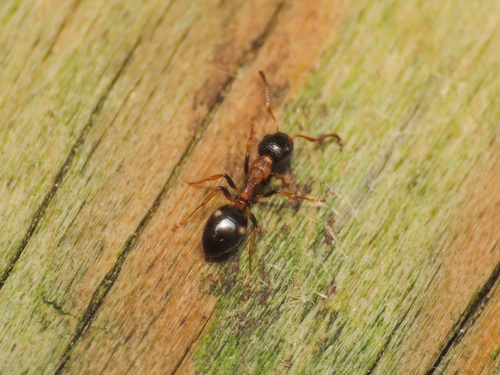
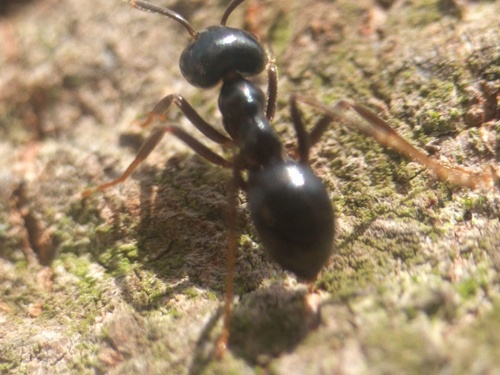
Andricus quercustozae

Andricus quercustozae

Andricus quercustozae

Daily sighting probability ~10% · With luck
at Fertő-Hanság National Park

In 3 days ~20% in a week ~40%

9 Verified sightings at Fertő-Hanság National Park From 2019 to 2026
70 In all 3 parks
March Best month
☀️ Diurnal When it's spotted

About the Andricus quercustozae

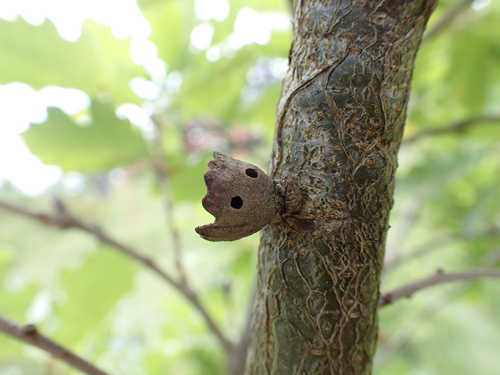
Andricus quercustozae is a species of gall wasp found in the Western Palaearctic. The species induces large round sticky galls on oaks. The species is associated with many parasitoids, inquilines, and other species which use the galls after the adult host wasp has emerged.

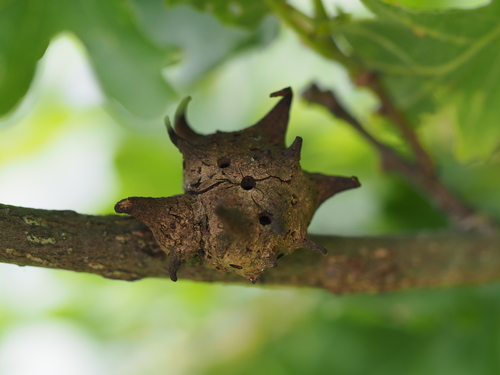
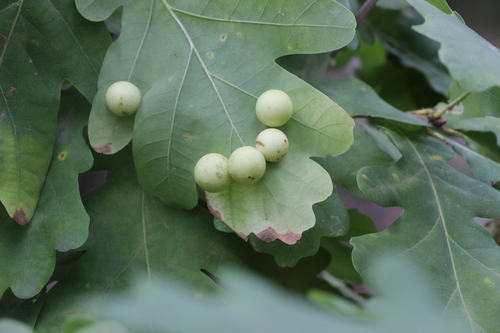
Andricus quercustozae has a heterogonic life cycle with an asexual and a sexual generation which induce different types of galls on oaks. The sexual generation induces cryptic bud galls. The asexual generation creates large round galls from the axillary buds of shoots on various species of oaks (e.g. Quercus frainetto, Q. pubescens, Q. petraea). The young galls start out as flat disks with marginal projections. These young galls are a reddish to yellowish colour and possess a sticky surface. As the gall matures, it swells into a spherical shape, leaving the marginal projections as a crown of thorns/warts on the top. The final diameter of the gall ranges from 17 to 40 mm. The inside of the gall often contains an internal airspace and the developing host lives in an isolated larval chamber. The asexual generation overwinters within these galls.

Andricus quercustozae supports many other... Wikipedia →

Global Distribution

Parks Where Found

# Park Country Daily sighting probability
1 Picos de Europa National Park 🇪🇸 Spain
~10%
2 Sierra de Guadarrama National Park 🇪🇸 Spain
~10%
3 Fertő-Hanság National Park 🇭🇺 Hungary
~10%

Cities Where Found

# City Country Daily sighting probability
1 Porto 🇵🇹 Portugal
~10%
2 Rome 🇮🇹 Italy
~10%
3 Lisbon 🇵🇹 Portugal
~10%
4 Madrid 🇪🇸 Spain
<5%
5 Vienna 🇦🇹 Austria
<5%

Before you go

What are the chances of seeing an Andricus quercustozae in Fertő-Hanság National Park?

With luck

About 10% of wildlife watchers report an Andricus quercustozae sighting in Fertő-Hanság National Park on a given day, based on 9 verified sightings from GBIF citizen-science data from 2019 to 2026. It is the 135th most-seen of the 243 insects we can rate there. Over three days the chance rises to about 20%, and over a week to about 40%, if each day is a fresh chance.

When is the best time to see an Andricus quercustozae in Fertő-Hanság National Park?

February and March

In those months about 20% of wildlife watchers report an Andricus quercustozae in Fertő-Hanság National Park on a given day, against under 5% in April, June–August and November–January, the lowest months.

What time of day is best to see an Andricus quercustozae?

Between 1 and 4 pm

Across all the parks we cover, that three-hour window holds the most Andricus quercustozae sightings with a recorded time, and nearly all of them come between 6 am and 6 pm: it is a daytime animal.

Is Fertő-Hanság National Park the best place to see an Andricus quercustozae?

Among the best

Of the 3 parks where we can rate Andricus quercustozae sightings, Fertő-Hanság National Park ranks 3rd at about 10%, level with the leaders once rounded. The best odds are in Picos de Europa National Park (Spain, about 10%) and Sierra de Guadarrama National Park (Spain, about 10%).

Where does the Andricus quercustozae sighting chance come from?

GBIF citizen-science records

It is estimated from how often the Andricus quercustozae is recorded against all the insects logged in Fertő-Hanság National Park (9 verified sightings from 2019 to 2026), calibrated against known sighting rates. Figures are rounded to the nearest 10% because citizen-science data supports honest approximations, not decimals, and months with records from fewer than five people show "—". How it works.

← Back to Fertő-Hanság National Park