Jet Ant
Daily sighting probability ~10% · With luck
at Fertő-Hanság National Park

In 3 days ~20% in a week ~40%

6 Verified sightings at Fertő-Hanság National Park From 2019 to 2026
83 In all 6 parks
March Best month
☀️ Diurnal When it's spotted

About the Jet Ant

Lasius fuliginosus, also known as the jet ant or jet black ant, is a species of ant in the subfamily Formicinae. This species has a wide distribution in Europe and Asia, from Portugal and Ireland in the west, Finland in the north to Italy in the south, and eastwards to Korea and Japan. In the UK, records suggest that while occasionally found further North before 1970, it is now found mostly south of The Wash, in East Anglia and Southern England, with a few colonies found in Ireland.

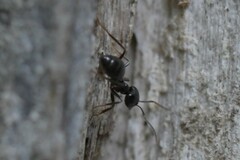
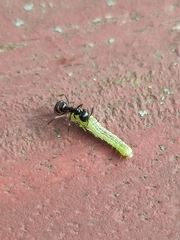
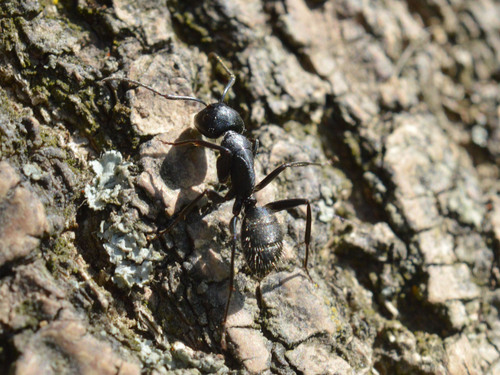
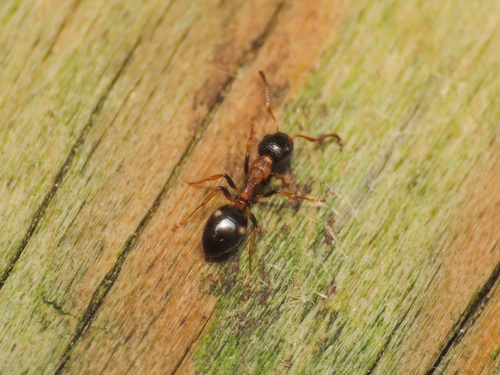
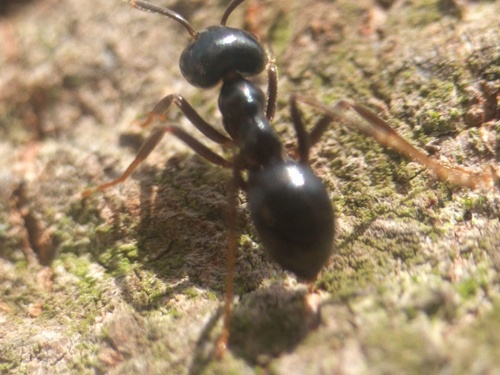
Workers of Lasius fuliginosus have a black shiny colour, a relatively large head, broadly cordate, with a distinct posterior emargination and rounded occipital lobes. Over the dorsum is present a sparse pubescence and scattered erect hairs. Legs are brownish yellow.

Queens have a black shiny colour and a shape similar to the workers, pubescence and body hairs are more abundant, but the orifice of the metapleural gland lacks guard hairs. The head is heart-shaped, broadly emarginated and wider that alitrunk. Moreover the scutum overhangs the pronotal convexity. Legs are brownish yellow and rather longer than in workers. In males, suberect hairs are present on extensor... Wikipedia →
Global Distribution

Parks Where Found

# Park Country Daily sighting probability
1 Triglav National Park 🇸🇮 Slovenia
~10%
2 Bavarian Forest National Park 🇩🇪 Germany
~10%
3 Fertő-Hanság National Park 🇭🇺 Hungary
~10%
4 Pyrénées National Park 🇫🇷 France
~10%
5 Cévennes National Park 🇫🇷 France
<5%
6 Wadden Sea National Park 🇩🇪 Germany
<5%

Cities Where Found

# City Country Daily sighting probability
1 Warsaw 🇵🇱 Poland
~10%
2 Budapest 🇭🇺 Hungary
~10%
3 Prague 🇨🇿 Czechia
~10%
4 Kyiv 🇺🇦 Ukraine
~10%
5 Vienna 🇦🇹 Austria
~10%
6 Berlin 🇩🇪 Germany
~10%
7 Bucharest 🇷🇴 Romania
~10%
8 Rotterdam [The Hague] 🇳🇱 Netherlands
~10%
9 Minsk 🇧🇾 Belarus
~10%
10 Essen 🇩🇪 Germany
<5%

Before you go

What are the chances of seeing a Jet Ant in Fertő-Hanság National Park?

With luck

About 10% of wildlife watchers report a Jet Ant sighting in Fertő-Hanság National Park on a given day, based on 6 verified sightings from GBIF citizen-science data from 2019 to 2026. It is the 162nd most-seen of the 243 insects we can rate there. Over three days the chance rises to about 20%, and over a week to about 40%, if each day is a fresh chance.

When is the best time to see a Jet Ant in Fertő-Hanság National Park?

March–April, June and September

In those months about 10% of wildlife watchers report a Jet Ant in Fertő-Hanság National Park on a given day, against under 5% in May, July–August and October–February, the lowest months.

What time of day is best to see a Jet Ant?

Between 1 and 4 pm

Across all the parks we cover, that three-hour window holds the most Jet Ant sightings with a recorded time, and about 8 in 10 of them come between 6 am and 6 pm: it is a daytime animal.

Is Fertő-Hanság National Park the best place to see a Jet Ant?

Among the best

Of the 6 parks where we can rate Jet Ant sightings, Fertő-Hanság National Park ranks 3rd at about 10%, level with the leaders once rounded. The best odds are in Triglav National Park (Slovenia, about 10%) and Bavarian Forest National Park (Germany, about 10%).

Which relatives of the Jet Ant live in Fertő-Hanság National Park?

Same family: Formicidae

The closest relatives of the Jet Ant that you can see in Fertő-Hanság National Park (family Formicidae, Ants) are Hairy Carpenter Ant (about 10%) and Dolichoderus quadripunctatus (about 10%), with each one's daily chance of a sighting.

Where does the Jet Ant sighting chance come from?

GBIF citizen-science records

It is estimated from how often the Jet Ant is recorded against all the insects logged in Fertő-Hanság National Park (6 verified sightings from 2019 to 2026), calibrated against known sighting rates. Figures are rounded to the nearest 10% because citizen-science data supports honest approximations, not decimals, and months with records from fewer than five people show "—". How it works.

← Back to Fertő-Hanság National Park