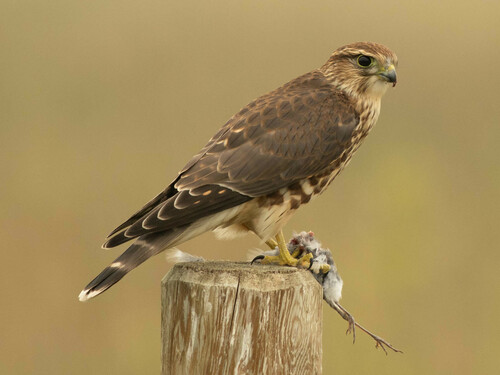
Saker Falcon

Saker Falcon

Falco cherrug

Silhouette: Shyamal · PhyloPic

LCNTVUENEndangeredCR
Daily sighting probability ~10% · With luck
at Fertő-Hanság National Park

In 3 days ~20% in a week ~40%

20 Verified sightings at Fertő-Hanság National Park From 2019 to 2026
39 In all 3 parks
November Best month
☀️ Diurnal When it's spotted

About the Saker Falcon

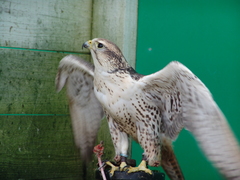
The saker falcon (Falco cherrug) is a large falcon species. It breeds from Central Europe eastwards across the Palearctic to Manchuria. It is a partial migrant, which means that some part of the population is migratory, some part is not. In Europe, for example, a part of the juveniles are migrating, while adults are mostly resident. The European and West Asian migratory sakers spend the winter in the Sahel region. On migration, they cross the Middle East, the Arabian Peninsula, and Pakistan, where they are exposed to illegal trapping. The migratory birds to the east from Altai Mountains spend the winter in the Qinghai-Tibet Plateau.

The saker falcon is the second fastest bird in level flight after the white-throated needletail swift (unconfirmed), capable of reaching 150 km/h (93 mph). It is also the third fastest animal in the world overall after the peregrine falcon and the golden eagle, with all three species capable of executing high speed dives known as "stooping", approaching 300 km/h (190 mph). The saker falcon is the national bird of Hungary, the United Arab Emirates, and Mongolia. It is called by Arabs Hur, i.e., "Free-bird", and it has been used in falconry in the Arabian Peninsula since ancient times. Saker falcons are the national bird of the United Arab Emirates, Saudi Arabia, Kuwait, Qatar, Oman and Yemen and have been integral to Arab heritage and culture for over 9,000 years. They are the national emblem of many Arab countries. Wikipedia →

Sounds

Flight call0:35

Mongolia · 2017

© Frank Lambert · XC412094 · CC BY-NC-ND 4.0

Recording0:06

Russia · 2024

© Vyacheslav Luzanov · iNaturalist · CC BY-NC 4.0

Recording0:05

Russia · 2024

© Daba · iNaturalist · CC BY-NC 4.0

Global Distribution

Parks Where Found

# Park Country Daily sighting probability
1 Gobi Gurvansaikhan National Park 🇲🇳 Mongolia
~40%
2 Kiskunság National Park 🇭🇺 Hungary
~20%
3 Fertő-Hanság National Park 🇭🇺 Hungary
~10%

Zoos & Centres Where Found

# Zoo / Centre Country
1 ZooParc de Beauval 🇫🇷 France In captivity
2 Cabarceno Natural Park 🇪🇸 Spain In captivity
3 Jihlava Zoo 🇨🇿 Czechia In captivity
4 Walsrode World Bird Park 🇩🇪 Germany In captivity
5 Kaliningrad Zoo 🇷🇺 Russia In captivity
6 Le rocher des aigles 🇫🇷 France In captivity
7 Wildpark Schloss Tambach 🇩🇪 Germany In captivity
8 Espace Rambouillet 🇫🇷 France In captivity
9 Al Qudra Lakes 🇦🇪 United Arab Emirates In captivity
10 Wisentgehege Springe 🇩🇪 Germany In captivity
11 Doha Zoo 🇶🇦 Qatar In captivity
12 Shanghai Zoo 🇨🇳 China In captivity
13 WildtierPark Edersee 🇩🇪 Germany In captivity
14 Selwo Aventura 🇪🇸 Spain In captivity
15 Wildgehege Hellenthal 🇩🇪 Germany In captivity
16 Hochwildpark Rheinland 🇩🇪 Germany In captivity
17 Lüneburg Heath Wildlife Park 🇩🇪 Germany In captivity
18 Almaty Zoo 🇰🇿 Kazakhstan In captivity
19 Kharkiv Zoo 🇺🇦 Ukraine In captivity
20 Rosamond Gifford Zoo 🇺🇸 United States In captivity
21 Belgrade Zoo 🇷🇸 Serbia In captivity
22 Bird Park Steinen 🇩🇪 Germany In captivity
23 Hawk Creek Wildlife Center 🇺🇸 United States In captivity
24 Palmitos Park 🇪🇸 Spain In captivity
25 Barnaul Zoo 🇷🇺 Russia In captivity
26 Greifvogelpark Saarburg 🇩🇪 Germany In captivity
27 Qalqilya Zoo 🇵🇸 Palestinian Territories In captivity
28 Castellar Zoo 🇪🇸 Spain In captivity
29 Grizzly Bear Habitat 🇨🇦 Canada In captivity
30 Liberty's Owl, Raptor and Reptile Centre 🇬🇧 United Kingdom In captivity
31 Sharjah Aquarium 🇦🇪 United Arab Emirates In captivity
32 Carolina Raptor Center 🇺🇸 United States In captivity
33 Volerie des aigles 🇫🇷 France In captivity
34 Bangkok Aquarium 🇹🇭 Thailand In captivity
35 Cascades Raptor Center 🇺🇸 United States In captivity
36 Donjon des aigles 🇫🇷 France In captivity
37 EKZOLAND 🇺🇦 Ukraine In captivity
38 Granja escuela Basabere 🇪🇸 Spain In captivity
39 Le centre de soins des rapaces Espace Rambouillet 🇫🇷 France In captivity
40 Maymont Farm 🇺🇸 United States In captivity

Before you go

What are the chances of seeing a Saker Falcon in Fertő-Hanság National Park?

With luck

About 10% of wildlife watchers report a Saker Falcon sighting in Fertő-Hanság National Park on a given day, based on 20 verified sightings from GBIF citizen-science data from 2019 to 2026. It is the 133rd most-seen of the 207 birds we can rate there. Over three days the chance rises to about 20%, and over a week to about 40%, if each day is a fresh chance.

When is the best time to see a Saker Falcon in Fertő-Hanság National Park?

November

In that month about 20% of wildlife watchers report a Saker Falcon in Fertő-Hanság National Park on a given day, against under 5% in April, June–July, September and December, the lowest months.

What time of day is best to see a Saker Falcon?

Between 10 am and 1 pm

Across all the parks we cover, that three-hour window holds the most Saker Falcon sightings with a recorded time, and about 8 in 10 of them come between 6 am and 6 pm: it is a daytime animal.

Is Fertő-Hanság National Park the best place to see a Saker Falcon?

3rd of 3

Of the 3 parks where we can rate Saker Falcon sightings, Fertő-Hanság National Park ranks 3rd at about 10%. The best odds are in Gobi Gurvansaikhan National Park (Mongolia, about 40%) and Kiskunság National Park (Hungary, about 20%).

Which relatives of the Saker Falcon live in Fertő-Hanság National Park?

Same genus: Falco

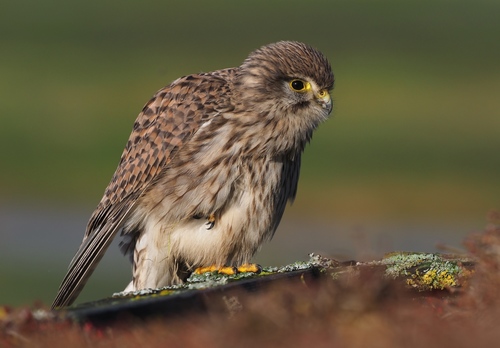
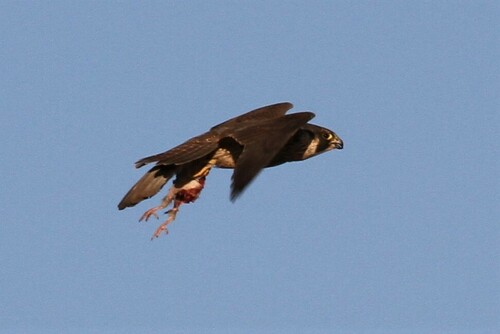
The closest relatives of the Saker Falcon that you can see in Fertő-Hanság National Park (genus Falco, Typical Falcons) are Common Kestrel (about 60%), Eurasian Hobby (about 20%) and Red-footed Falcon (about 10%), with each one's daily chance of a sighting.

Where does the Saker Falcon sighting chance come from?

GBIF citizen-science records

It is estimated from how often the Saker Falcon is recorded against all the birds logged in Fertő-Hanság National Park (20 verified sightings from 2019 to 2026), calibrated against known sighting rates. Figures are rounded to the nearest 10% because citizen-science data supports honest approximations, not decimals, and months with records from fewer than five people show "—". How it works.

← Back to Fertő-Hanság National Park