Silver Barred

Silver Barred

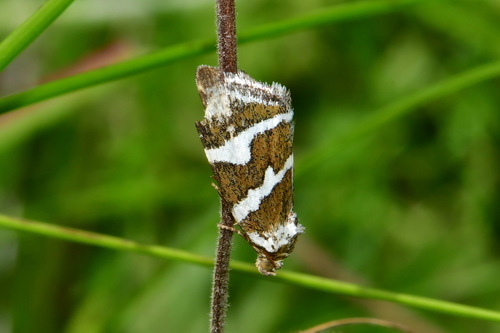
Deltote bankiana

Daily sighting probability ~10% · With luck
at Fertő-Hanság National Park

In 3 days ~20% in a week ~40%

5 Verified sightings at Fertő-Hanság National Park From 2019 to 2026
66 In all 3 parks
May Best month
☀️🌙 Day & Night When it's spotted

About the Silver Barred

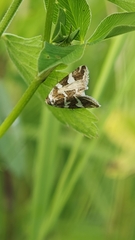
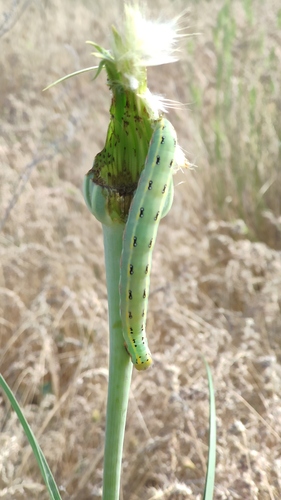
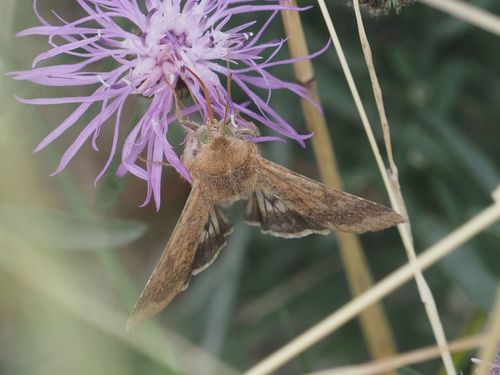
Deltote bankiana, the silver barred, is a moth of the family Noctuidae. The species was first described by Johan Christian Fabricius in 1775. It is found in the Palearctic. The range of the species stretches from the Iberian Peninsula and France in the west to Japan and Korea in the east. However, the occurrences are often only isolated. In England, it is found in Cambridgeshire and Kent. Elsewhere in England the species is a regular immigrant. In Ireland it is resident in peat bogs in County Cork and County Kerry. in the north, the range is from South Sweden. In the south, it is absent from Greece. In the Alps, D. bankiana rises to 1500 meters.

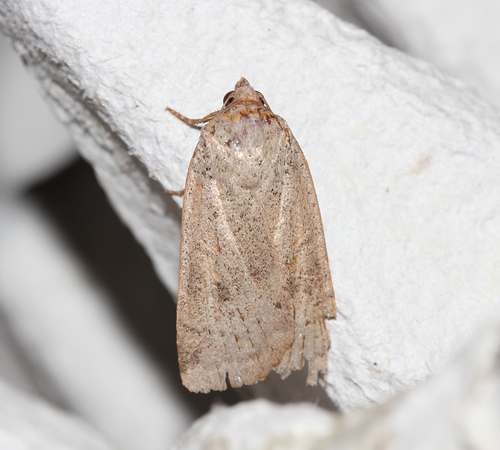
The wingspan is 24–28 mm. The length of the forewings is 10–12 mm. "Forewing pale olive brown, sometimes sprinkled with darker brown; the markings shining white, edged with blackish; viz., a small spot at base of costa, two narrow outwardly oblique transverse fasciae, a short costal mark before apex, and a straight subterminal streak; reniform stigma indicated by a swelling in second fascia; hindwing luteous white, sprinkled with grey, deeper terminally. Staudinger describes the form amurula from Amurland as rather smaller... Wikipedia →
Global Distribution

Parks Where Found

# Park Country Daily sighting probability
1 Wadden Sea National Park 🇩🇪 Germany
~10%
2 Bavarian Forest National Park 🇩🇪 Germany
~10%
3 Fertő-Hanság National Park 🇭🇺 Hungary
~10%

Cities Where Found

# City Country Daily sighting probability
1 Helsinki 🇫🇮 Finland
~10%
2 Warsaw 🇵🇱 Poland
~10%
3 Nizhny Novgorod 🇷🇺 Russia
~10%
4 Novosibirsk 🇷🇺 Russia
~10%
5 Berlin 🇩🇪 Germany
<5%
6 Hamburg 🇩🇪 Germany
<5%
7 Saint Petersburg 🇷🇺 Russia
<5%
8 Moscow 🇷🇺 Russia
<5%
9 Munich 🇩🇪 Germany
<5%
10 Prague 🇨🇿 Czechia
<5%

Before you go

What are the chances of seeing a Silver Barred in Fertő-Hanság National Park?

With luck

About 10% of wildlife watchers report a Silver Barred sighting in Fertő-Hanság National Park on a given day, based on 5 verified sightings from GBIF citizen-science data from 2019 to 2026. It is the 199th most-seen of the 243 insects we can rate there. Over three days the chance rises to about 20%, and over a week to about 40%, if each day is a fresh chance.

When is the best time to see a Silver Barred in Fertő-Hanság National Park?

May and June

In those months about 10% of wildlife watchers report a Silver Barred in Fertő-Hanság National Park on a given day, against under 5% in July to April, the lowest months.

What time of day is best to see a Silver Barred?

Between 10 pm and 1 am

Across all the parks we cover, that three-hour window holds the most Silver Barred sightings with a recorded time, and about half of them come between 6 pm and 6 am: it is seen both by day and at night.

Is Fertő-Hanság National Park the best place to see a Silver Barred?

Among the best

Of the 3 parks where we can rate Silver Barred sightings, Fertő-Hanság National Park ranks 3rd at about 10%, level with the leaders once rounded. The best odds are in Wadden Sea National Park (Germany, about 10%) and Bavarian Forest National Park (Germany, about 10%).

Which relatives of the Silver Barred live in Fertő-Hanság National Park?

Same family: Noctuidae

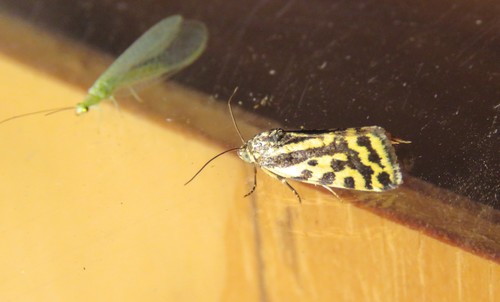
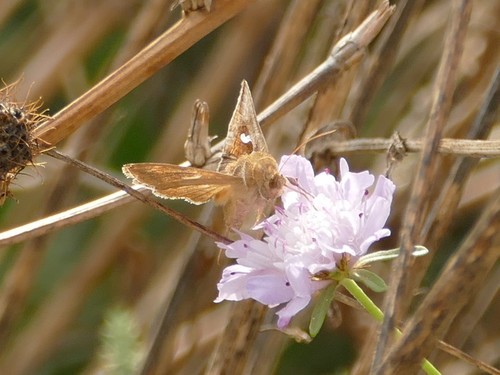
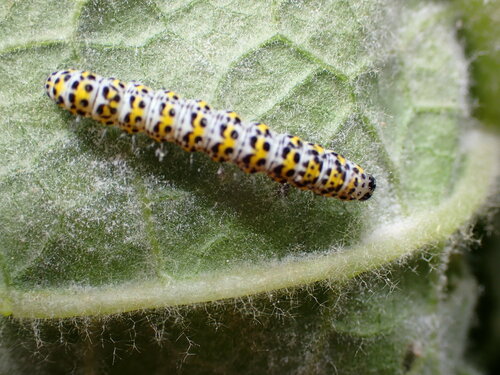
The closest relatives of the Silver Barred that you can see in Fertő-Hanság National Park (family Noctuidae, Cutworm Moths and Allies) are Spotted Sulphur (about 20%), Dewick's Plusia (about 10%) and Mullein Moth (about 10%), with each one's daily chance of a sighting.

Where does the Silver Barred sighting chance come from?

GBIF citizen-science records

It is estimated from how often the Silver Barred is recorded against all the insects logged in Fertő-Hanság National Park (5 verified sightings from 2019 to 2026), calibrated against known sighting rates. Figures are rounded to the nearest 10% because citizen-science data supports honest approximations, not decimals, and months with records from fewer than five people show "—". How it works.

← Back to Fertő-Hanság National Park