Mulga Parrot

Mulga Parrot

Psephotellus varius

Endemic
Daily sighting probability ~20% · Possible
at Flinders Ranges National Park

In 3 days ~50% in a week ~80%

75 Verified sightings at Flinders Ranges National Park From 2019 to 2026
891 In all 2 parks
July Best month
☀️ Diurnal When it's spotted

About the Mulga Parrot

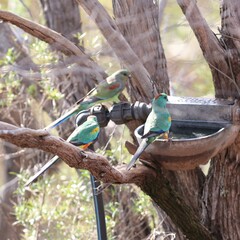
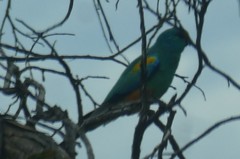
The mulga parrot (Psephotellus varius) is endemic to arid scrublands and lightly timbered grasslands in the interior of southern Australia. The male mulga parrot is multicolored, from which the older common name of many-coloured parrot is derived.

The mulga parrot was given its current scientific name of Psephotellus varius by American zoologist Austin Hobart Clark in 1910, after its name Psephotus multicolor was ruled invalid as the original combination (Psittacus multicolor) had been used for another species. Gregory Mathews proposed the name Psephotus dulciei in 1911 for the same reason, unaware of Clark's proposal, which was published earlier and hence had priority.

Mathews described two additional subspecies of mulga parrot in 1912: P. varius rosinae, from a specimen collected from Yorke Peninsula, noting that it had less red on the abdomen and its upper breast was a darker green, and P. varius exsul from a specimen from Mount Magnet in Western Australia, reporting it had a more blue than green color overall, particularly on the cheeks. In 1917, he revised his classification, noting that he had assumed the type collection came from New South Wales but was now made... Wikipedia →

Global Distribution

Parks Where Found

# Park Country Daily sighting probability
1 Hattah-Kulkyne National Park 🇦🇺 Australia
~50%
2 Flinders Ranges National Park 🇦🇺 Australia
~20%

Zoos & Centres Where Found

# Zoo / Centre Country
1 Berlin Zoological Garden 🇩🇪 Germany In captivity
2 Loro Parque 🇪🇸 Spain In captivity
3 Aquarium Berlin 🇩🇪 Germany In captivity

Before you go

What are the chances of seeing a Mulga Parrot in Flinders Ranges National Park?

Possible

About 20% of wildlife watchers report a Mulga Parrot sighting in Flinders Ranges National Park on a given day, based on 75 verified sightings from GBIF citizen-science data from 2019 to 2026. It is the 36th most-seen of the 94 birds we can rate there. Over three days the chance rises to about 50%, and over a week to about 80%, if each day is a fresh chance.

When is the best time to see a Mulga Parrot in Flinders Ranges National Park?

February and July

In those months about 40% of wildlife watchers report a Mulga Parrot in Flinders Ranges National Park on a given day, against about 10% in March, August and October, the lowest months. Those are among Flinders Ranges National Park's driest months, with about 10 mm of rain a month against 40 mm in November. December has too few records to rate.

What time of day is best to see a Mulga Parrot?

Between 8 and 11 am

Across all the parks we cover, that three-hour window holds the most Mulga Parrot sightings with a recorded time, and about 9 in 10 of them come between 6 am and 6 pm: it is a daytime animal.

Is Flinders Ranges National Park the best place to see a Mulga Parrot?

2nd of 2

Of the 2 parks where we can rate Mulga Parrot sightings, Flinders Ranges National Park ranks 2nd at about 20%. The best odds are in Hattah-Kulkyne National Park (Australia, about 50%).

Where does the Mulga Parrot sighting chance come from?

GBIF citizen-science records

It is estimated from how often the Mulga Parrot is recorded against all the birds logged in Flinders Ranges National Park (75 verified sightings from 2019 to 2026), calibrated against known sighting rates. Figures are rounded to the nearest 10% because citizen-science data supports honest approximations, not decimals, and months with records from fewer than five people show "—". How it works.

← Back to Flinders Ranges National Park