
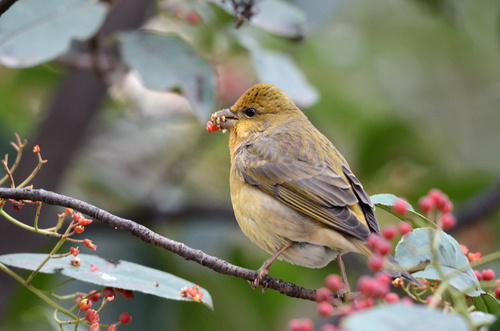
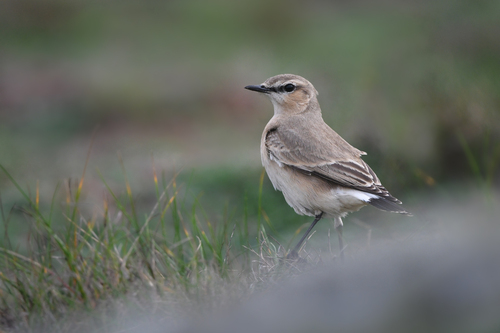
Chinese Beautiful Rosefinch

Chinese Beautiful Rosefinch

Carpodacus davidianus

Silhouette: Sheatherius · PhyloPic

Daily sighting probability ~40% · Likely
at Gobi Gurvansaikhan National Park

In 3 days ~80% in a week >90%

136 Verified sightings at Gobi Gurvansaikhan National Park From 2019 to 2026
136 In 1 park
June Best month
☀️ Diurnal When it's spotted

About the Chinese Beautiful Rosefinch

The Chinese beautiful rosefinch (Carpodacus davidianus) is a true finch species (family Fringillidae). It is one of the rosefinches that might belong in the genus Propasser. It is found in China and Mongolia. Its natural habitats are temperate shrubland and subtropical or tropical high-altitude shrubland.

The Chinese beautiful rosefinch, Himalayan beautiful rosefinch and a subspecies of pink-rumped rosefinch (C. w. waltoni) were considered conspecific, called "beautiful rosefinch" (C. pulcherrimus). While the phylogenetic relationship among rosefinches was reconstructed in a 2013 study, two mitochondrial genes and two nuclear genes were used. It revealed that C. p. waltoni is closer to C. eos, and has now been merged into the same species, pink-rumped rosefinch, and its scientific name changed to C. waltoni. While the Chinese beautiful rosefinch and Himalayan beautiful rosefinch were split into two different species, the former was named C. davidianus, and the latter has the scientific name C. pulcherrimus of "beautiful rosefinch". After the taxonomic revision, the Chinese beautiful rosefinch is a monotypic species.

Gill, F and D Donsker (Eds). 2011... Wikipedia →

Sounds

Call0:23

China · 2026

© Peter Boesman · XC1147384 · CC BY-NC-ND 4.0

Flight call0:19

China · 2020

© PT xiao · XC573544 · CC BY-NC-SA 4.0

Call0:13

China · 2025

© Mengshuai Ge · XC1002682 · CC BY-NC-SA 4.0

Global Distribution

Parks Where Found

# Park Country Daily sighting probability
1 Gobi Gurvansaikhan National Park 🇲🇳 Mongolia
~40%

More parks will be added in future updates.

Before you go

What are the chances of seeing a Chinese Beautiful Rosefinch in Gobi Gurvansaikhan National Park?

Likely

About 40% of wildlife watchers report a Chinese Beautiful Rosefinch sighting in Gobi Gurvansaikhan National Park on a given day, based on 136 verified sightings from GBIF citizen-science data from 2019 to 2026. It is the 17th most-seen of the 122 birds we can rate there. Over three days the chance rises to about 80%, and over a week to over 90%, if each day is a fresh chance.

When is the best time to see a Chinese Beautiful Rosefinch in Gobi Gurvansaikhan National Park?

June

In that month about 50% of wildlife watchers report a Chinese Beautiful Rosefinch in Gobi Gurvansaikhan National Park on a given day, against about 30% in July–September and December, the lowest months. January–April and October–November have too few records to rate.

What time of day is best to see a Chinese Beautiful Rosefinch?

Between 10 am and 1 pm

Across all the parks we cover, that three-hour window holds the most Chinese Beautiful Rosefinch sightings with a recorded time, and about 9 in 10 of them come between 6 am and 6 pm: it is a daytime animal.

Where else can you see a Chinese Beautiful Rosefinch?

Only Gobi Gurvansaikhan National Park, in our data

Gobi Gurvansaikhan National Park is the only park on Wallace's Line with enough records to rate Chinese Beautiful Rosefinch sightings: about 40% of wildlife watchers there report one on a given day.

Which relatives of the Chinese Beautiful Rosefinch live in Gobi Gurvansaikhan National Park?

Same genus: Carpodacus

The closest relatives of the Chinese Beautiful Rosefinch that you can see in Gobi Gurvansaikhan National Park (genus Carpodacus, Typical Rosefinches) are Common Rosefinch (about 30%) and Himalayan Beautiful Rosefinch (about 10%), with each one's daily chance of a sighting.

Where does the Chinese Beautiful Rosefinch sighting chance come from?

GBIF citizen-science records

It is estimated from how often the Chinese Beautiful Rosefinch is recorded against all the birds logged in Gobi Gurvansaikhan National Park (136 verified sightings from 2019 to 2026), calibrated against known sighting rates. Figures are rounded to the nearest 10% because citizen-science data supports honest approximations, not decimals, and months with records from fewer than five people show "—". How it works.

← Back to Gobi Gurvansaikhan National Park