Twite

Twite

Linaria flavirostris

Silhouette: Oier Frias Abecia · PhyloPic

LCLeast ConcernNTVUENCR
Daily sighting probability ~40% · Likely
at Gobi Gurvansaikhan National Park

In 3 days ~80% in a week >90%

118 Verified sightings at Gobi Gurvansaikhan National Park From 2019 to 2026
418 In all 5 parks
May Best month
☀️ Diurnal When it's spotted

About the Twite

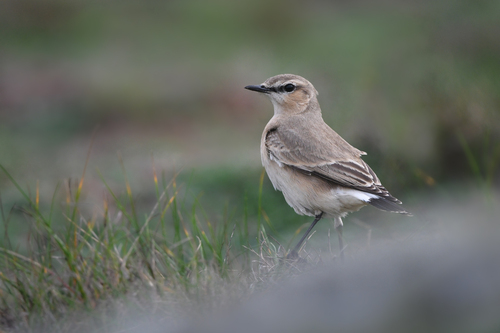
The twite (Linaria flavirostris) is a small brown passerine bird in the finch family Fringillidae. It is a partially migratory species that is found in a strongly disjunct distribution in northern Europe, and in Asian mountains from eastern Turkey to Nepal, western China and Mongolia. It mainly feeds on small seeds but occasionally also feeds on insects.

In 1758 the Swedish naturalist Carl Linnaeus included the twite in the 10th edition of his Systema Naturae under the binomial name Fringilla flavirostris. The twite and the closely related linnets were at one time placed in the genus Carduelis but were moved to the resurrected genus Linaria based on a phylogenetic analysis of mitochondrial and nuclear DNA sequences that was published in 2012. The genus had originally been described in 1802 by the German naturalist Johann Matthäus Bechstein. The genus name linaria is the Latin for a linen-weaver, from linum, "flax". The specific epithet flavirostris means "yellow-billed".

Nine subspecies are recognised: L... Wikipedia →

Sounds

Alarm call0:12

Poland · 2024

© Jarek Matusiak · XC879366 · CC BY-NC-ND 4.0

Song1:08

Norway · 2021

© Stein Ø. Nilsen · XC679082 · CC BY-NC-SA 4.0

Song0:40

Sweden · 2021

© Lars Edenius · XC638923 · CC BY-NC-SA 4.0

Global Distribution

Parks Where Found

# Park Country Daily sighting probability
1 Gobi Gurvansaikhan National Park 🇲🇳 Mongolia
~40%
2 Hemis National Park 🇮🇳 India
~10%
3 Wadden Sea National Park 🇩🇪 Germany
<5%
4 Biebrza National Park 🇵🇱 Poland
<5%
5 Cairngorms National Park 🇬🇧 United Kingdom
<5%

Cities Where Found

# City Country Daily sighting probability
1 Ulaanbaatar 🇲🇳 Mongolia
~10%
2 Saint Petersburg 🇷🇺 Russia
<5%
3 Copenhagen 🇩🇰 Denmark
<5%
4 Helsinki 🇫🇮 Finland
<5%

Before you go

What are the chances of seeing a Twite in Gobi Gurvansaikhan National Park?

Likely

About 40% of wildlife watchers report a Twite sighting in Gobi Gurvansaikhan National Park on a given day, based on 118 verified sightings from GBIF citizen-science data from 2019 to 2026. It is the 22nd most-seen of the 122 birds we can rate there. Over three days the chance rises to about 80%, and over a week to over 90%, if each day is a fresh chance.

When is the best time to see a Twite in Gobi Gurvansaikhan National Park?

May

In that month about 50% of wildlife watchers report a Twite in Gobi Gurvansaikhan National Park on a given day, against about 10% in September, the lowest month. January–April and October–November have too few records to rate.

What time of day is best to see a Twite?

Between 9 am and noon

Across all the parks we cover, that three-hour window holds the most Twite sightings with a recorded time, and about 8 in 10 of them come between 6 am and 6 pm: it is a daytime animal.

Is Gobi Gurvansaikhan National Park the best place to see a Twite?

Yes

Of the 5 parks where we can rate Twite sightings, Gobi Gurvansaikhan National Park has the highest daily chance: about 40%. Next come Hemis National Park (India, about 10%) and Wadden Sea National Park (Germany, under 5%).

Which relatives of the Twite live in Gobi Gurvansaikhan National Park?

Same family: Fringillidae

The closest relatives of the Twite that you can see in Gobi Gurvansaikhan National Park (family Fringillidae, Finches, Euphonias, and Allies) are Mongolian Finch (about 40%), Chinese Beautiful Rosefinch (about 40%) and Common Rosefinch (about 30%), with each one's daily chance of a sighting.

Where does the Twite sighting chance come from?

GBIF citizen-science records

It is estimated from how often the Twite is recorded against all the birds logged in Gobi Gurvansaikhan National Park (118 verified sightings from 2019 to 2026), calibrated against known sighting rates. Figures are rounded to the nearest 10% because citizen-science data supports honest approximations, not decimals, and months with records from fewer than five people show "—". How it works.

← Back to Gobi Gurvansaikhan National Park