Sagebrush Lizard

Sagebrush Lizard

Sceloporus graciosus

Silhouette: SeismicShrimp · PhyloPic

LCLeast ConcernNTVUENCR
Daily sighting probability ~20% · Possible
at Grand Canyon National Park

In 3 days ~60% in a week ~90%

110 Verified sightings at Grand Canyon National Park From 2019 to 2026
837 In all 6 parks
July Best month
☀️ Diurnal When it's spotted

About the Sagebrush Lizard

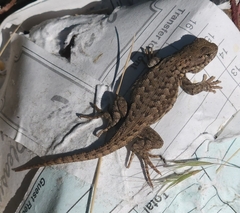
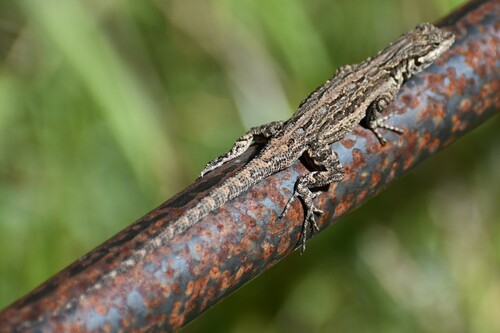
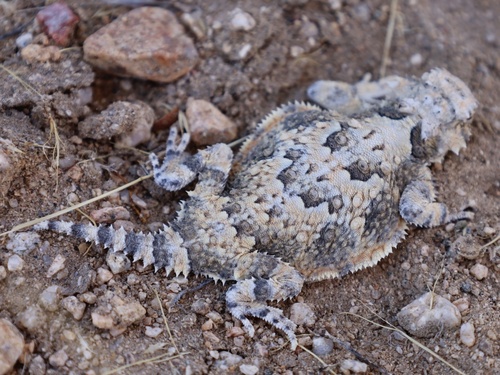
The sagebrush lizard or sagebrush swift (Sceloporus graciosus) is a common species of phrynosomatid lizard found at mid to high altitudes in the western United States. It belongs to the genus Sceloporus (spiny lizards) in the Phrynosomatidae family of reptiles. Named after the sagebrush plants near which it is commonly found, the sagebrush lizard has keeled and spiny scales running along its dorsal surface.

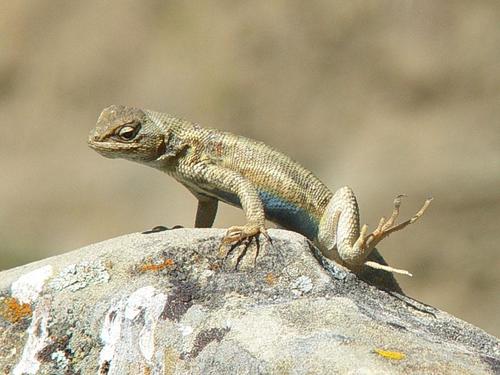
The sagebrush lizard is similar to the western fence lizard, another Sceloporus species found in the western US. The sagebrush lizard can be distinguished from the western fence lizard in that the former is on average smaller and has finer scales. The keeled dorsal scales are typically gray or tan, but can be a variety of colors. The main (ground) color is broken by a lighter gray or tan stripe running down the center of the back (vertebral stripe) and two light stripes, one on either side of the lizard (dorsolateral stripes). S. graciosus will sometimes have orange markings on its sides.

Three regional races of the sagebrush lizard are recognized: the southern sagebrush lizard lives in Southern California, and the western and northern races are found in many western states, including Nevada, Oregon, Idaho, Colorado, Montana, Washington, New Mexico, Utah, Wyoming, North Dakota, South Dakota, Nebraska, and Arizona. Wikipedia →
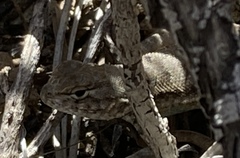
Global Distribution

Parks Where Found

# Park Country Daily sighting probability
1 Zion National Park 🇺🇸 United States
~50%
2 Sequoia and Kings Canyon National Parks 🇺🇸 United States
~50%
3 Yosemite National Park 🇺🇸 United States
~40%
4 Grand Canyon National Park 🇺🇸 United States
~20%
5 Death Valley National Park 🇺🇸 United States
~10%
6 Yellowstone National Park 🇺🇸 United States
~10%

Cities Where Found

# City Country Daily sighting probability
1 Salt Lake City 🇺🇸 United States
~10%

Zoos & Centres Where Found

# Zoo / Centre Country
1 Bear Country USA 🇺🇸 United States In captivity

Before you go

What are the chances of seeing a Sagebrush Lizard in Grand Canyon National Park?

Possible

About 20% of wildlife watchers report a Sagebrush Lizard sighting in Grand Canyon National Park on a given day, based on 110 verified sightings from GBIF citizen-science data from 2019 to 2026. It is the 10th most-seen of the 23 reptiles we can rate there. Over three days the chance rises to about 60%, and over a week to about 90%, if each day is a fresh chance.

When is the best time to see a Sagebrush Lizard in Grand Canyon National Park?

July

In that month about 40% of wildlife watchers report a Sagebrush Lizard in Grand Canyon National Park on a given day, against under 5% in November to February, the lowest months.

What time of day is best to see a Sagebrush Lizard?

Between 10 am and 1 pm

Across all the parks we cover, that three-hour window holds the most Sagebrush Lizard sightings with a recorded time, and about 9 in 10 of them come between 6 am and 6 pm: it is a daytime animal.

Which relatives of the Sagebrush Lizard live in Grand Canyon National Park?

Same genus: Sceloporus

The closest relatives of the Sagebrush Lizard that you can see in Grand Canyon National Park (genus Sceloporus, Spiny Lizards) are Plateau Fence Lizard (about 60%) and Desert Spiny Lizard (about 50%), with each one's daily chance of a sighting.

Where does the Sagebrush Lizard sighting chance come from?

GBIF citizen-science records

It is estimated from how often the Sagebrush Lizard is recorded against all the reptiles logged in Grand Canyon National Park (110 verified sightings from 2019 to 2026), calibrated against known sighting rates. Figures are rounded to the nearest 10% because citizen-science data supports honest approximations, not decimals, and months with records from fewer than five people show "—". How it works.

← Back to Grand Canyon National Park