Ceanothus Silk Moth

Ceanothus Silk Moth

Hyalophora euryalus

Daily sighting probability ~10% · With luck
at Great Bear Rainforest

In 3 days ~20% in a week ~40%

11 Verified sightings at Great Bear Rainforest From 2019 to 2026
70 In all 7 parks
May Best month
☀️ Diurnal When it's spotted

About the Ceanothus Silk Moth

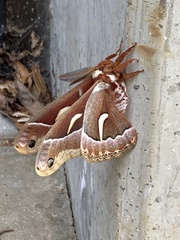
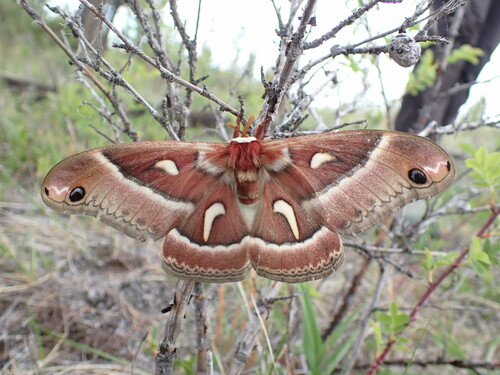
Hyalophora euryalus, the ceanothus silkmoth, is a moth of the family Saturniidae. The species was first described by Jean Baptiste Boisduval in 1855. It is found in the forests and valleys of the Pacific Northwest, but has been observed as south as Baja California.

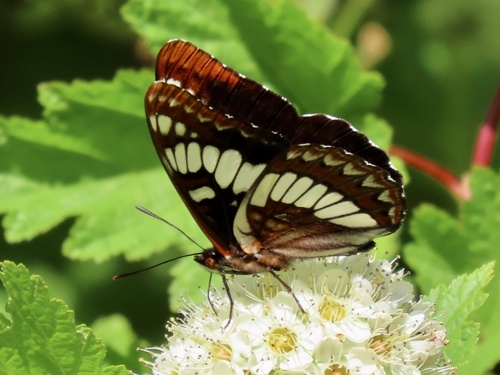
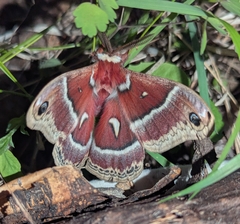
It is a reddish-brown moth with black and white patterning spots. The postmedial band and various spots are black and white. The edges of the wings vary from light brown to gray. Its antennae are fluffy and black. The wingspan is 89–127 mm. Adults are on wing from January to July depending on the location. There is one generation per year.

It is found in the dry intermontane valleys and interior of British Columbia, Canada, (as far north as Prince George along the Fraser River) south to Baja California in Mexico. A subspecies, Hyalophora euryalus cedrocensis, is found on the Isla de Cedros, a small island off the west coast of Baja California, Mexico.

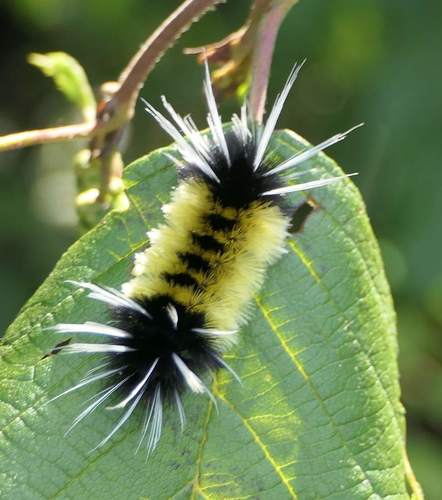
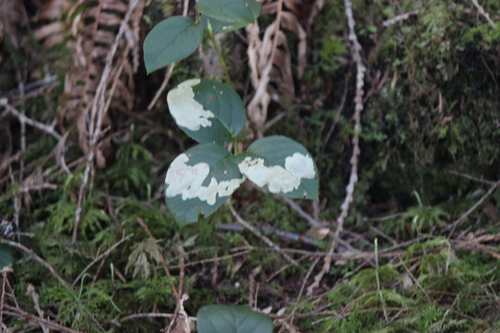
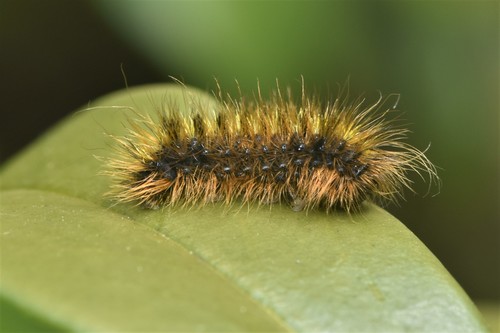
Other habitats include coastal rainforests, hardwood forests, montane forests, and juniper woodlands. The larvae feed on numerous hostplants including those in the Rhamnaceae (Ceanothus, Rhamnus californica), Ericaceae... Wikipedia →
Global Distribution

Parks Where Found

# Park Country Daily sighting probability
1 Redwood National Park 🇺🇸 United States
~10%
2 Sequoia and Kings Canyon National Parks 🇺🇸 United States
~10%
3 Yosemite National Park 🇺🇸 United States
~10%
4 Great Bear Rainforest 🇨🇦 Canada
~10%
5 Pacific Rim National Park Reserve 🇨🇦 Canada
~10%
6 Glacier National Park 🇺🇸 United States
~10%
7 Olympic National Park 🇺🇸 United States
<5%

Cities Where Found

# City Country Daily sighting probability
1 Portland 🇺🇸 United States
<5%
2 Vancouver 🇨🇦 Canada
<5%
3 San Francisco 🇺🇸 United States
<5%
4 San Diego 🇺🇸 United States
<5%
5 Los Angeles 🇺🇸 United States
<5%

Before you go

What are the chances of seeing a Ceanothus Silk Moth in Great Bear Rainforest?

With luck

About 10% of wildlife watchers report a Ceanothus Silk Moth sighting in Great Bear Rainforest on a given day, based on 11 verified sightings from GBIF citizen-science data from 2019 to 2026. It is the 111th most-seen of the 235 insects we can rate there. Over three days the chance rises to about 20%, and over a week to about 40%, if each day is a fresh chance.

When is the best time to see a Ceanothus Silk Moth in Great Bear Rainforest?

May

In that month about 20% of wildlife watchers report a Ceanothus Silk Moth in Great Bear Rainforest on a given day, against under 5% in June to April, the lowest months. That is one of Great Bear Rainforest's driest months, with about 140 mm of rain against 480 mm in November.

What time of day is best to see a Ceanothus Silk Moth?

Between 7 and 10 am

Across all the parks we cover, that three-hour window holds the most Ceanothus Silk Moth sightings with a recorded time, and about 9 in 10 of them come between 6 am and 6 pm: it is a daytime animal.

Is Great Bear Rainforest the best place to see a Ceanothus Silk Moth?

Among the best

Of the 7 parks where we can rate Ceanothus Silk Moth sightings, Great Bear Rainforest ranks 4th at about 10%, level with the leaders once rounded. The best odds are in Redwood National Park (United States, about 10%), Sequoia and Kings Canyon National Parks (United States, about 10%) and Yosemite National Park (United States, about 10%).

Where does the Ceanothus Silk Moth sighting chance come from?

GBIF citizen-science records

It is estimated from how often the Ceanothus Silk Moth is recorded against all the insects logged in Great Bear Rainforest (11 verified sightings from 2019 to 2026), calibrated against known sighting rates. Figures are rounded to the nearest 10% because citizen-science data supports honest approximations, not decimals, and months with records from fewer than five people show "—". How it works.

← Back to Great Bear Rainforest