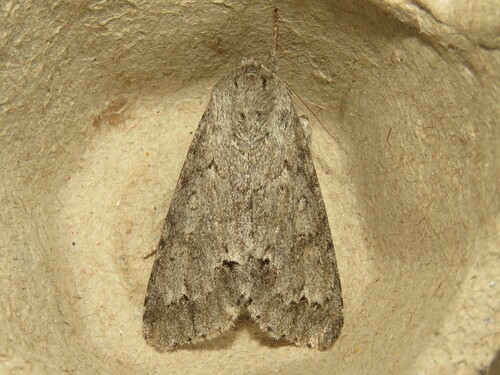
Spotted Tussock Moth

Spotted Tussock Moth

Lophocampa maculata

Daily sighting probability ~20% · Possible
at Great Bear Rainforest

In 3 days ~50% in a week ~80%

143 Verified sightings at Great Bear Rainforest From 2019 to 2026
1,037 In all 17 parks
September Best month
☀️ Diurnal When it's spotted

About the Spotted Tussock Moth

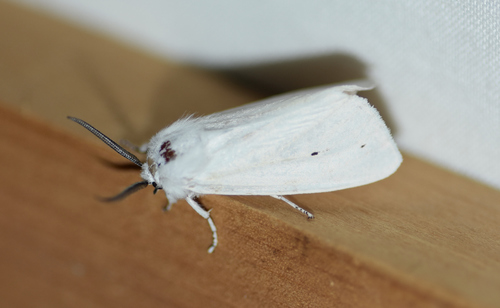
Lophocampa maculata, the Yellow-spotted tussock moth, mottled tiger or spotted halisidota, is a moth of the family Erebidae and the tribe Arctiini, the tiger moths. The species was first described by Thaddeus William Harris in 1841. It is found across Canada, the western parts of the United States, south in the Appalachians to South Carolina and Kentucky. They are also found in Southeastern Alaska.

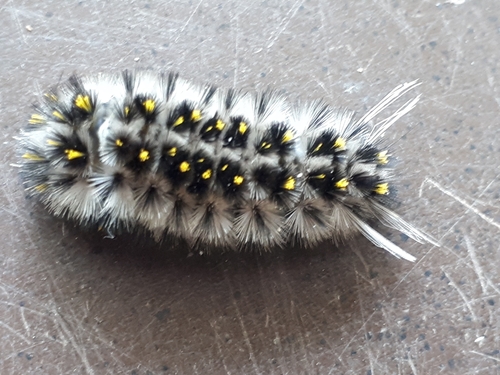
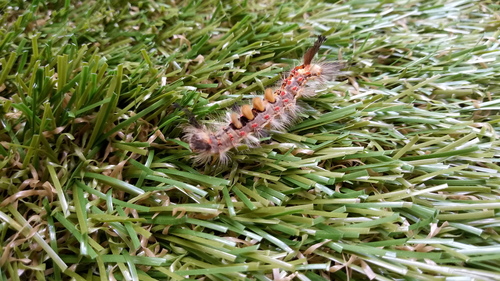
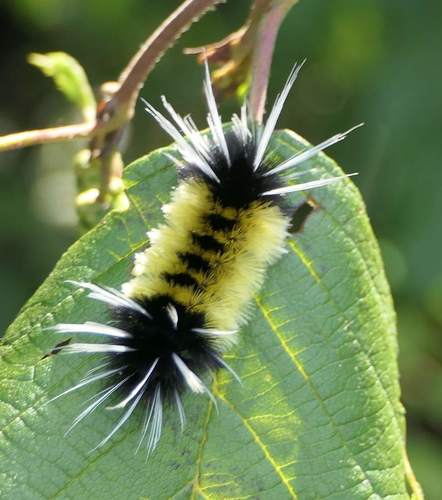
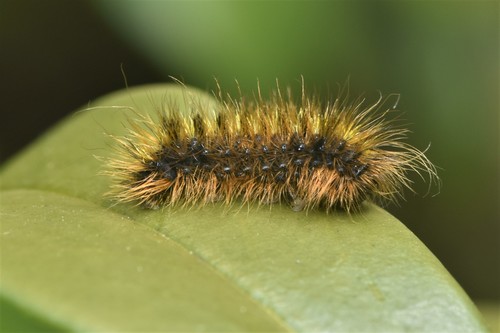
The wingspan is 35–45 mm. The moth flies from May to July; the larvae remain from July to September. There is one generation per year. The larvae go through five instars. In some populations the caterpillar can vary greatly in color between instars. One variation is white with a line of orange dorsal spots, Another variation is yellow with black at the tail and head. The final instar is black at the ends, with a yellow or orange middle section, which in some populations has black spots.

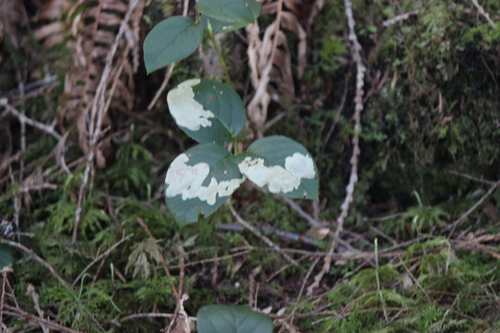
The larvae feed on the leaves of some poplars, willows, alders, basswoods, birches, maples, and oaks. It is a tiger moth but is commonly referred to as a "tussock moth" for the tufts of hair on the caterpillar. According to Wiktionary, a tussock is a tuft or clump of green grass or similar verdure, forming a small hillock. Wikipedia →
Global Distribution

Parks Where Found

# Park Country Daily sighting probability
1 Gros Morne National Park 🇨🇦 Canada
~40%
2 Glacier National Park 🇺🇸 United States
~30%
3 Grand Teton National Park 🇺🇸 United States
~30%
4 Rocky Mountain National Park 🇺🇸 United States
~30%
5 Great Bear Rainforest 🇨🇦 Canada
~20%
6 Redwood National Park 🇺🇸 United States
~20%
7 Voyageurs National Park 🇺🇸 United States
~20%
8 Channel Islands National Park 🇺🇸 United States
~20%
9 Pacific Rim National Park Reserve 🇨🇦 Canada
~20%
10 Olympic National Park 🇺🇸 United States
~10%
11 Riding Mountain National Park 🇨🇦 Canada
~10%
12 Cape Breton Highlands National Park 🇨🇦 Canada
~10%
13 Jasper National Park 🇨🇦 Canada
~10%
14 Yellowstone National Park 🇺🇸 United States
~10%
15 Elk Island National Park 🇨🇦 Canada
~10%
16 Acadia National Park 🇺🇸 United States
~10%
17 Great Smoky Mountains National Park 🇺🇸 United States
~10%

Cities Where Found

# City Country Daily sighting probability
1 Edmonton 🇨🇦 Canada
~10%
2 San Francisco 🇺🇸 United States
~10%
3 Calgary 🇨🇦 Canada
~10%
4 Vancouver 🇨🇦 Canada
<5%
5 Seattle 🇺🇸 United States
<5%
6 Toronto 🇨🇦 Canada
<5%
7 Montreal 🇨🇦 Canada
<5%

Before you go

What are the chances of seeing a Spotted Tussock Moth in Great Bear Rainforest?

Possible

About 20% of wildlife watchers report a Spotted Tussock Moth sighting in Great Bear Rainforest on a given day, based on 143 verified sightings from GBIF citizen-science data from 2019 to 2026. It is the 2nd most-seen of the 235 insects we can rate there. Over three days the chance rises to about 50%, and over a week to about 80%, if each day is a fresh chance.

When is the best time to see a Spotted Tussock Moth in Great Bear Rainforest?

September

In that month about 50% of wildlife watchers report a Spotted Tussock Moth in Great Bear Rainforest on a given day, against under 5% in November to February, the lowest months.

What time of day is best to see a Spotted Tussock Moth?

Between noon and 3 pm

Across all the parks we cover, that three-hour window holds the most Spotted Tussock Moth sightings with a recorded time, and about 9 in 10 of them come between 6 am and 6 pm: it is a daytime animal.

Is Great Bear Rainforest the best place to see a Spotted Tussock Moth?

5th of 17

Of the 17 parks where we can rate Spotted Tussock Moth sightings, Great Bear Rainforest ranks 5th at about 20%. The best odds are in Gros Morne National Park (Canada, about 40%), Glacier National Park (United States, about 30%) and Grand Teton National Park (United States, about 30%).

Where does the Spotted Tussock Moth sighting chance come from?

GBIF citizen-science records

It is estimated from how often the Spotted Tussock Moth is recorded against all the insects logged in Great Bear Rainforest (143 verified sightings from 2019 to 2026), calibrated against known sighting rates. Figures are rounded to the nearest 10% because citizen-science data supports honest approximations, not decimals, and months with records from fewer than five people show "—". How it works.

← Back to Great Bear Rainforest