Tapeigaster nigricornis

Tapeigaster nigricornis

Tapeigaster nigricornis

Daily sighting probability <5% · Rare
at Great Otway National Park

In 3 days ~10% in a week ~30%

6 Verified sightings at Great Otway National Park From 2019 to 2026
6 In 1 park
April Best month
☀️ Diurnal When it's spotted

About the Tapeigaster nigricornis

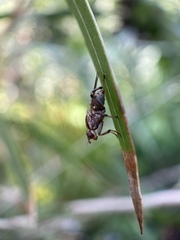
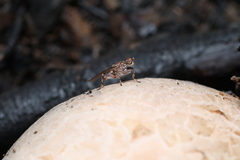
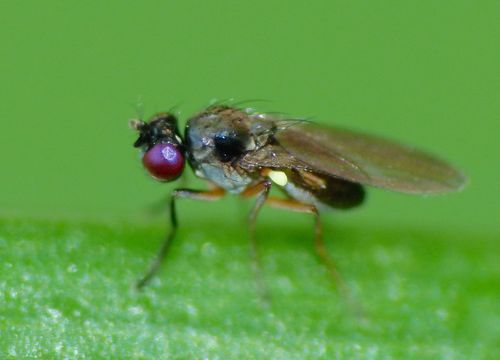
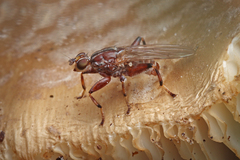
Tapeigaster nigricornis is a species of fly in the family Heleomyzidae. It is endemic to Australia, occurring in New South Wales, Queensland, South Australia, Tasmania, Victoria, and Western Australia. It is the most commonly seen species of Tapeigaster.

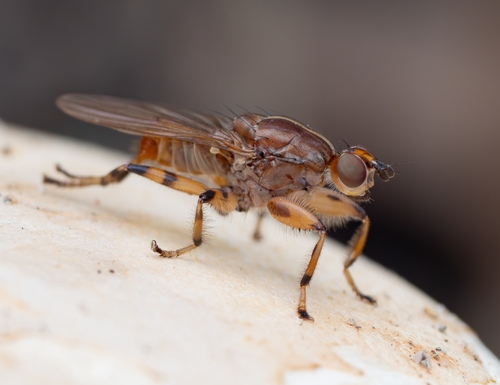
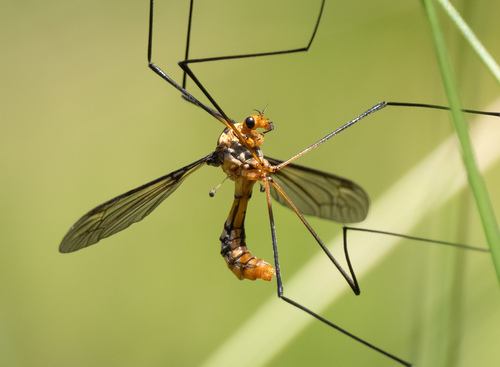
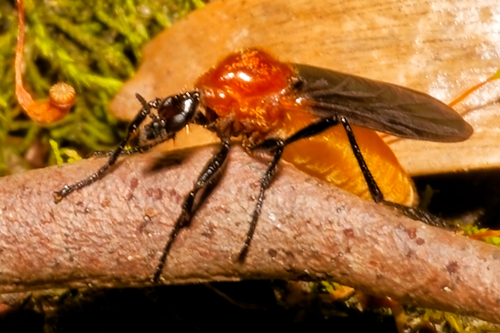
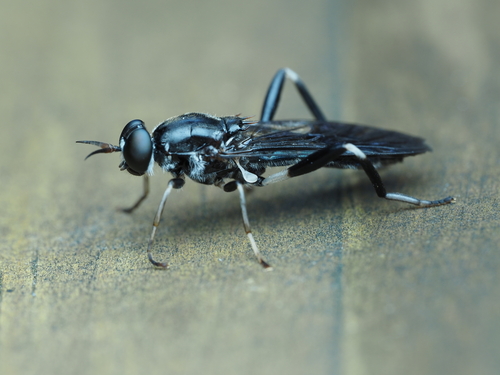
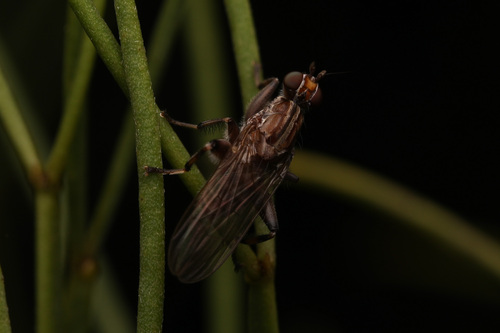
Adult T. nigricornis are medium-sized flies with bodies measuring 6 mm (0.24 in) long and wings measuring between 5–7 mm (0.20–0.28 in) long. The antennae are black, measuring slightly shorter than the face, with long, bare arista. All bristles on the head and thorax are black. The frons is yellow at the front of the head and red towards the back, with two bright white stripes bordering the eyes. The thorax is reddish-brown, with a grey longitudinal stripe running down the middle of the mesoscutum from the neck to the scutellum and a grey band running from near the neck to the base of the wing on each side. The halteres are white with a reddish stalk and the scutellum is reddish-brown with a dusting of grey. The femora are reddish but covered with a grey dust (pruinescence) that sometimes appears shiny. The fore and hind femora are moderately swollen, but the mid femora are not and appear visibly thinner. All femora... Wikipedia →
Global Distribution

Parks Where Found

# Park Country Daily sighting probability
1 Great Otway National Park 🇦🇺 Australia
<5%

More parks will be added in future updates.

Cities Where Found

# City Country Daily sighting probability
1 Melbourne 🇦🇺 Australia
<5%

Before you go

What are the chances of seeing a Tapeigaster nigricornis in Great Otway National Park?

Rare

Under 5% of wildlife watchers report a Tapeigaster nigricornis sighting in Great Otway National Park on a given day, based on 6 verified sightings from GBIF citizen-science data from 2019 to 2026. It is the 369th most-seen of the 418 insects we can rate there. Over three days the chance rises to about 10%, and over a week to about 30%, if each day is a fresh chance.

When is the best time to see a Tapeigaster nigricornis in Great Otway National Park?

April–May and September

In those months about 10% of wildlife watchers report a Tapeigaster nigricornis in Great Otway National Park on a given day, against under 5% in June–August and October–March, the lowest months.

What time of day is best to see a Tapeigaster nigricornis?

Between 2 and 5 pm

Across all the parks we cover, that three-hour window holds the most Tapeigaster nigricornis sightings with a recorded time, and nearly all of them come between 6 am and 6 pm: it is a daytime animal.

Where else can you see a Tapeigaster nigricornis?

Only Great Otway National Park, in our data

Great Otway National Park is the only park on Wallace's Line with enough records to rate Tapeigaster nigricornis sightings: under 5% of wildlife watchers there report one on a given day.

Where does the Tapeigaster nigricornis sighting chance come from?

GBIF citizen-science records

It is estimated from how often the Tapeigaster nigricornis is recorded against all the insects logged in Great Otway National Park (6 verified sightings from 2019 to 2026), calibrated against known sighting rates. Figures are rounded to the nearest 10% because citizen-science data supports honest approximations, not decimals, and months with records from fewer than five people show "—". How it works.

← Back to Great Otway National Park