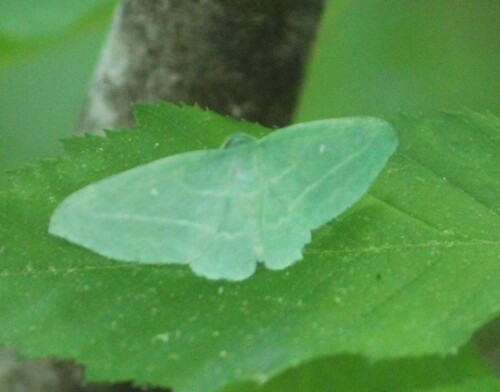
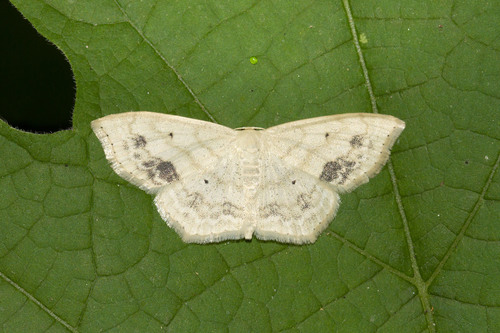
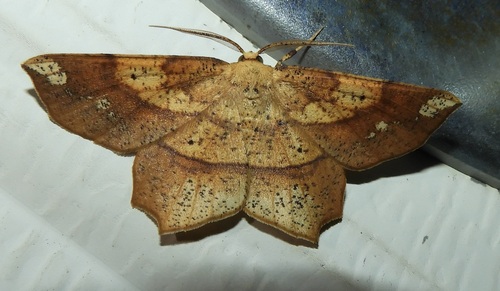
Barred Umber

Barred Umber

Plagodis pulveraria

Daily sighting probability <5% · Rare
at Great Smoky Mountains National Park

In 3 days ~10% in a week ~30%

8 Verified sightings at Great Smoky Mountains National Park From 2019 to 2026
42 In all 4 parks
May Best month
🌅 Crepuscular When it's spotted

About the Barred Umber

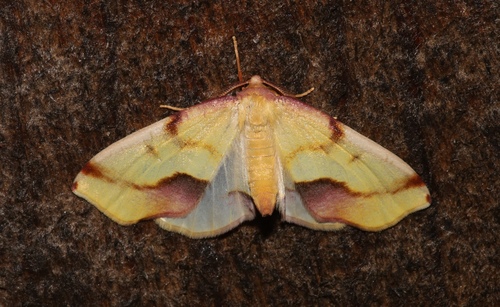
Plagodis pulveraria, the barred umber, is a moth of the family Geometridae. The species was first described by Carl Linnaeus in his 1758 10th edition of Systema Naturae. It is found throughout much of the Palearctic realm from Ireland to Japan, and in the Nearctic realm (Canada).

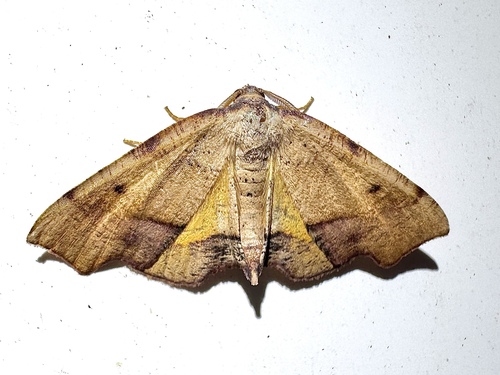
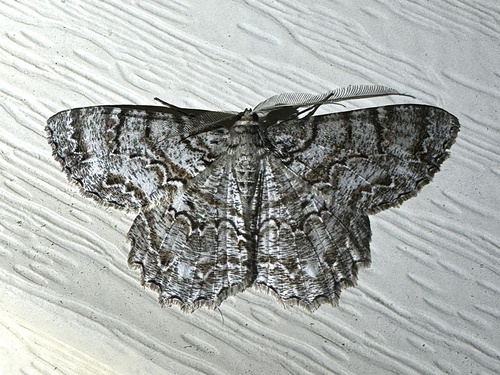
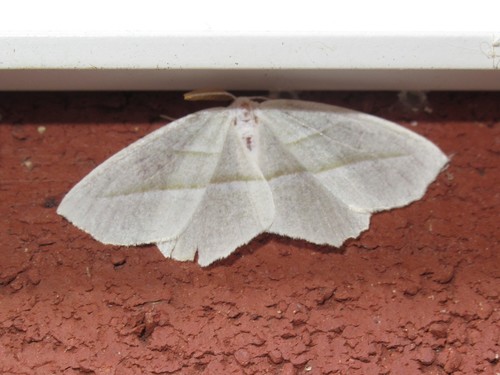
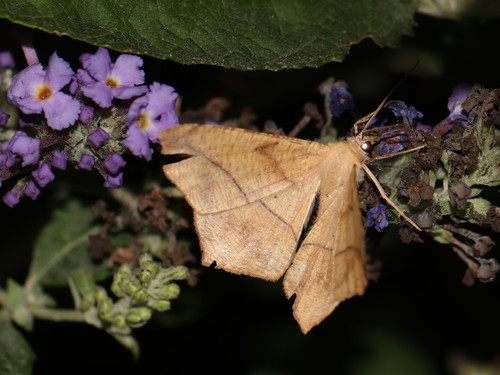
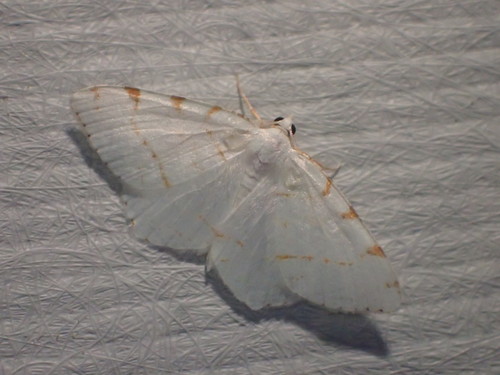
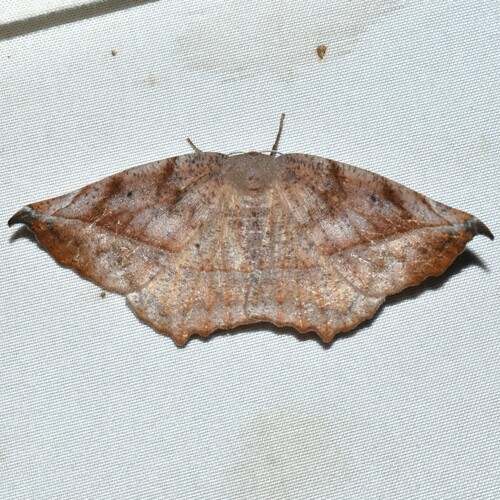
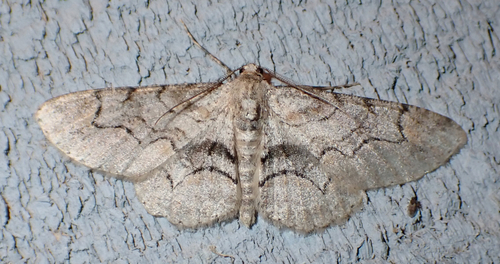
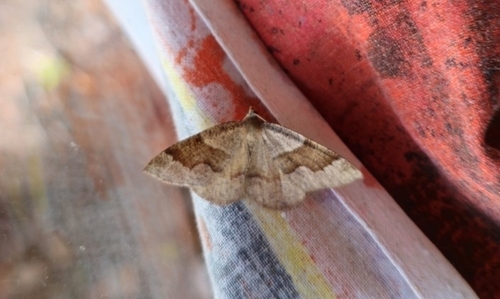
The wingspan is 28–33 mm. The length of the forewings is 17–19 mm. "Variable, but always showing more or less of a reddish tone, with no markings except the rather straight antemedian and posteriorly strongly incurved postmedian lines of the forewing. The median area in the name-typical form is darkened. — ab. passetii Th.-Mieg is violaceous grey instead of reddish brown, the median band sharply expressed. - ab. marginepurpuraria Bastelb. is deeper red, the median area of forewing and basal half of hindwing more orange-, the rest more purple-tinged, lines thick, antemedian rather curved, postmedian less broad anteriorly than in the type. Rather small and round-winged. Rheingau - ab. unicolor Hirschke has both wings uniform brown, dark-dusted, without lines or band. - gadmensis Ratzer is a rather small, brighter (yellower) brown form from Switzerland (Gadmenthal), with the median area almost or quite concolorous, the lines remaining.- violacearia Graeser (15 h), from Amurland, is a very small form, coloured nearly like marginepurpuraria, which must perhaps sink to it, but the thick lines are described as dark violet and it is not indicated that their form differs from the normal; compare, however, the following form. -japonica Btlr. is a small race, or possibly distinct species, from Japan and Korea, bright deep red-brown, the median area as broad posteriorly as anteriorly, not differentiated in colour, the lines which bound it deeper red brown, the postmedian only projecting a little in the middle. Line on hindwing continued nearly to the costal margin, straighter than in marginepurpuraria, which also shows this peculiarity."

The moth flies in two generations from mid-March to August.[1] The larva feeds on various deciduous trees such as oak, birch and sallow. Wikipedia →
Global Distribution

Parks Where Found

# Park Country Daily sighting probability
1 Snowdonia National Park 🇬🇧 United Kingdom
~10%
2 Great Bear Rainforest 🇨🇦 Canada
~10%
3 Pyrénées National Park 🇫🇷 France
<5%
4 Great Smoky Mountains National Park 🇺🇸 United States
<5%

Cities Where Found

# City Country Daily sighting probability
1 Helsinki 🇫🇮 Finland
<5%

Before you go

What are the chances of seeing a Barred Umber in Great Smoky Mountains National Park?

Rare

Under 5% of wildlife watchers report a Barred Umber sighting in Great Smoky Mountains National Park on a given day, based on 8 verified sightings from GBIF citizen-science data from 2019 to 2026. It is the 513th most-seen of the 822 insects we can rate there. Over three days the chance rises to about 10%, and over a week to about 30%, if each day is a fresh chance.

When is the best time to see a Barred Umber in Great Smoky Mountains National Park?

May and July

In those months about 10% of wildlife watchers report a Barred Umber in Great Smoky Mountains National Park on a given day, against under 5% in June and August–April, the lowest months.

What time of day is best to see a Barred Umber?

Between 6 and 9 am

Across all the parks we cover, that three-hour window holds the most Barred Umber sightings with a recorded time, and about 6 in 10 of them come between 6 am and 6 pm: it is most active around dawn and dusk.

Is Great Smoky Mountains National Park the best place to see a Barred Umber?

4th of 4

Of the 4 parks where we can rate Barred Umber sightings, Great Smoky Mountains National Park ranks 4th at under 5%. The best odds are in Snowdonia National Park (United Kingdom, about 10%), Great Bear Rainforest (Canada, about 10%) and Pyrénées National Park (France, under 5%).

Where does the Barred Umber sighting chance come from?

GBIF citizen-science records

It is estimated from how often the Barred Umber is recorded against all the insects logged in Great Smoky Mountains National Park (8 verified sightings from 2019 to 2026), calibrated against known sighting rates. Figures are rounded to the nearest 10% because citizen-science data supports honest approximations, not decimals, and months with records from fewer than five people show "—". How it works.

← Back to Great Smoky Mountains National Park