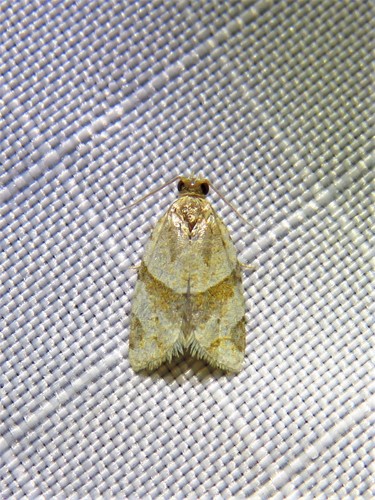
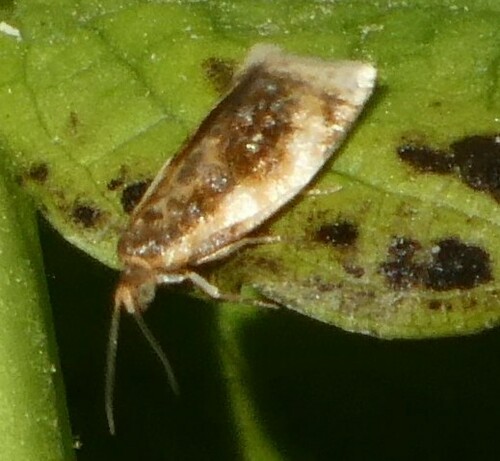
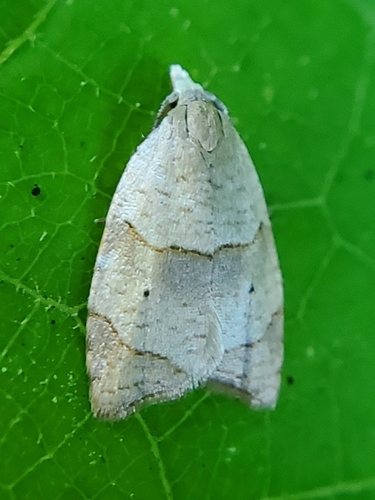
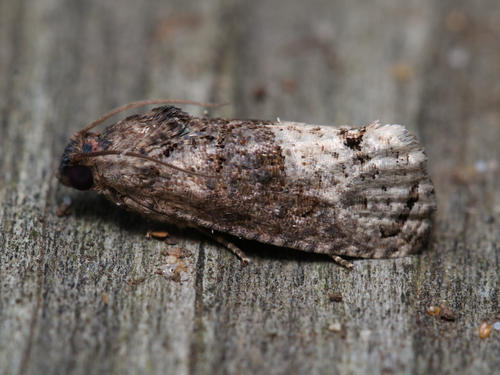
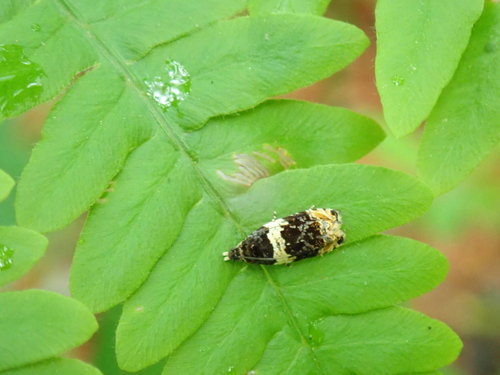
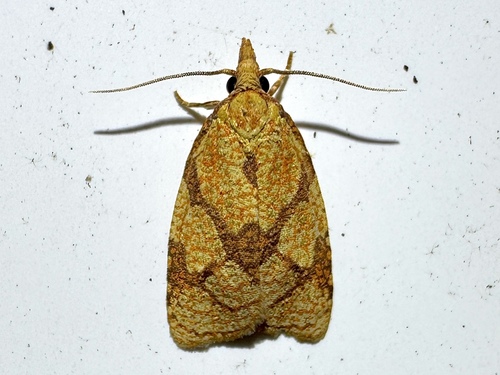
Garden Tortrix

Garden Tortrix

Clepsis peritana

Daily sighting probability <5% · Rare
at Great Smoky Mountains National Park

In 3 days ~10% in a week ~30%

11 Verified sightings at Great Smoky Mountains National Park From 2019 to 2026
17 In all 2 parks
July Best month
☀️🌙 Day & Night When it's spotted

About the Garden Tortrix

Clepsis peritana, the garden tortrix or strawberry garden tortrix, is a species of moth of the family Tortricidae. It is found in Spain, Cuba, as well as North America, where it has been recorded from southern Canada throughout the United States.

The wingspan is 10–15 mm for males and 12–15 mm for females. Adults have been recorded on wing from March to September, in several generations per year. The larvae feed on Chrysanthemum, Cynara cardunculus, Senecio jacobaea, Stachys, Fragaria, Citrus, Scrophularia californica and Solanum torvum. Full-grown larvae reach a length of 13–14 mm. They have a light green abdomen, but the body colour can vary depending on the host plant. The head is yellowish brown. Wikipedia →

Global Distribution

Parks Where Found

# Park Country Daily sighting probability
1 Shenandoah National Park 🇺🇸 United States
<5%
2 Great Smoky Mountains National Park 🇺🇸 United States
<5%

Cities Where Found

# City Country Daily sighting probability
1 Austin 🇺🇸 United States
~10%
2 Dallas 🇺🇸 United States
~10%
3 Houston 🇺🇸 United States
~10%
4 Baltimore 🇺🇸 United States
~10%
5 San Antonio 🇺🇸 United States
<5%
6 Washington 🇺🇸 United States
<5%
7 Sacramento 🇺🇸 United States
<5%
8 Philadelphia 🇺🇸 United States
<5%
9 New York City 🇺🇸 United States
<5%
10 Los Angeles 🇺🇸 United States
<5%

Before you go

What are the chances of seeing a Garden Tortrix in Great Smoky Mountains National Park?

Rare

Under 5% of wildlife watchers report a Garden Tortrix sighting in Great Smoky Mountains National Park on a given day, based on 11 verified sightings from GBIF citizen-science data from 2019 to 2026. It is the 441st most-seen of the 822 insects we can rate there. Over three days the chance rises to about 10%, and over a week to about 30%, if each day is a fresh chance.

When is the best time to see a Garden Tortrix in Great Smoky Mountains National Park?

May, July and October

In those months about 10% of wildlife watchers report a Garden Tortrix in Great Smoky Mountains National Park on a given day, against under 5% in June, August–September and November–April, the lowest months.

What time of day is best to see a Garden Tortrix?

Between 8 and 11 pm

Across all the parks we cover, that three-hour window holds the most Garden Tortrix sightings with a recorded time, and about half of them come between 6 pm and 6 am: it is seen both by day and at night.

Is Great Smoky Mountains National Park the best place to see a Garden Tortrix?

Among the best

Of the 2 parks where we can rate Garden Tortrix sightings, Great Smoky Mountains National Park ranks 2nd at under 5%, level with the leaders once rounded. The best odds are in Shenandoah National Park (United States, under 5%).

Where does the Garden Tortrix sighting chance come from?

GBIF citizen-science records

It is estimated from how often the Garden Tortrix is recorded against all the insects logged in Great Smoky Mountains National Park (11 verified sightings from 2019 to 2026), calibrated against known sighting rates. Figures are rounded to the nearest 10% because citizen-science data supports honest approximations, not decimals, and months with records from fewer than five people show "—". How it works.

← Back to Great Smoky Mountains National Park